
Why Do Muslims Pray Five Times a Day? The Qur'an, the Sunnah, and the Wisdom Behind It
Five times a day, from before sunrise until the night has fallen, Muslims stop what they are doing and pray. Neighbours and co-workers notice it and ask why. Muslims ask it too, sometimes because they want to understand the prayer they already pray, and sometimes because they have heard someone claim that the Qur'an only mentions three prayers. This article answers the question from the sources themselves: where the five prayers came from, what the Qur'an says about their times as the imams of tafsir explained it, how the Sunnah set them out, and the wisdom the scholars mention behind them.
If you are looking for the conditions, pillars and rulings of the prayer, those are covered in our complete guide, Salah: The Second Pillar of Islam. This piece is about one question: why five?
Where the Five Prayers Came From: The Night of the Mi'raj
Most of the commands of Islam came down to the Prophet (peace and blessings be upon him) on earth, through the angel Jibril. The five daily prayers were given to him directly, above the seven heavens, on the night of al-Isra wal-Mi'raj. Abu Dharr, may Allah be pleased with him, narrated the Prophet's own account of what happened. It was not five at first:
Then Allah enjoined fifty prayers on my followers when I returned with this order of Allah, I passed by Moses who asked me, 'What has Allah enjoined on your followers?' I replied, 'He has enjoined fifty prayers on them.' Moses said, 'Go back to your Lord (and appeal for reduction) for your followers will not be able to bear it.' (So I went back to Allah and requested for reduction) and He reduced it to half. When I passed by Moses again and informed him about it, he said, 'Go back to your Lord as your followers will not be able to bear it.' So I returned to Allah and requested for further reduction and half of it was reduced. I again passed by Moses and he said to me: 'Return to your Lord, for your followers will not be able to bear it.' So I returned to Allah and He said, 'These are five prayers and they are all (equal to) fifty (in reward) for My Word does not change.' I returned to Moses and he told me to go back once again. I replied, 'Now I feel shy of asking my Lord again.'
— Sahih al-Bukhari 349
This is the first answer to "why five." The number is not a human invention, a tradition that grew over time, or a compromise reached by scholars. It is what Allah decreed, and He decreed it as a mercy: five prayers in the doing, fifty in the reward. "My Word does not change" means the fifty that was first decreed still stands in its reward, while the burden was lightened to five.
Ibn Kathir notes in his tafsir of Surah Hud that before the night of the Isra, the obligatory prayers were fewer: one before sunrise and one before sunset, with the night prayer also obligatory for a time. The five were established on that night, and the Muslims have prayed them ever since.
What the Qur'an Says About the Prayer Times
The Qur'an does not list the five prayers by name in a single verse. What it does is command the prayer at specific times of the day and night, again and again, and the imams of tafsir explain which prayers each verse refers to. Read together, the verses point to the five times. Here they are with their explanation.
Prayer Is Decreed at Specified Times
...Indeed, prayer has been decreed upon the believers a decree of specified times.
— Surah an-Nisa 4:103
In his Tafsir, Imam Ibn Kathir explains that "decreed" here means enjoined and made obligatory. He records from Ibn Abbas that the prayer has a fixed time just as the Hajj has a fixed time, and notes that the same explanation is reported from Mujahid, Salim ibn Abdullah, Ali ibn al-Husayn, al-Hasan and others among the early generations. The prayer is not something a Muslim performs whenever it suits him. Each prayer has its own window, and the Qur'an says so plainly.

The Two Ends of the Day and the Approach of the Night
And establish prayer at the two ends of the day and at the approach of the night. Indeed, good deeds do away with misdeeds. That is a reminder for those who remember.
— Surah Hud 11:114
Ibn Kathir gathers what the Salaf said about this verse. On "the two ends of the day," Ibn Abbas, al-Hasan and Abdur-Rahman ibn Zayd ibn Aslam said it means Fajr and Maghrib; in another report al-Hasan said Fajr and Asr; and Mujahid and Muhammad ibn Ka'b al-Qurazi said Fajr at the start of the day, and Dhuhr and Asr at its end. On "the approach of the night," Ibn Abbas, Mujahid and al-Hasan said it means Isha, and al-Hasan also said Maghrib and Isha, a view shared by Mujahid, Muhammad ibn Ka'b, Qatadah and ad-Dahhak.
Imam as-Sa'di, in the tafsir we carry as Tafsir as-Sa'di, brings these together: "the two ends of the day" covers Fajr, Dhuhr and Asr, and "the approach of the night" covers Maghrib and Isha, along with the night prayer, since it brings the servant closer to Allah. Between them, the five are named.

Then the verse gives a reason: "good deeds do away with misdeeds." As-Sa'di explains that the five prayers, with the voluntary prayers attached to them, are among the greatest of good deeds, and that besides their reward they wipe away sins. He limits this to the minor sins, because of the hadith the Prophet (peace and blessings be upon him) gave on exactly this point:
Abu Huraira reported: The Messenger of Allah (peace and blessings be upon him) said: Five prayers and from one Friday prayer to (the next) Friday prayer is an expiation (of the sins committed in between their intervals) if major sins are not committed.
— Sahih Muslim 233a
And he gave a picture of it that anyone can understand:
Narrated Abu Huraira: I heard Allah's Messenger (peace and blessings be upon him) saying, "If there was a river at the door of anyone of you and he took a bath in it five times a day would you notice any dirt on him?" They said, "Not a trace of dirt would be left." The Prophet (peace and blessings be upon him) added, "That is the example of the five prayers with which Allah blots out (annuls) evil deeds."
— Sahih al-Bukhari 528
Ibn Kathir cites both of these narrations under this verse. Five times a day the believer returns to that river.
From the Sun's Decline to the Darkness of Night, and the Recitation of Dawn
Establish prayer at the decline of the sun [from its meridian] until the darkness of the night and [also] the Qur'an of dawn. Indeed, the recitation of dawn is ever witnessed.
— Surah al-Isra 17:78
This single verse contains all five times. Ibn Kathir explains that "the decline of the sun" (duluk ash-shams) is the sun passing its zenith at midday, and he narrates this from Ibn Abbas and Ibn Umar, and from Abu Barzah al-Aslami, Mujahid, al-Hasan, ad-Dahhak, Abu Ja'far al-Baqir and Qatadah. "The darkness of the night" (ghasaq al-layl) is the night's darkness, so the span from the sun's decline to the night's darkness takes in Dhuhr, Asr, Maghrib and Isha. "The Qur'an of dawn" is the Fajr prayer. Ibn Kathir states that the verse is understood to refer to the times of the five prayers, and that their detailed timings were established by the Sunnah, transmitted so widely that no doubt can enter it.
Imam at-Tabari, in his Jami' al-Bayan, records that some of the early scholars held that duluk means sunset, and others that it means the sun's decline after midday. He concludes that the correct meaning is the decline after midday, from the Arabic sense of the word as inclining, and that the verse therefore begins with Dhuhr. As-Sa'di explains the verse in the same way: the decline of the sun covers Dhuhr and Asr, the darkness of night covers Maghrib and Isha, and the recitation of dawn is Fajr. Because the verse singles out these times for the command, he says, the prayers within them are obligatory.
Why is the Fajr prayer called "the Qur'an of dawn," and why is it "witnessed"? As-Sa'di explains that it is called Qur'an because its recitation is longer than in the other prayers, and that it is witnessed by Allah and by the angels of the night and of the day. Ibn Kathir cites the hadith of Abu Hurayrah in the Two Sahihs about the angels of the night and the angels of the day, who take turns among the people and meet at the Fajr and Asr prayers. Twice each day, the angels witness the believer at prayer.
Before Sunrise and Before Sunset
So be patient over what they say and exalt [Allah] with praise of your Lord before the rising of the sun and before its setting; and during periods of the night [exalt Him] and at the ends of the day, that you may be satisfied.
— Surah Ta-Ha 20:130
Ibn Kathir explains that "before the rising of the sun" is the Fajr prayer and "before its setting" is the Asr prayer, and that "periods of the night" refers to the night prayer, with some of the scholars including Maghrib and Isha in it. He then cites the hadith of Jarir ibn Abdullah from the Two Sahihs, in which the Prophet spoke of the believers seeing their Lord in the Hereafter and, in the same breath, urged them not to be overcome in the prayers before sunrise and before sunset. The two prayers this verse names are tied to the greatest reward a believer can hope for.
Guard the Prayers, and the Middle Prayer
Maintain with care the [obligatory] prayers and [in particular] the middle prayer and stand before Allah, devoutly obedient.
— Surah al-Baqarah 2:238
Ibn Kathir explains that guarding the prayers means performing them properly and at their times, and he cites the report of Ibn Mas'ud in the Two Sahihs that the Prophet named prayer at its proper time as the most beloved of deeds to Allah. On "the middle prayer," he concludes that it is the Asr prayer, the view of most of the scholars among the Companions and, as al-Mawardi reported, of most of the Tabi'in. He cites the hadith of Ali about the day of al-Ahzab, recorded in Sahih Muslim and elsewhere, in which the middle prayer is named as Asr, along with other narrations to the same effect. "Devoutly obedient," he explains, means standing before Allah in humility, which is why speech was later forbidden in the prayer.
A "middle" prayer only makes sense if there are prayers on either side of it. With Asr in the middle, there are two before it, Fajr and Dhuhr, and two after it, Maghrib and Isha.
What These Verses Show
Taken together, the verses command prayer before sunrise, from the sun's decline at midday, before sunset, at the approach of the night and in its darkness. They name a middle prayer, which requires prayers around it. And the mufassirun, drawing on what the Companions and the Tabi'in said, read the five prayers in them. What the Qur'an does not give is the exact beginning and end of each time, or the number of rak'ahs. As Ibn Kathir says, those details were established by the Sunnah. This is exactly what Allah described when He said He sent down the revelation to His Messenger "that you may make clear to the people what was sent down to them" (Surah an-Nahl 16:44). For why the Qur'an cannot be followed without that explanation, see Is the Qur'an Enough? The Authority of the Sunnah in Islam.
Jibril Taught the Prophet the Times
The detailed times were not left to estimation. The angel Jibril came and led the Prophet in each of the five prayers twice, once at the start of its time and once at its end, so that the boundaries would be known:
Ibn Abbas narrated that: the Prophet said: "Jibril (peace be upon him) led me (in Salat) twice at the House. So he prayed Zuhr the first time when the shadow was similar to (the length of) the strap a sandal. Then he prayed Asr when everything was similar (to the length of) its shadow. Then he prayed Maghrib when the sun had set and the fasting person breaks fast. Then he prayed Isha when the twilight had vanished. Then he prayed Fajr when Fajr (dawn) began, and when eating is prohibited for the fasting person. The second time he prayed Zuhr when the shadow of everything was similar to (the length of) it, at the time of Asr the day before. Then he prayed Asr when the shadow of everything was about twice as long as it. Then he prayed Maghrib at the same time as he did the first time. Then he prayed Isha, the later one, when a third of the night had gone. Then he prayed Subh when the land glowed. Then Jibril turned towards me and said: "O Muhammad! These are the times of the Prophets before you, and the (best) time is what is between these two times."
— Jami' at-Tirmidhi 149, graded Hasan
Notice Jibril's words at the end: "These are the times of the Prophets before you." The five prayers connect this Ummah to the worship of the Prophets who came before. And the times he set are the same times Muslims follow today, marked by the sun's position and the light in the sky, which is why prayer timetables change through the year.
Five Obligatory Prayers, and No More
A man once came to the Prophet (peace and blessings be upon him) asking what Islam required of him, and the first thing he was told was the prayer:
Narrated Talha bin 'Ubaidullah: A man came to Allah's Messenger (peace and blessings be upon him) asking him about Islam, Allah's Messenger (peace and blessings be upon him) said, "You have to offer five compulsory prayers in a day and a night (24 hours)." The man asked, "Is there any more compulsory prayers for me?" Allah's Messenger (peace and blessings be upon him) said, "No, unless you like to offer Nawafil (i.e. optional prayers)." Allah's Messenger (peace and blessings be upon him) then added, "You have to observe fasts during the month of Ramadan." The man said, "Am I to fast any other days?" Allah's Messenger (peace and blessings be upon him) said, "No, unless you wish to observe the optional fast voluntarily." Then Allah's Messenger (peace and blessings be upon him) told him about the compulsory Zakat. The man asked, "Do I have to give anything besides?" Allah's Messenger (peace and blessings be upon him) said, "No, unless you wish to give in charity voluntarily." So, the man departed saying, "By Allah I will neither do more nor less than that." Allah's Messenger (peace and blessings be upon him) said, "If he has said the truth he will be successful."
— Sahih al-Bukhari 2678
This settles the number from the other direction. Five prayers are obligatory, not fewer and not more. Everything beyond them, the sunnah prayers before and after, the night prayer and witr, is voluntary, a door left open for whoever wants to draw closer. For the prayer that closes the night, see how to pray witr step by step.
The Wisdom Behind Five Prayers
The first and sufficient reason a Muslim prays five times is that Allah commanded it. But the Qur'an and Sunnah also show the wisdom in it, and the scholars have drawn this out.
Remembrance Spread Across the Whole Day
Indeed, I am Allah. There is no deity except Me, so worship Me and establish prayer for My remembrance.
— Surah Ta-Ha 20:14
Prayer is for the remembrance of Allah, and five prayers spread from dawn to night mean that no long stretch of the day passes without it. The believer begins the day with Allah before sunrise, stops at midday when work is at its height, stops again in the afternoon, again at sunset, and again before sleep. The day is not divided into time for the world and time for Allah. Allah is returned to throughout it.
A Barrier Against Wrongdoing
Recite, [O Muhammad], what has been revealed to you of the Book and establish prayer. Indeed, prayer prohibits immorality and wrongdoing, and the remembrance of Allah is greater. And Allah knows that which you do.
— Surah al-Ankabut 29:45
Ibn Kathir explains that the prayer has two aims. The first is that it helps a person leave immorality and evil deeds, because regular prayer makes that possible. The second, and greater, is the remembrance of Allah itself, which is why the verse says "the remembrance of Allah is greater." He records from Abu al-Aliyah that a prayer lacking sincerity, fear of Allah and remembrance of Him is not truly prayer. A person who stands before Allah five times a day, and means it, finds it hard to go far astray between one prayer and the next.
Cleansing, Five Times Over
The river at the door, in Sahih al-Bukhari 528 above, is the Prophet's own explanation of why the prayer is repeated. Sins accumulate through the day, and the believer is washed of them at each prayer, as long as he avoids the major sins. One wash a day would leave the dirt of the hours in between. Five leave nothing.
A Mercy, Not a Burden
Fifty were first decreed, and Allah lightened them to five while keeping the reward of fifty. Each prayer takes only a few minutes. The obligation is light, and the reward is great. And it is the first deed the servant will be asked about, as covered in our guide to salah, while abandoning it altogether is the line the Prophet drew between a man and disbelief, discussed in The Ruling on the One Who Leaves Off the Prayer: What the Companions Said.
For Those Asking From Outside Islam
If you are not Muslim and have wondered what your Muslim colleague or neighbour is doing when they step away for a few minutes, this is it. The five prayers are Fajr before sunrise, Dhuhr after midday, Asr in the afternoon, Maghrib just after sunset, and Isha at night. Each is short, made after washing (wudu), facing the Ka'bah in Makkah, and consists of standing, reciting from the Qur'an, bowing and prostrating. Our walkthrough of how to pray salah step by step shows each position. If you would like to read the Qur'an for yourself, we will mail you a free English Qur'an.
Where to Read Further
Prayer According to the Qur'an and Sunnah by Prof. Muhammad Zulfiqar covers the prayer from its conditions and times to its pillars and rulings, grounded in the verses and authentic narrations.

A Textbook on the Prayer: Description of the Prophet's Prayer by Imam Muhammad Nasir al-Din al-Albani gathers and authenticates the narrations that describe how the Prophet prayed, each position with its evidence.

For the times in particular, our fiqh excerpt The Prayer Times sets out each one, and Praying On Time and the Warning of Ghayy in Surah Maryam covers the warning against delaying them. For the heart of the prayer, see Inner Dimensions of the Prayer by Ibn al-Qayyim and Developing Khushu in the Prayer.
Every explanation of the verses above can be read in the tafsir works themselves: Tafsir Ibn Kathir and Tafsir as-Sa'di, under Surah an-Nisa 4:103, Hud 11:114, al-Isra 17:78, Ta-Ha 20:130, al-Baqarah 2:238 and al-Ankabut 29:45. Browse the full salah collection for more.
Baarakallahu feekum — The Islamic Book Cafe | Portland, Oregon.
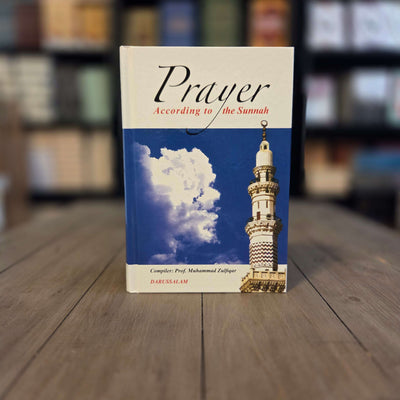 Prayer According To Quran and Sunnah By Prof. Muhammad ZulfiqarDarussalam Publishers$29.00
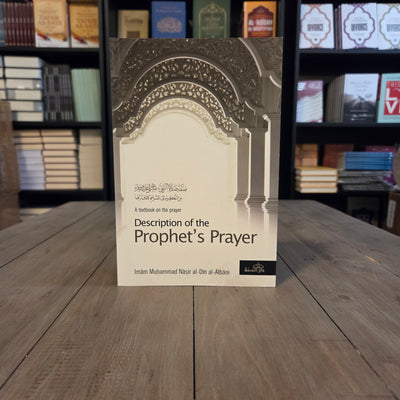 A Textbook on the Prayer Description of the Prophet's Prayer By Muhammad Nasir al-Din al-AlbaniDar as-Sunnah Publishers$17.00
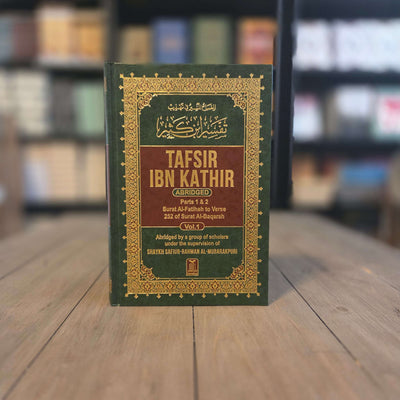 Tafsir Ibn Kathir Abridged 10 Volume SetDarussalam Publishers$267.00
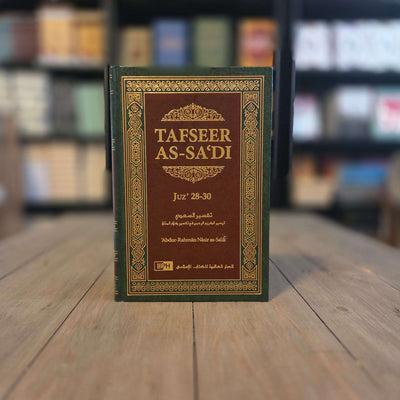 Tafseer As-Sa'di 10 Vol. By Abdul Rahman bin Nasir As-Sa'adiInternational Islamic Publishing House$278.00
Leave a comment
This site is protected by hCaptcha and the hCaptcha Privacy Policy and Terms of Service apply.