
How to Pray Witr: Step by Step from the Qur'an and Sunnah
Witr is the prayer that closes the night. The Prophet (peace and blessings be upon him) prayed it at home and on a journey, and he never abandoned it. Imam Ahmad said that whoever neglects Witr is a bad man whose testimony should not be accepted — an indication of how firmly established this prayer is in the Sunnah.
Yet many Muslims skip it, usually for one of two reasons: they are unsure how many rak'ahs it is, or they think they cannot pray it because they have not memorised the witr dua. Neither is a valid excuse, and this guide answers both from the evidence.
What Is the Witr Prayer?
Witr means odd-numbered. It is a voluntary night prayer of an odd number of rak'ahs, prayed after the Isha prayer, and it is the prayer with which a Muslim seals his night worship. The Prophet (peace and blessings be upon him) said: Make Witr the last of your prayer at night. (Sahih al-Bukhari 998)
The correct position is that Witr is a confirmed sunnah (sunnah mu'akkadah) — not an obligation like the five daily prayers, but a prayer the Muslim should guard and not leave. Missing it does not invalidate your fard prayers, but abandoning it habitually means turning away from something the Prophet (peace and blessings be upon him) held to for his entire life.
When Is the Time for the Witr Prayer?
The window for Witr opens after you have prayed Isha and closes at the break of dawn. Within that window, the end of the night is better — but praying early is better than not praying at all.
Jabir (may Allah be pleased with him) reported that the Prophet (peace and blessings be upon him) said: Whoever fears that he will not get up at the end of the night, let him pray Witr at the beginning of it; and whoever expects to rise at the end of the night, let him pray Witr at the end, for prayer at the end of the night is witnessed, and that is better. (Sahih Muslim 755)
The practical rule this gives you: if you are confident of waking for tahajjud, delay Witr and make it the seal of your night prayer. If you are not confident, pray it before you sleep. This is why Witr is one of the easiest sunnahs to keep — it can be prayed right after Isha, in a couple of minutes.
How Many Rak'ahs Is the Witr Prayer?
Witr may be one rak'ah, three, five, seven, nine, or eleven. The minimum is a single rak'ah, and a person who prays only that has performed the Sunnah. The Prophet (peace and blessings be upon him) said: The night prayer is two by two, and if one of you fears the approach of dawn, let him pray one rak'ah, which will make odd what he has already prayed. (Sahih al-Bukhari 990)
Three rak'ahs is the most common practice. Do not let uncertainty about the number stop you — any odd number within the range is established.
How to Pray Witr Step by Step
The Three-Rak'ah Witr, Prayed as Two Then One
This is the method reported from Ibn Umar (may Allah be pleased with him) and the most straightforward for anyone learning:
- Make sure you have valid wudu. If you are unsure of any step, review how to make wudu step by step first.
- Make the intention in your heart to pray Witr. Nothing is said aloud.
- Pray two rak'ahs exactly as you pray any two-rak'ah prayer, and end them with the tasleem.
- Stand again and pray a single rak'ah on its own, with its own tashahhud and tasleem.
The Three-Rak'ah Witr, Prayed Continuously
The three rak'ahs may also be prayed together without sitting for tashahhud after the second, sitting only at the end of the third and giving one tasleem. Both methods are established in the Sunnah. What should be avoided is praying it in a way that resembles the Maghrib prayer — that is, with a tashahhud after the second rak'ah followed by a third — because the Prophet (peace and blessings be upon him) forbade making Witr resemble Maghrib.
What to Recite in the Witr Prayer
After al-Fatihah, the Prophet (peace and blessings be upon him) would recite in his three-rak'ah Witr:
- First rak'ah: Surah al-A'la (Sabbih isma Rabbik al-A'la)
- Second rak'ah: Surah al-Kafirun (Qul ya ayyuhal-kafirun)
- Third rak'ah: Surah al-Ikhlas (Qul huwa Allahu ahad)
(Sunan an-Nasa'i 1699) These are short surahs that most Muslims already know, which makes Witr accessible even to someone who has recently begun to learn.
The Witr Dua — Du'a al-Qunut and What to Say
First, the point that keeps people away from this prayer needlessly: the witr dua is not a condition for Witr to be valid. If you do not know it, pray Witr anyway. Learn it afterwards.
Al-Hasan ibn Ali (may Allah be pleased with him) said that the Messenger of Allah (peace and blessings be upon him) taught him words to say in the qunut of Witr:
Allahumma-hdini feeman hadayt, wa 'aafini feeman 'aafayt, wa tawallani feeman tawallayt, wa baarik li feema a'tayt, wa qini sharra ma qadayt, fa innaka taqdi wa la yuqda 'alayk, wa innahu la yadhillu man waalayt, tabaarakta Rabbana wa ta'aalayt.
O Allah, guide me among those You have guided, grant me wellbeing among those You have granted wellbeing, take me into Your care among those You have taken into Your care, bless me in what You have given, and protect me from the evil of what You have decreed. For You decree and none decrees against You, and none is humiliated whom You have befriended. Blessed are You, our Lord, and Exalted.
(Jami' at-Tirmidhi 464, graded authentic) The witr dua is said in the final rak'ah, and it is prescribed after the bowing according to the more correct of the two positions, with the hands raised.
What to Say After Finishing Witr
When the Prophet (peace and blessings be upon him) finished his Witr, he would say Subhanal-Malikil-Quddus (Glory be to the Sovereign, the Most Holy) three times, elongating the words the third time. (Sunan an-Nasa'i 1699)
Where to Learn the Prayer Properly
The evidences above are the essentials, but a proper reference will settle the questions this guide cannot cover — the rulings on travel, on praying Witr while seated, on making it up, and on the rest of the voluntary prayers.
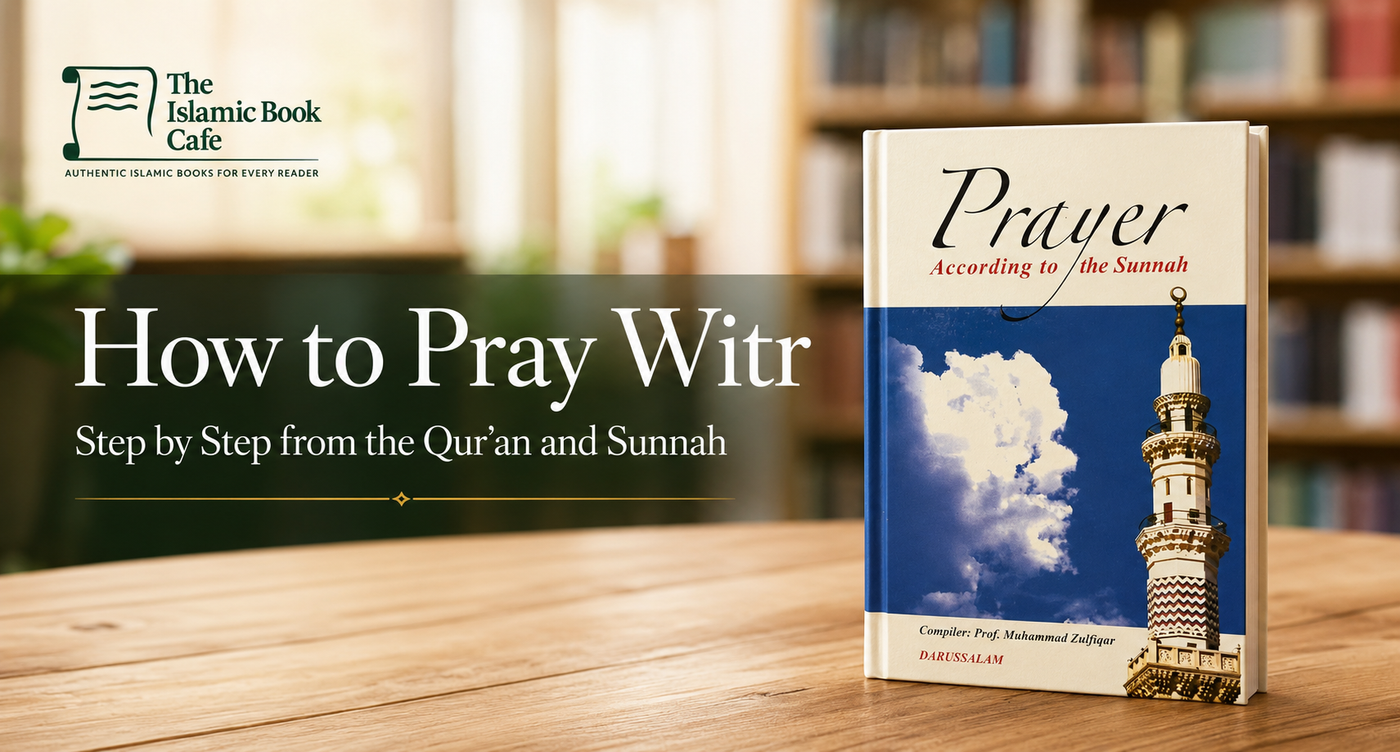
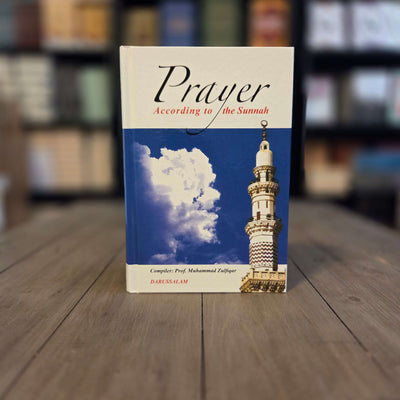
Prayer According to the Qur'an and Sunnah by Prof. Muhammad Zulfiqar is a single-volume reference covering salah from purification through to the voluntary prayers, with a dedicated treatment of qiyam al-layl and Witr, each ruling given with its evidence. It is the book to reach for when a question about the prayer comes up in the household.
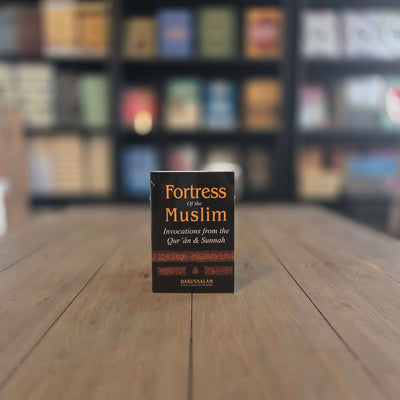
For the wording of the dua itself — the qunut, the adhkar of the night, and what to say before sleeping — Fortress of the Muslim gives each supplication in Arabic with transliteration and English meaning. It is pocket-sized and inexpensive enough to keep one by the prayer mat and one in the car.
Continue Reading
Witr is one part of a larger picture. For the conditions and pillars of the prayer as a whole, see Salah: the second pillar of Islam. To pray with presence rather than habit, see developing khushu in the prayer. And for another prayer from the Sunnah that many Muslims never learn, see how to pray istikhara step by step.
Browse the full salah collection for more references on the prayer.
Leave a comment
This site is protected by hCaptcha and the hCaptcha Privacy Policy and Terms of Service apply.