
How to Pray Salah Step by Step: A Complete Guide for Beginners
Learning to pray is the first thing a new Muslim needs, and the thing many lifelong Muslims most want to check. This guide walks through the salah — the Islamic prayer, also called salat or namaz — from the opening takbeer to the final tasleem, exactly as the Prophet (peace and blessings be upon him) prayed it.
He said plainly how it is to be learned:
Pray as you have seen me praying.
(Sahih al-Bukhari 631)
Everything below is the description of his prayer from the authentic Sunnah. For the conditions that make the prayer valid, its pillars, and its place in Islam, see the full reference: Salah: The Second Pillar of Islam.
Before You Begin
Three things must be in place before you stand to pray:
- Purity. You must have valid wudu — see how to make wudu step by step. Your body, clothing, and place of prayer must also be free of filth.
- Covering the awrah. A man covers from navel to knee at minimum; a woman covers her whole body except the face and hands.
- Facing the qiblah, the direction of the Ka'bah in Makkah, and praying within the prayer's prescribed time.
The intention is made in the heart. It is not spoken aloud — the Prophet (peace and blessings be upon him) never uttered his intention for the prayer, and doing so is an addition with no basis in the Sunnah.
How Many Rak'ahs Is Each Prayer?
A rak'ah is one full cycle of the prayer — standing, bowing, and two prostrations. The five obligatory prayers differ in how many rak'ahs they contain:
- Fajr — 2 rak'ahs
- Dhuhr — 4 rak'ahs
- Asr — 4 rak'ahs
- Maghrib — 3 rak'ahs
- Isha — 4 rak'ahs
The steps below describe a single rak'ah and how to close the prayer. Repeat the cycle for the number of rak'ahs the prayer requires.
How to Pray Salah, Step by Step
Step 1 — Standing in Salah (Qiyam)

Stand facing the Qiblah with feet approximately shoulder-width apart. The gaze should be directed toward the place of prostration.
Step 2 — Takbeerat al-Ihram, The Opening of the Prayer

Raise both hands to the level of the shoulders or earlobes, palms facing forward, and say: "Allahu Akbar" (Allah is the Greatest). This is the opening of the prayer. The world is left behind. You are now in a state of prayer.
Step 3 — The Standing Position (Qiyam with Hands Folded)

Place the right hand over the left hand or wrist upon the chest. Begin with the opening supplication (du'a al-istiftah). One narrated by Abu Hurayrah (may Allah be pleased with him):
"Subhanakallahumma wa bihamdika wa tabarakasmuka wa ta'ala jadduka wa la ilaha ghairuk."
Then recite: "A'udhu billahi min ash-shaytan ir-rajeem", then "Bismillah ir-Rahman ir-Raheem", then Surah al-Fatihah — reciting it is a pillar of every rak'ah. The Prophet (peace and blessings be upon him) said:
"There is no prayer for the one who does not recite the Opening of the Book."
(Sahih al-Bukhari 756 and Sahih Muslim 394)
After al-Fatihah, say Ameen aloud (in congregation) or quietly (in private) — a small word carrying great reward, which we cover in detail in What Does Amin (Ameen) Mean in Islam? Then recite whatever is easy from the Qur'an.
Step 4 — Ruku' (Bowing) in Prayer

Say "Allahu Akbar" and bow, placing the palms on the knees with fingers spread, back flat and parallel to the ground, head in line with the back. Abu Humayd as-Sa'idi (may Allah be pleased with him), describing the Prophet's prayer, said:
"On bowing, he placed his hands on both knees and bent his back straight."
(Sahih al-Bukhari 828)
Say in ruku': "Subhana Rabbiy al-'Adheem" — at minimum three times. (Glory be to my Lord, the Most Great)
Step 5 — Rising from Ruku'

Rise saying: "Sami'Allahu liman hamidah" (Allah hears whoever praises Him). Once fully upright, say: "Rabbana wa lakal hamd" (Our Lord, to You belongs all praise). Stand still (tuma'ninah) before going to sujud.
Step 6 — Sujud, Prostration on Seven Body Parts

Say "Allahu Akbar" and go to the ground on seven body parts: the forehead and nose, both hands, both knees, and the tips of both feet. The Prophet (peace and blessings be upon him) said:
"I have been commanded to prostrate on seven bones: the forehead — and he pointed to his nose — the two hands, the two knees, and the extremities of the two feet."
(Sahih al-Bukhari 812 and Sahih Muslim 490)
In sujud, say: "Subhana Rabbiy al-A'la" — at minimum three times. (Glory be to my Lord, the Most High)
Sujud is the position of greatest nearness to Allah. The Prophet (peace and blessings be upon him) said:
"The nearest a servant comes to his Lord is when he is prostrating himself, so make supplication (in this state)."
(Sahih Muslim 482)
For a reflection on what is truly happening in the prostration, see our excerpt Servitude in al-Sujud.
Step 7 — Sitting Between the Two Prostrations
Rise saying "Allahu Akbar" and sit upright in iftirash — left foot under you, right foot upright. Say: "Rabbighfir li, Rabbighfir li" (My Lord forgive me, My Lord forgive me).
Step 8 — The Second Prostration
Repeat the sujud exactly as the first. This completes one rak'ah.
If the prayer has more rak'ahs remaining, stand saying "Allahu Akbar" and begin the next rak'ah from Step 3 — al-Fatihah, then bowing, then the two prostrations. In the third and fourth rak'ahs, only al-Fatihah is recited; no additional surah is added.
Step 9 — The Tashahhud, Sitting and Testimony of Faith

After the second rak'ah (or the final rak'ah), sit for the Tashahhud. Sit in iftirash for the first tashahhud. For the final tashahhud, sit in tawarruk — the left foot comes out from under and the right remains upright, with weight on the left buttock.
Recite the Tashahhud:
"At-tahiyyatu lillahi was-salawatu wat-tayyibat. As-salamu 'alayka ayyuhan-nabiyyu wa rahmatullahi wa barakatuh. As-salamu 'alayna wa 'ala 'ibadillahis-salihin. Ash-hadu alla ilaha illallah, wa ash-hadu anna Muhammadan 'abduhu wa rasuluh."
In the final sitting, add Salah Ibrahimiyyah and the du'a before tasleem:
"Allahumma inni a'udhu bika min 'adhabi jahannam, wa min 'adhabil qabr, wa min fitnatil mahya wal mamat, wa min sharri fitnatil masih ad-dajjal." (Sahih Muslim 588)
Step 10 — The Tasleem, Concluding the Prayer


Turn to the right: "As-salamu 'alaykum wa rahmatullah". Then to the left: "As-salamu 'alaykum wa rahmatullah". The prayer is complete.
Do Not Rush — Stillness Is a Pillar
The single most common error in the prayer is speed. Settling in each position before moving to the next (tuma'ninah) is a pillar, and a prayer performed without it is invalid. The Prophet (peace and blessings be upon him) once told a man who prayed hastily to go back and pray again, three times over, then taught him:
"When you stand for prayer, say the Takbeer, then recite what is easy for you from the Quran. Then bow until you are at rest in bowing, then rise until you are standing upright. Then prostrate until you are at rest in prostration, then sit until you are at rest in sitting. And do that throughout your entire prayer."
(Sahih al-Bukhari 757)
The full list of pillars, the obligatory acts, and the rules of sujud as-sahw for when something is forgotten are set out in the salah reference guide.
Books to Learn the Prayer Properly
A Textbook on the Prayer: Description of the Prophet's Prayer — Shaykh Muhammad Nasir al-Din al-Albani
Al-Albani spent years gathering and authenticating the narrations that describe the prayer, setting out each position with its evidence and removing weak narrations that had crept into practice.
Prayer According to the Qur'an and Sunnah — Prof. Muhammad Zulfiqar
A single-volume reference covering salah from purification through to the voluntary prayers, each ruling given with its evidence.
Salah & Its Essential Conditions — Yahya Ondigo
A focused study of what makes prayer valid — well suited to a new Muslim, and to anyone wanting to audit their own prayer.
Fortress of the Muslim
The authentic du'a collection, including the adhkar said after the prayer.
Browse the full salah collection and fiqh collection.
Continue Reading
Once the obligatory prayers are established, the night prayer follows — see how to pray witr step by step. To pray with presence rather than habit, see developing khushu in the prayer. And if you are new to Islam, start with our guide to the 7 best Islamic books for new Muslims.
This post is based on the Qur'an, authentic Sunnah, and the explanations of the scholars of Ahlus-Sunnah. For detailed rulings, refer to the books listed above or consult a reliable scholar.
Baarakallahu feekum — The Islamic Book Cafe | Portland, Oregon.
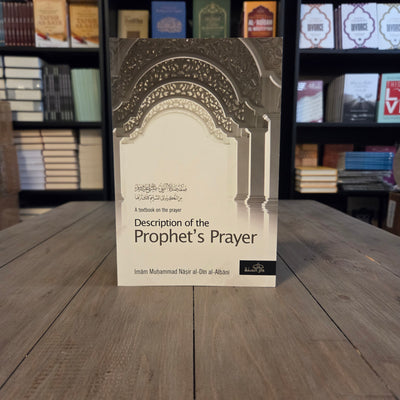 A Textbook on the Prayer Description of the Prophet's Prayer By Muhammad Nasir al-Din al-AlbaniDar as-Sunnah Publishers$17.00
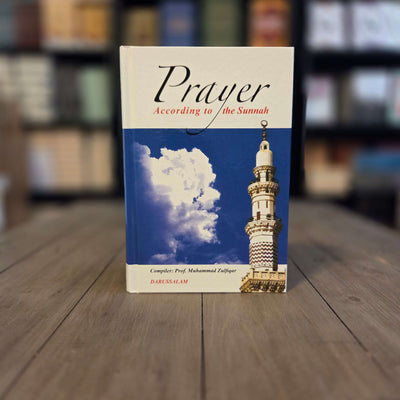 Prayer According To Quran and Sunnah By Prof. Muhammad ZulfiqarDarussalam Publishers$29.00
 Salah Prayer & Its essential Conditions By Yahya OndigoInternational Islamic Publishing House$20.00
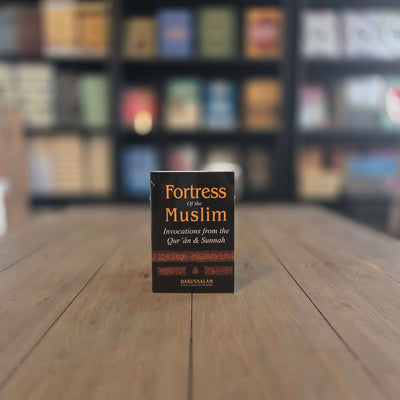 Fortress of The Muslim Invocations from the Quran and SunnahDarussalam Publishers$8.00
Leave a comment
This site is protected by hCaptcha and the hCaptcha Privacy Policy and Terms of Service apply.