
The Ruling on the One Who Leaves Off the Prayer: What the Companions Said
Jabir reported that he heard the Messenger of Allah (peace and blessings be upon him) say:
Verily between man and between polytheism and unbelief is the negligence of prayer.
— Sahih Muslim 82
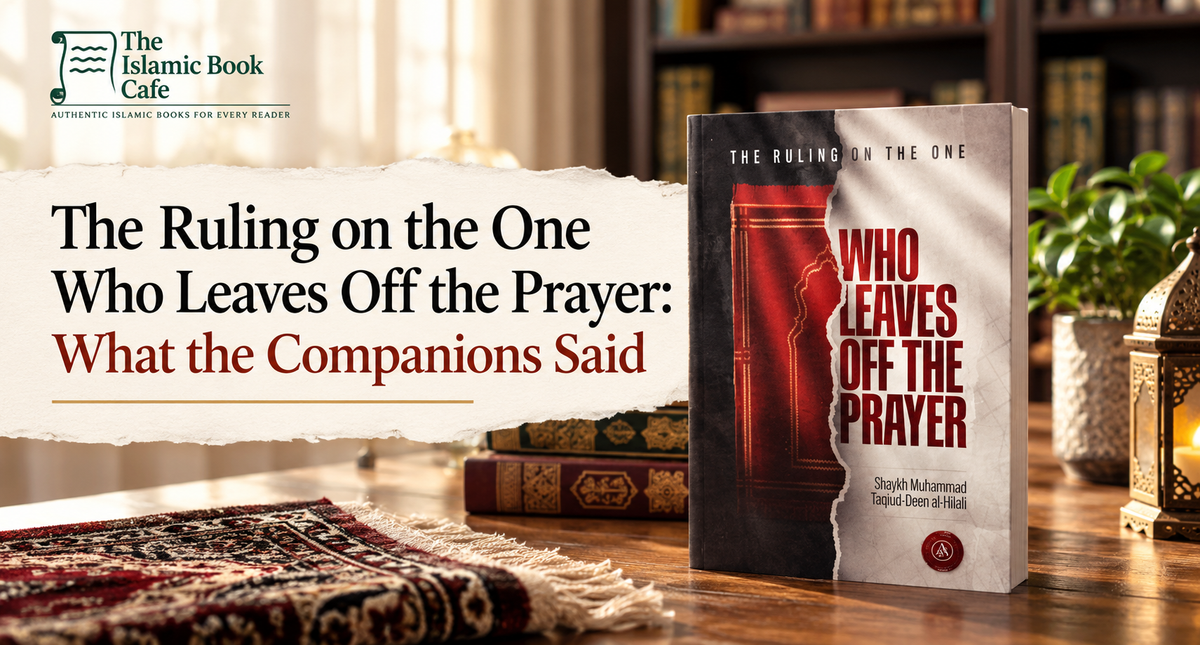
Few warnings in the Sunnah are as severe, and few questions have been discussed by the scholars as closely as the ruling on the one who abandons the prayer. Shaykh Muhammad Taqi al-Din al-Hilali gathers the evidence on that question in The Ruling on the One Who Leaves Off the Prayer. The following is an excerpt from pages 54 to 57, the section on what was reported from the Companions.
Concerning What Came on the Authority of the Companions
Ibn al-Qayyim said in: "the book of the prayer": "as for the consensus of the Companions, then Ibn Zanjoyah with his connected chain of narration on the authority of Ibn Abbas that he came to Umar ibn al-Khattab when he was stabbed in the Mosque and said: "I and a group of people with me carried him in the mosque until we entered him into his house, so he commanded Abdur-Rahman ibn Awf to pray with the people. When we entered Umar into his house, he lost consciousness while in the throes of death, and he remained unconscious until the dawn became bright. Then, he awoke and said: "Did the people pray?" so we replied: "Yes," so he said: "there is no Islam for the one who leaves off the prayer." And in another wording: "there is no share in Islam for the one who has left the prayer." Then he called for water, performed ablution, and prayed." He then mentioned the rest of the story and said: "this was in the presence of the Companions., and they did not criticize him (i.e. for that statement)." And the likes of that has preceded on the authority of Muadh ibn Jabal, Abdur-Rahman ibn Awf, and Abu Hurayrah, and it is not known from (any) companion that they differed (in it).
The Hafidh Abdul Haqq al-Ishbeeli (may Allah have mercy on him) said in his book about the prayer: "a number of the Companions (may Allah be pleased with them) and those after them were of the opinion of the disbelief of the one who leaves off the prayer intentionally, by leaving it off until it's time goes out; from them are Umar ibn al-Khattab, Mu'adh ibn Jabal, Abdullah ibn Masoud, Ibn Abbas, Jaabir, and Abu ad Dardaa. It was likewise reported from Ali ibn Abi Taalib - may Allah ennoble his face. They (those who are of this opinion) are from the Companions, and from other than them (such as) Ahmad ibn Hanbal, Ishaaq ibn Rahoyah, Abdullah Ibnul Mubaarak, Ibrahim an-Nakha'ee, al-Hakam ibn Uyaynah, Ayyub as-Sakhtiyani, Abu Dawud at-Tayalisi, Abu Bakr ibn Abi Shaybah, and Abu Khaythamah Zuhayr ibn Harb.
On the phrase used for Ali here, the translator adds a footnote from Shaykh Muqbil al-Wadi'i (may Allah have mercy on him):
Shaykh Muqbil al-Wadi'ee (may Allah have mercy on him) was asked: "is it from the sunnah that we say (when mentioning) Ali: "may Allah ennoble his face"? So he answered: "it has not been established that we are to single out Ali with "may Allah ennoble his face", or "peace be upon him", but this doesn't reach the level of innovation. As for "peace be upon him", then it has been found in al-Bukhari and in the Musnad of Imam Ahmed, and it is best that we treat Ali (may Allah be pleased with him) like his brothers from the Companions and say: Ali (may Allah be pleased with him).
— Translator's note, citing Tuhfatul Mujeeb, page 29
The Prayer Is the Key to the Servant's Record
Then, Ibn al-Qayyim mentioned lengthy speech concerning the sins which do not exit a person from the religion even if they were called disbelief, corruption, or hypocrisy, and came to the following solution as it came on page 523 from the Najdi Compilation of Hadith that which says: "and the evidence that we mentioned and other than it indicates that nothing from a servants actions are accepted from him except by him performing the prayer, as it is the key to his record, and the capital of his profit, and it is impossible for profit to remain without capital. So, when he loses it, he loses all of his actions, even if he outwardly performs them. And he (peace and blessings be upon him) indicated this in his statement: "so if he wastes it then he is more wasteful of other than it,"[1] and in his statement: "the first thing that is looked at from his actions is the prayer, so if it is accept from him, the rest of his actions will be looked into, and if it wasn't accepted, nothing from his actions after it will be looked into."
— The translator notes that the likes of it was reported by Abu Dawud 864, at-Tirmidhi 413, an-Nasa'i 467, Ibn Majah 1425, and others on the authority of Abu Hurayrah, and that Shaykh al-Albani declared it authentic in as-Silsilah as-Sahihah 1358.
[1] This wording is recorded as the words of Umar ibn al-Khattab (may Allah be pleased with him) in a letter he wrote to his governors: "The most important of your affairs in my view is the prayer. Whoever protects it and observes it carefully is protecting his deen, while whoever is negligent about it will be even more negligent about other things." (Muwatta Malik, Book 1, Hadith 6; also recorded by Abd ar-Razzaq, 2038, and al-Bayhaqi. Shaykh al-Albani graded its chain munqati' in Hidayat ar-Ruwat.)
And from that which is strange is that doubt occurs concerning the disbelief of the one who insists upon leaving it off, and is called to perform it before the people, while he sees the gleaming of the sword at his head, and he is bound to be killed and his eyes are covered. It is said to him "either you will pray or we will kill you", so he says: "kill me, I will never pray!" the one who doesn't declare the one who leaves off the prayer to be a disbeliever says that this (aforementioned) person is a believing Muslim, and is to be washed, prayed over, and buried in the graveyards of the Muslims. Some of them say: "He is a believer with complete faith, his faith is like the faith of Jibril and Mika'eel!" so this person is not shy from his statement of denial of declaring the disbelief of the one who the Book, the Sunnah, and the consensus of the Companions bore witness to his disbelief. And Allah is the one who grants success.
A Note on the Claimed Consensus
The book does not leave the matter there. On page 55, the translator records that Shaykh Rabee al-Madkhali held that "the consensus being actualized in this matter is debatable," and quotes him:
I went over the books of consensus: "Maratib al-Ijmaa" by ibn Hazm", "the Criticism of Maratib al-Ijmaa" by Shaykh al-Islaam ibn Taymiyyah, "al-Iqnaa' fee masa'il al-Ijmaa'" by Abul Hasan Ibn al-Qattan searching for this claimed consensus, and I didn't find it nor a sign of it; so why did these Imams not mention this consensus if his claim was correct? Rather, I didn't find except that which refutes it, and it is the statement of the Imam Abu Bakr Muhammad ibn Ibrahim ibn al-Mundhir who died year 318 in his book "al-Ijmaa": "Abu Bakr said: "I did not find consensus concerning them (page 158 – the chapter of the male and female magician – the chapter of the one who leaves off the prayer).
— Translator's note, page 55
So the reader comes away with both: the statements reported from Umar, Mu'adh, Ibn Mas'ud and others among the Companions on the gravity of leaving the prayer, and the scholarly discussion over whether those statements amount to a consensus on the one who leaves it out of laziness. What no one in the discussion disputes is the danger. The prayer is the first deed looked at, and the one who neglects it has placed himself in the gravest position a Muslim can be in.
Guarding the Prayer
The prayer this book warns against abandoning is set out in full in our complete reference, Salah: The Second Pillar of Islam. For the warning against delaying it past its time, read Praying On Time and the Warning of Ghayy in Surah Maryam, and for learning the prayer as the Prophet (peace and blessings be upon him) prayed it, see al-Albani's Description of the Prophet's Prayer.
About the Book
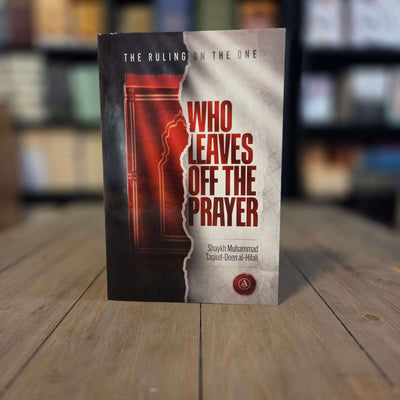
The Ruling on the One Who Leaves Off the Prayer by Shaykh Muhammad Taqi al-Din al-Hilali, published by Authentic Statements Publications, gathers the evidence from the Qur'an, the Sunnah and the statements of the Companions on the one who abandons the prayer, together with the positions of the scholars. Shaykh al-Hilali taught in the Prophet's Mosque and at the Islamic University of Madinah, and is known to English readers as co-translator of The Noble Qur'an.
Browse the full salah collection.
Baarakallahu feekum — The Islamic Book Cafe | Portland, Oregon.
Leave a comment
This site is protected by hCaptcha and the hCaptcha Privacy Policy and Terms of Service apply.