
Speaking About Allah Without Knowledge | A Book Excerpt from The Remedy for Those Victimized by Sins
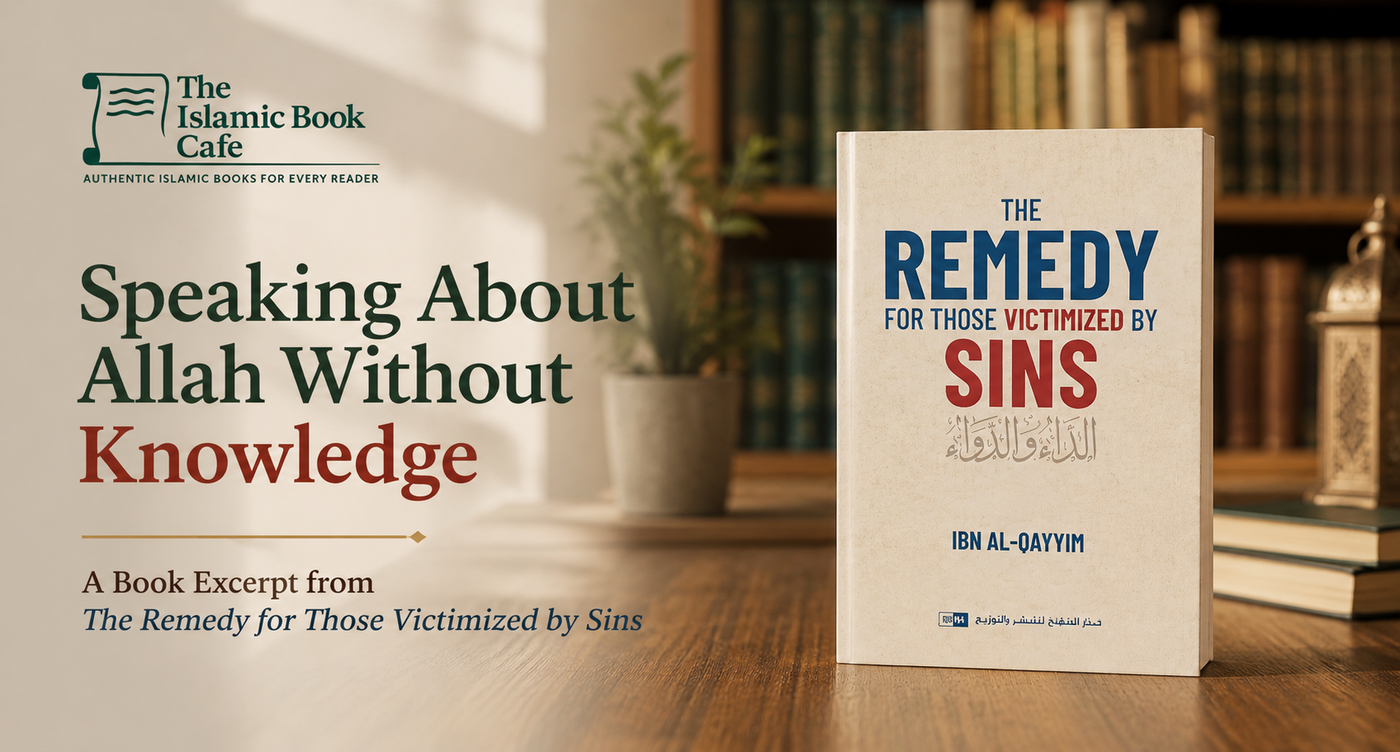
Near the close of ad-Da' wa ad-Dawa', translated by the International Islamic Publishing House as The Remedy for Those Victimized by Sins, Ibn al-Qayyim al-Jawziyyah turns from the sins of the limbs to a sickness that runs deeper than any of them. The passages below are quoted from that chapter, pages 288-290 of this edition, in the translator's own wording.
Describe Allah Only as He and His Messenger Described Him
Ibn al-Qayyim opens the chapter with the rule that governs the whole subject:
Speaking about Allah's names, attributes, and actions without knowledge is harmful. He should only be described as He or His Messenger (peace and blessings be upon him) have described Him.
To speak beyond that, he explains, contradicts the wisdom of the One who owns the creation and issues the commands, and amounts to an accusation against His Lordship. For the foundation of this subject, see our cornerstone article Who is Allah?
The Mu'attil and the Polytheist: Which Crime Is Greater?
What follows is the statement that stops most readers on the page:
If this (sin) occurs despite having knowledge, it is stubbornness that is uglier than polytheism. It is a greater crime in Allah's sight. The polytheist who affirms the Lord's qualities is better than the mu'attil who knowingly denies His perfect qualities.
The King Who Is Denied and the King Who Is Given Partners
He then weighs the two cases with an illustration anyone can follow. Suppose people acknowledge a king's dominion and the qualities that earned it, yet associate others with him in some matters to draw nearer to him. Such people, he says, are nominally better than those who deny the dominion and the qualities altogether. And this is not a conclusion reached by argument alone:
This matter is established in everyone's mind and fitrah. How can one compare (the gravity of) completely denying the qualities of perfection with adopting an intermediary between the worshipper and the worshipped?
He closes the comparison with a single line: The disease of denial is fatal and without any cure.
Fir'awn, the Champion of Denial
The example Ibn al-Qayyim reaches for is Fir'awn, who denied what Musa (peace be upon him) told him about his Lord being above the heavens, and ordered his minister:
...O Haman, build me a tower, so that I may attain the means of access — access to the heavens, and have a look at the God of Moosa, for verily I think he is a liar... (Surah Ghafir 40:36-37)
He notes that Abul-Hasan al-Ash'ari used this same verse as a proof against the deniers of the attributes in his book al-Ibanah. Fir'awn understood exactly what Musa had claimed. His mockery is itself a witness to the meaning he was rejecting.
Why Iblees Loves Innovation More Than He Loves Sin
Ibn al-Qayyim then joins the two diseases together:
Polytheism and speaking about Allah without knowledge are inseparable from one another. They happen due to innovative beliefs, ignorance of Allah's attributes, and denial of what He and His Messenger (peace and blessings be upon him) have informed us about Him.
All of it, he writes, rests on ignorance and stubbornness, and this has made them the greatest of major sins even where they fall short of disbelief. He then reports that some of the Salaf held innovation to be more beloved to Iblees than sin, because people repent from sin but not from innovation, and cites the boast of Iblees recorded in Musnad Ibn al-Ja'd (no. 1885):
I destroyed Adam's descendants using sins, and they destroyed me by seeking forgiveness and [saying]: La ilaha illa Allah. When I saw that, I inspired them with deviant desires. They sin and do not repent because they assume they are doing good deeds.
Sinners Harm Themselves; Innovators Harm Everyone
The chapter ends with a comparison worth memorising:
Sinners only harm themselves, but innovators harm everyone. The tribulation of the innovators is grounded in their religion, but the tribulation of the sinners is grounded in their desires. Innovators sit for the people on the straight path of Allah, making them stray from it, but sinners are not like that.
And the closing line of the section:
Innovators hinder people on the road to the hereafter, while sinners travel slowly because of their sins.
This is the seriousness with which The Remedy for Those Victimized by Sins treats the heart: a book that begins with a man's private struggle against a sin he cannot leave, and ends by showing him that what he believes about his Lord is the ground everything else stands on. We also carry the Hikmah Publications translation of the same work as The Disease and the Cure, and wrote about it at length in The Disease and the Cure: A Prescription for the Ailing Heart.
For a companion excerpt from the same imam on what happens to worship when tawhid leaves the heart, read When the Heart Dries Up, or browse our guide to the best books on purifying the soul (tazkiyah).
Baarakallahu feekum — The Islamic Book Cafe | Portland, Oregon.
 The Remedy For Those Victimized By Sins By Ibn Al-QayyimInternational Islamic Publishing House$26.00
 The Disease and The Cure By Imam Ibn Al-QayyimHikmah Publications$53.00
Leave a comment
This site is protected by hCaptcha and the hCaptcha Privacy Policy and Terms of Service apply.