
Who Is Allah? The One True God in Islam
Allah is the one true God, the Creator and Sustainer of all that exists, the only One who deserves to be worshipped. The word Allah is simply the Arabic word for God: the same God that Adam, Nuh, Ibrahim, Musa, and Isa (peace be upon them all) called their people to worship. Arabic-speaking Jews and Christians use the very same word for God in their scriptures and prayers. So when a Muslim says "Allah," he is not naming a different or foreign deity. He is naming the one God who created the heavens and the earth.
To answer the question "Who is Allah?" fully, we turn to the two sources a Muslim relies on above all else: the Qur'an, the literal speech of Allah, and the authentic Sunnah of His final Messenger, Muhammad, peace and blessings be upon him. What follows is Allah described as He has described Himself.
The Meaning of the Name Allah
The name Allah is unique. Unlike the word "god," it has no plural and no gender: you cannot make it "gods" or "goddess." It refers to a single, absolute Being with no equal, no rival, and no partner. This is why the Qur'an's most concentrated answer to "Who is Allah?" is a short chapter that Muslims recite every day, Surah al-Ikhlas:
Say, "He is Allah, [who is] One, Allah, the Eternal Refuge. He neither begets nor is born, Nor is there to Him any equivalent."
— Surah al-Ikhlas 112:1-4, Saheeh International
In four short verses, Allah tells us who He is: One, not one of many, and not composed of parts; the Eternal Refuge whom all creation depends upon while He depends on nothing; without father or offspring; and without anything in creation resembling Him.
How the Salaf Explained "the Eternal Refuge" (As-Samad)
The second verse names Allah as-Samad, rendered here as "the Eternal Refuge." It is one of the most comprehensive words in the Qur'an, and the earliest Muslims explained it with remarkable depth. The Companion Ibn 'Abbas (may Allah be pleased with him), as recorded in the tafsir of Ibn Kathir at Surah al-Ikhlas, said that as-Samad means:
the One Whom all of the creation depends upon for their needs and their requests.
In another statement from Ibn 'Abbas, as-Samad is the Master who is perfect in His sovereignty, perfect in His nobility, in His forbearance, in His knowledge, and in His wisdom, perfect in every aspect of majesty and authority. The picture the Companions drew is this: everything in existence turns to Allah in its need, while He turns to no one. He alone is complete in Himself, and all things depend on Him.
Why the Companions Loved Surah al-Ikhlas
This chapter was not merely memorized by the first Muslims. It was loved, precisely because of what it reveals about Allah. Among the authentic reports about them is this:
The Prophet, peace and blessings be upon him, sent (an army unit) under the command of a man who used to lead his companions in the prayers and would finish his recitation with (the Sura 112): "Say: He is Allah, the One." When they returned (from the battle), they mentioned that to the Prophet. He said (to them), "Ask him why he does so." They asked him and he said, "I do so because it mentions the qualities of the Beneficent and I love to recite it (in my prayer)." The Prophet said (to them), "Tell him that Allah loves him."
— Sahih al-Bukhari 7375
A man's love for a chapter that simply describes his Lord became the very reason Allah declared His love for him. In another authentic narration, the Prophet, peace and blessings be upon him, taught that this same short chapter "is equal to one-third of the Qur'an" (Sahih al-Bukhari 5013), because knowing who Allah is stands among the three great themes of the entire revelation.
Is Allah the Same as the God of the Bible?
This is one of the most common questions asked about Islam, and the answer has two parts. Muslims believe that Allah is the same one God who created Adam and sent every prophet, including Ibrahim (Abraham), Musa (Moses), and Isa (Jesus), peace be upon them. In that sense, Islam does not introduce a new or different God; it calls people back to the one God of all the prophets.
Where Islam differs is in how that one God is described. Every prophet, from the first to the last, taught pure monotheism: that God is One, without partner, without a son, and without any created thing sharing in His divinity. Islam affirms this without compromise, which is why the Qur'an states plainly that Allah "neither begets nor is born." The Islamic understanding of God therefore rejects the ideas that God became a man, fathered a son, or exists as a trinity, not to offend anyone, but because, in the Islamic view, these beliefs departed from the undivided monotheism the prophets originally brought. Allah is One, and He alone is worshipped. The specific question of Jesus is taken up in The Status of Jesus (Isa) in Islam.
There is even a closeness in the name itself that surprises many people. Allah is closely related to the Hebrew Eloah and the Aramaic Alaha, both meaning God, and Aramaic was the everyday language of Isa (Jesus), peace be upon him. To this day, Arabic-speaking Christians open their Bibles with the name Allah. The name is not a rival to the God of the earlier prophets; it is simply His name in the language of the Qur'an.
The Most Merciful: How Allah Introduces Himself
If you opened the Qur'an and read it from the beginning, the first thing you would learn about Allah is His mercy. Nearly every one of its 114 chapters opens with the same line:
In the name of Allah, the Entirely Merciful, the Especially Merciful.
— Surah al-Fatihah 1:1, Saheeh International
Two of Allah's names stand together there: ar-Rahman and ar-Rahim, both drawn from mercy, one a mercy that embraces the whole of creation, the other His special mercy for those who believe. Before Allah tells us that He is mighty or that He judges, He tells us, over and over, that He is merciful. And in an authentic sacred narration, the Messenger of Allah, peace and blessings be upon him, said:
When Allah decreed the Creation He pledged Himself by writing in His book which is laid down with Him: My mercy prevails over my wrath.
— Sahih al-Bukhari 3194; also Sahih Muslim 2751
Allah is perfectly just, and He does hold people to account, but His mercy is greater than His anger, and it reaches all things. For someone meeting Allah for the first time, this is the open door: He is not a distant or hostile power, but a Lord who describes Himself, before anything else, as full of mercy.
The Greatest Verse About Allah: Ayat al-Kursi
When the Prophet, peace and blessings be upon him, was asked which verse of the Qur'an is the greatest, he affirmed that it is a single verse known as Ayat al-Kursi, the Verse of the Throne (Sahih Muslim 810). In it, Allah describes Himself:
Allah - there is no deity except Him, the Ever-Living, the Sustainer of [all] existence. Neither drowsiness overtakes Him nor sleep. To Him belongs whatever is in the heavens and whatever is on the earth. Who is it that can intercede with Him except by His permission? He knows what is [presently] before them and what will be after them, and they encompass not a thing of His knowledge except for what He wills. His Kursi extends over the heavens and the earth, and their preservation tires Him not. And He is the Most High, the Most Great.
— Surah al-Baqarah 2:255, Saheeh International
In a few lines, Allah tells us that He alone is God; that He is the Ever-Living who never dies and the Sustainer upon whom all things depend; that He is never touched by tiredness or sleep; that everything in the heavens and the earth belongs to Him; that His knowledge has no limit; and that His majesty extends beyond all creation, never wearying Him. Ahlus-Sunnah wal-Jama'ah affirm what this verse says of Allah, His Kursi and His being high above His creation, exactly as He affirmed it for Himself, without asking "how." This is the God that Islam invites you to know.
Tawhid: The Oneness of Allah
The heart of knowing Allah is tawhid, affirming His absolute oneness. The scholars of Islam explain that tawhid has three connected aspects.
Tawhid ar-Rububiyyah: Oneness of Lordship
Allah alone is the Creator, Owner, and Controller of everything. He gives life and death, provides sustenance, and governs the universe with no helper. Even those who worshipped idols often admitted that it was Allah who created them, but acknowledging Him as Creator is not, by itself, enough.
Tawhid al-Uluhiyyah: Oneness of Worship
Because Allah alone is the Creator, He alone deserves worship: prayer, supplication, hope, fear, sacrifice, and reliance. Directing any act of worship to other than Allah is shirk, associating partners with Him, which is the gravest of all sins. Worshipping Allah alone is the very purpose for which humanity was created.
Tawhid al-Asma wa's-Sifat: Oneness of Names and Attributes
Allah is described by the beautiful names and lofty attributes that He affirmed for Himself in the Qur'an and that His Messenger affirmed for Him. Ahlus-Sunnah wal-Jama'ah affirm these as they came, without distorting their meanings, without denying them, without asking "how," and without likening Allah to His creation. The balancing principle is captured in a single verse:
There is nothing like unto Him, and He is the Hearing, the Seeing.
— Surah ash-Shura 42:11, Saheeh International
Allah truly hears and truly sees; these are real attributes. Yet His hearing and seeing are unlike any created hearing or seeing, because "there is nothing like unto Him."
The Names and Attributes of Allah
Allah has revealed His most beautiful names so that we may come to know Him and call upon Him by them:
And to Allah belong the best names, so invoke Him by them. And leave [the company of] those who practice deviation concerning His names. They will be recompensed for what they have been doing.
— Surah al-A'raf 7:180, Saheeh International
The Messenger of Allah, peace and blessings be upon him, said:
Allah has ninety-nine names, i.e. one-hundred minus one, and whoever knows them will go to Paradise.
— Sahih al-Bukhari 2736
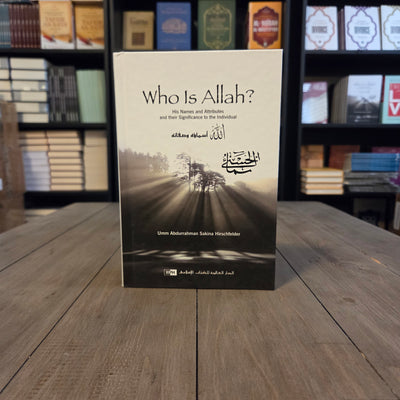
The imams who followed the way of the Salaf as-Salih explained that "knowing" these names means far more than memorizing the Arabic words: it means understanding what each name reveals about Allah, worshipping Him in light of it, and calling upon Him through it. Knowing that He is ar-Razzaq (the Provider) changes how you seek provision; knowing that He is al-Ghafur (the Most Forgiving) changes how you turn back to Him in repentance. This is why the study of Allah's names and attributes is among the most transforming knowledge a believer can pursue, a subject explored in depth in Who Is Allah? His Names and Attributes and Their Significance to the Individual by Umm Abdurrahman Sakina Hirschfelder, which works through more than a hundred of Allah's names and what each one means for daily life.
Why Knowing Allah Matters
Knowledge of Allah is the foundation on which everything else in a believer's life is built. When a person truly knows who Allah is (His mercy, His justice, His knowledge, His power) obedience stops feeling like a burden and becomes the natural response of a grateful heart. This is why the scholars taught that tawhid, not the fine details of law, must come first: without knowing Allah, worship becomes mechanical and rules feel heavy. This foundation is explored further in Kitab at-Tawheed: The Book of Monotheism.
If you are exploring Islam and want to read the words of Allah for yourself, you can request a free copy of the Qur'an and begin with Surah al-Ikhlas, the chapter that answers, in Allah's own words, the question "Who is Allah?"
Baarakallahu feekum — The Islamic Book Cafe | Portland, Oregon.
Leave a comment
This site is protected by hCaptcha and the hCaptcha Privacy Policy and Terms of Service apply.