
Is Music Haram in Islam? What the Evidence Actually Says
Few questions in Islam are asked more often, or answered more confusingly, than this one. Search for it and you will find confident claims in both directions, usually with no evidence attached, or with evidence quoted so selectively that the reader is left no better off than before. What follows is what the Qur'an and the authentic Sunnah actually say on the matter, upon the understanding of the Salaf as-Salih, including an honest treatment of the main objection raised against the central proof.
The Question Behind the Question: Instruments, Not Sound Itself
Before looking at evidence, the question needs to be stated precisely, because most of the confusion comes from imprecision. The discussion among the scholars is about al-ma'azif (musical instruments) and singing performed to them. It is not about the human voice as such. Nobody has ever argued that the recitation of the Qur'an, the adhan, a mother humming to her child, or the sound of wind and birdsong falls under a prohibition. When someone says "music is a natural part of being human," they are usually arguing against a claim no scholar made.
The Central Evidence: The Hadith of Abu Malik al-Ash'ari
The foundational text on this question is recorded by Imam al-Bukhari in his Sahih:
Narrated Abu 'Amir or Abu Malik Al-Ash'ari: that he heard the Prophet, peace and blessings be upon him, saying, "From among my followers there will be some people who will consider illegal sexual intercourse, the wearing of silk, the drinking of alcoholic drinks and the use of musical instruments, as lawful. And there will be some people who will stay near the side of a mountain and in the evening their shepherd will come to them with their sheep and ask them for something, but they will say to him, 'Return to us tomorrow.' Allah will destroy them during the night and will let the mountain fall on them, and He will transform the rest of them into monkeys and pigs and they will remain so till the Day of Resurrection."
— Sahih al-Bukhari 5590
Two features of this narration carry the weight of the ruling. The first is the company that musical instruments keep: they are listed alongside unlawful sexual intercourse, silk for men, and intoxicants, three things whose prohibition no one disputes. The second is the verb. The Prophet, peace and blessings be upon him, did not say these people would use musical instruments; he said they would consider them lawful. A thing can only be "made lawful" if it was unlawful to begin with. The prohibition is built into the grammar of the warning.
Answering the Objection: "Isn't the Chain of That Hadith Broken?"
This is the objection you will meet most often, and it deserves a straight answer rather than a dismissal.
The observation behind it is real. Imam al-Bukhari records this narration in what the hadith scholars call mu'allaq form: he writes "Hisham ibn Ammar said" rather than "it was narrated to us by Hisham ibn Ammar," which leaves an apparent gap at the top of the chain. Ibn Hazm built his position on exactly this point and concluded the report could not be used.
The hadith masters examined that objection closely and answered it on two grounds. First, al-Bukhari uses the definitive active form here, "he said" rather than "it is said," and it is established in the science of hadith, as Ibn as-Salah and Ibn Hajar both explain, that when al-Bukhari suspends a narration in this decisive wording he is affirming its authenticity, not casting doubt on it. Second, and more decisively, the same narration is transmitted with a fully connected chain outside the Sahih, through routes recorded by at-Tabarani, al-Bayhaqi, and Ibn Hibban. Ibn Hajar traced these chains in detail. Ibn al-Qayyim added a further point: al-Bukhari placed the narration in a chapter heading and argued from it, which is not what a compiler does with a report he considers unreliable. Imam al-Albani devoted an entire treatise to establishing its authenticity.
So the honest summary is not that no one ever raised a question about this hadith. Someone did. It is that the question was examined by the specialists in the field and answered, and the narration stands as authentic.
The Qur'an: The "Amusement of Speech" in Surah Luqman
Allah says:
And of the people is he who buys the amusement of speech to mislead [others] from the way of Allah without knowledge and who takes it [i.e., His way] in ridicule. Those will have a humiliating punishment.
— Surah Luqman 31:6, Saheeh International
The phrase rendered "amusement of speech" is lahw al-hadith, and the Companions were asked directly what it meant.
What Ibn Mas'ud and Ibn Abbas Said About This Verse
In the tafsir of Ibn Kathir, it is recorded that Ibn Mas'ud (may Allah be pleased with him) said of this verse: "This, by Allah, refers to singing." He was not offering a cautious guess; the transmission records him swearing by Allah and repeating it.
The same explanation is transmitted from Ibn 'Abbas (may Allah be pleased with him), the Companion whom the Prophet, peace and blessings be upon him, supplicated for to be given understanding of the Book. At-Tabari records in his tafsir of this verse that Ibn 'Abbas explained lahw al-hadith as singing, and the same is preserved through al-Hakim and al-Bayhaqi. The same explanation of the verse is further transmitted from Jabir ibn 'Abdullah among the Companions, and from Mujahid, 'Ikrimah, Sa'id ibn Jubayr, and al-Hasan al-Basri among the Tabi'un, al-Hasan stating that the verse was revealed concerning singing and musical instruments.
This matters because of who is speaking. These are not later scholars reasoning their way to a conclusion. They are the generation that received the Qur'an from the Messenger of Allah, peace and blessings be upon him, and knew the circumstances in which its verses came down. When a body of the Companions and their students independently explain a phrase the same way, that explanation is not one opinion among many.
The Broader Reading, Which Reaches the Same Place
In fairness, some of the mufassirun read lahw al-hadith more generally: as every kind of idle and falsifying speech that turns a person from the remembrance of Allah, including empty tales and fiction. As-Sa'di takes this broader path in his tafsir, and it is worth noticing that he explicitly counts the singing and instruments of Shaytan within it. So the general reading does not rescue music from the verse; it places music inside a wider category of the same thing. Both roads arrive together.
One clarification on method: these are explanations of the verse by Companions and by the mufassirun, attributed to them by name. They are tafsir, not hadith of the Prophet, peace and blessings be upon him, and should not be quoted as though they were.
What Is Excepted: The Duff on Days of Celebration
An honest presentation has to include what the Sunnah permits, not only what it forbids. Aisha (may Allah be pleased with her) narrated:
Abu Bakr came to my house while two small Ansari girls were singing beside me the stories of the Ansar concerning the Day of Buath. And they were not singers. Abu Bakr said protestingly, "Musical instruments of Satan in the house of Allah's Messenger!" It happened on the 'Id day and Allah's Messenger, peace and blessings be upon him, said, "O Abu Bakr! There is an 'Id for every nation and this is our 'Id."
— Sahih al-Bukhari 952
From this and its supporting narrations the scholars derive a genuine allowance: the duff (a simple hand-drum) for women at weddings and on the days of Eid, and unaccompanied singing within decent limits.
Notice, though, what this narration actually shows. Aisha is careful to add that the girls "were not singers": they were untrained children, not performers. It was the day of Eid, a specific occasion. And Abu Bakr's instinctive objection is itself revealing: his reaction assumes a known prohibition, and the Prophet's answer is a permission for that day, not a denial that any prohibition exists. An exception carved out for one instrument, for particular people, on particular days, is only necessary because there is a rule for it to be an exception to.
Why the Ruling Is Not Arbitrary
The verse in Surah Luqman attaches a purpose to the thing it condemns: it is bought "to mislead [others] from the way of Allah." That is the thread running through this subject. The objection is not to organised sound. It is to what a heart saturated in it becomes, and to what gets displaced. The scholars of the Salaf spoke of singing as something that grows in the heart the way water grows a crop, and what it grows there competes with the remembrance of Allah for the same ground.
What This Means Practically
Someone who has built years of habit around music will not undo it in an afternoon, and pretending otherwise helps nobody. But the first obligation is not to succeed immediately; it is to be honest about what the evidence says rather than searching for a scholar who will say what we want to hear. The Companions, when the verse prohibiting wine was revealed, poured it into the streets of Madinah, not because it was easy, but because the matter had been settled and their part was to submit.
That principle, that we return our disputes to the Book and the Sunnah rather than to preference, is the subject of our reflection on Obeying Allah and Obeying His Messenger. And the imams of the past understood that safety in a contested question lies with the people who kept to the narrations rather than to argument; that is the theme of our excerpt on the truth being with the people of hadith.
Where to Read the Evidence for Yourself
This article rests entirely on three sources, and each is on our shelves. The hadith of Abu Malik al-Ash'ari and the narration of Aisha on the day of Eid are both from the Sahih of al-Bukhari, which we carry as Summarized Sahih al-Bukhari ($46.00). The statements of Ibn Mas'ud and Ibn 'Abbas on Surah Luqman 31:6 are preserved in Tafsir Ibn Kathir ($267.00). And the broader reading of lahw al-hadith discussed above is from Tafseer As-Sa'di ($278.00).
Prices were current at the time of publication. The price shown on each product page is always the live one.
Baarakallahu feekum — The Islamic Book Cafe | Portland, Oregon.
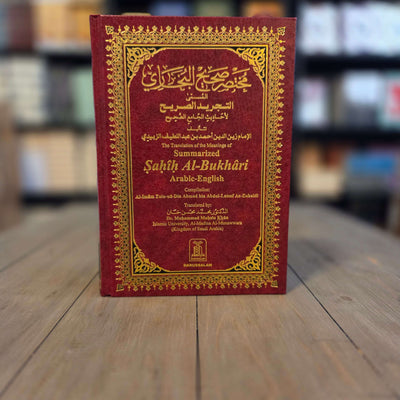 Summarized Sahih Al-Bukhari (Large)Darussalam Publishers$46.00
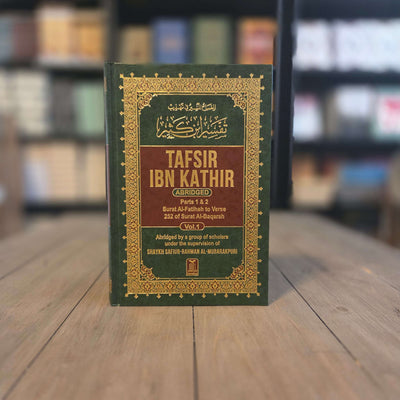 Tafsir Ibn Kathir Abridged 10 Volume SetDarussalam Publishers$267.00
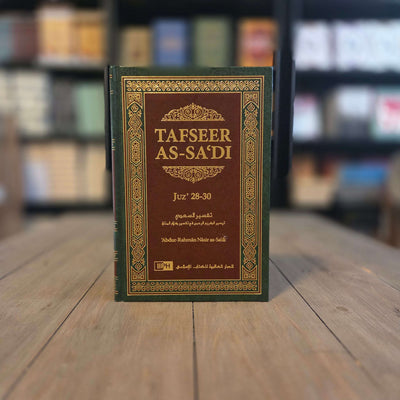 Tafseer As-Sa'di 10 Vol. By Abdul Rahman bin Nasir As-Sa'adiInternational Islamic Publishing House$278.00
Leave a comment
This site is protected by hCaptcha and the hCaptcha Privacy Policy and Terms of Service apply.