
The Four Imams of Sunni Islam: Their Lives, Teachings, and Legacy

The four imams (Imam Abu Hanifa, Imam Malik, Imam al-Shafi'i, and Imam Ahmad ibn Hanbal, may Allah have mercy on them all) were scholars of the early generations of Islam. Each of them devoted his life to understanding and teaching the religion from its two foundations: the Book of Allah and the authentic Sunnah of His Messenger, peace and blessings be upon him. The schools of Islamic jurisprudence (madhahib) that later carried their names were built by their students and by the generations who came after them.
It is important to understand these imams correctly. They were not founders of competing sects, and not one of them ever asked to be followed blindly. Every one of them taught that the final authority belongs to the Qur'an and the Sunnah, and every one of them instructed his students to abandon his opinion whenever it contradicted an authentic hadith. This article looks at their lives, their contributions, and, most importantly, their shared insistence on returning to the evidence.
Imam Abu Hanifa
Imam Abu Hanifa, whose name was al-Nu'man ibn Thabit (699–767 CE / 80–150 AH), was born in Kufa, Iraq, to a family of Persian origin. He lived in the earliest period of Islam and is reported to have seen the Companion Anas ibn Malik (may Allah be pleased with him), which would place him among the Tabi'in, the generation of the Successors who met the Companions. By trade he was a merchant who dealt in cloth, and he was widely praised for his scrupulousness (wara') in his earnings, giving generously to students of knowledge from his own wealth.
He studied for many years under Hammad ibn Abi Sulayman and became known for the precision of his legal reasoning. Because far fewer of the Prophet's narrations had reached Iraq than had reached Medina, and because the fabrication of hadith was widespread in Kufa in his day, he was cautious in accepting narrations and gave a large place to careful analogy (qiyas) in deriving rulings, always, as he insisted, in the service of the texts rather than above them. He was also known for long night prayer and much recitation of the Qur'an. When the authorities pressed him to accept the post of judge, he refused, unwilling to place himself in the service of rulers in a way he could not answer for before Allah; reports state that he was imprisoned for that refusal and died in confinement. His fiqh was later gathered and systematized by his students, among them Abu Yusuf and Muhammad al-Shaybani, and came to be studied across Iraq, the lands of the Turks, and Central Asia.
Imam Malik
Imam Malik ibn Anas (711–795 CE / 93–179 AH) was born and raised in Medina, the city of the Prophet, peace and blessings be upon him, and spent his life teaching there, earning him the title Imam Dar al-Hijra, the Imam of the Abode of Emigration. He took knowledge from the scholars of Medina, foremost among them Nafi', the freed slave of Ibn Umar, and Ibn Shihab al-Zuhri. The chain of narration "Malik, from Nafi', from Ibn Umar" was regarded by the scholars of hadith, including Imam al-Bukhari, as among the soundest chains ever recorded, so much so that it became known as the Golden Chain.
His reverence for the Sunnah was well known: it is reported that he would make wudu, put on his finest garments, and sit with dignity before narrating the hadith of the Messenger, peace and blessings be upon him, refusing to relate them casually or while distracted. His work al-Muwatta is among the earliest books of Islam to gather authentic hadith alongside the practice of the people of Medina and the verdicts of the Companions and their students; it is reported that al-Shafi'i himself said there was no book on earth, after the Book of Allah, more reliable than the book of Malik, this being before the collections of al-Bukhari and Muslim were compiled. Malik's principled character showed itself when he was flogged by the authorities over a fatwa he would not retract, and again when the caliph wished to make the Muwatta the single binding law for all the lands: Malik refused, explaining that the Companions had scattered to different regions and people had received different authentic knowledge, so they should not be forced onto one book. His fiqh spread especially across North and West Africa.
Imam al-Shafi'i
Imam Muhammad ibn Idris al-Shafi'i (767–820 CE / 150–204 AH) was born in Gaza and raised in Mecca in modest circumstances. He was of Qurayshi descent, his lineage meeting that of the Prophet, peace and blessings be upon him, at their shared ancestor Abd Manaf, the only one of the four imams so closely tied to the Prophet's own line. He memorized the Qur'an as a child and, having spent time among the tribe of Hudhayl, mastered classical Arabic and its poetry to such a degree that later scholars cited his speech as a proof in the language. As a young man he traveled to Medina, where he studied under Imam Malik and is said to have already committed the Muwatta to memory; he later learned from the companions of Abu Hanifa in Iraq, benefiting from both the people of hadith and the people of reasoned jurisprudence.
He is known for founding the discipline of usul al-fiqh, the principles by which rulings are correctly derived from the Qur'an and Sunnah, which he set down in his Risala, and for his major work al-Umm. A striking feature of his life speaks directly to the theme of following evidence over blind allegiance: after moving from Iraq to Egypt and encountering new circumstances and narrations, he revised a number of his own rulings, so that scholars speak of his "old" positions (qawl qadim) and his "new" positions (qawl jadid). An imam of his standing was willing to abandon his own earlier verdicts when stronger evidence reached him. His fiqh spread across Egypt, East Africa, and Southeast Asia.
Imam Ahmad ibn Hanbal
Imam Ahmad ibn Hanbal (780–855 CE / 164–241 AH) was born in Baghdad, of Arab descent, and dedicated himself above all to the science of hadith. He traveled extensively, to the Hijaz, Yemen, Syria, and beyond, in pursuit of narrations, and is reported to have memorized hundreds of thousands of hadith with their chains. From this vast store he compiled his Musnad, one of the largest hadith collections ever assembled, organizing tens of thousands of reports by the Companions who narrated them. Scholars of the highest rank, including al-Bukhari and Muslim, benefited from him. He was equally known for his asceticism (zuhd) and humility, keeping his distance from the wealth of rulers and living simply.
He gave precedence to the Qur'an, the authentic Sunnah, and the way of the Companions over any personal opinion, and he so disliked the idea of people following his views blindly that he preferred his students record the evidences rather than treat his positions as a system to be imitated. His defining trial came when the Mu'tazila gained influence over the Abbasid court and the caliphs al-Ma'mun, al-Mu'tasim, and al-Wathiq sought to compel the scholars to declare the Qur'an created. Imam Ahmad refused, holding firm that the Qur'an is the uncreated speech of Allah, and he endured imprisonment and flogging rather than affirm a falsehood. When the caliph al-Mutawakkil later brought that persecution to an end, Imam Ahmad emerged vindicated and honored, and his steadfastness through the ordeal (the Mihna) earned him the title Imam Ahl al-Sunnah, the Imam of the People of the Sunnah. His fiqh is preserved in the Hanbali tradition and spread across the Arabian Peninsula.
The Four Imams Forbade Blind Following
The single most important thing a Muslim should know about these four imams is that none of them wanted to be followed blindly. They were united in directing people to the evidence. Each of them said, in one wording or another, that if an authentic hadith of the Messenger of Allah, peace and blessings be upon him, is established, it is to be taken, and any statement of theirs that contradicts it is to be left.
Imam Abu Hanifa is reported to have said that it is not permissible for anyone to adopt his view without knowing where he derived it from. Imam Malik said that the words of every person may be accepted or rejected, except those of the one in the grave, the Messenger, peace and blessings be upon him. Imam al-Shafi'i instructed that when an authentic hadith is established, that is his madhhab. And Imam Ahmad warned people against blindly imitating him or Malik or al-Shafi'i, telling them instead to take from where those scholars took: the Qur'an and the Sunnah.
What does that look like in practice? The prayer is the clearest place to see it. A Textbook on the Prayer: Description of the Prophet's Prayer by Imam Muhammad Nasir al-Din al-Albani sets out each position and movement of the prayer with the narration it rests upon, which is the method the four imams instructed their own students to follow. We look at how it relates to the four schools in Comparing Description of the Prophet's Prayer.
This is the methodology of Ahlus-Sunnah wal-Jama'ah: to honour the scholars and benefit from their knowledge, while worshipping Allah upon evidence rather than upon blind allegiance to a school. For a focused scholarly treatment of this exact subject, see A Critique of the Ruling of al-Taqlid by Imam Muhammad ibn Ali al-Shawkani. We look closely at what that treatise argues, the crucial difference between taqlid and ittiba' and the four imams' own statements on following evidence, in Taqlid in Islam: Al-Shawkani's Critique of Blind Following.
Their Contributions to Islamic Scholarship
Beyond fiqh, the four imams contributed immensely to the broader Islamic sciences. Imam Abu Hanifa engaged the theological questions of his day and trained a generation of students who carried and recorded his fiqh. Imam Malik, through his Muwatta, helped preserve a large body of authentic hadith together with the practice of the people of Medina. Imam al-Shafi'i, in addition to his fiqh, founded the discipline of usul al-fiqh and was a careful student of hadith. And Imam Ahmad ibn Hanbal compiled his enormous Musnad and became the standard-bearer of Ahlus-Sunnah against theological innovation. The Hanbali fiqh tradition is preserved in works such as Umdat Al-Fiqh Explained | A Commentary on Ibn Qudamah's The Reliable Manual of Fiqh.
The Enduring Lesson of the Four Imams
The four imams, rahimahumullah, were scholars whose lives were built upon following the Qur'an and Sunnah. They themselves warned against blind following and instructed their students to take authentic hadith over their opinions when the two conflicted. To read further on Islamic jurisprudence and the methodology of the Salaf, see our fiqh collection at The Islamic Book Cafe. We aim to keep to the Qur'an, the authentic Sunnah, and the understanding of the first three generations, and we ask Allah to keep us upon that; our author pages set out where each writer studied and under whom, so you can weigh them for yourself. This same theme, returning to reliable sources rather than secondhand information, is explored in Gaining Knowledge from Reliable Sources.
Baarakallahu feekum — The Islamic Book Cafe | Portland, Oregon.
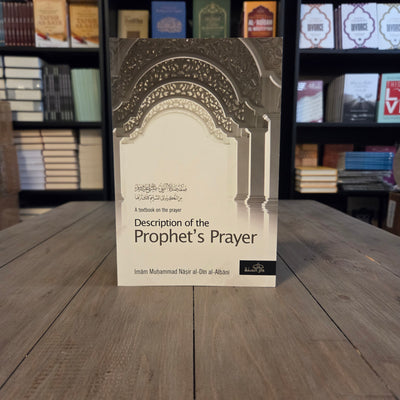 A Textbook on the Prayer Description of the Prophet's Prayer By Muhammad Nasir al-Din al-AlbaniDar as-Sunnah Publishers$17.00
 A Critique Of The Ruling Of al-Taqlid By Muhammad ibn Ali al-ShawkaniDar Al-Arqam$24.00
 Umdat Al-Fiqh Explained | A Commentary on Ibn Qudamah's The Reliable Manual of Fiqh (2Vol)International Islamic Publishing House$69.00
Leave a comment
This site is protected by hCaptcha and the hCaptcha Privacy Policy and Terms of Service apply.