
Comparing Description of the Prophet's Prayer
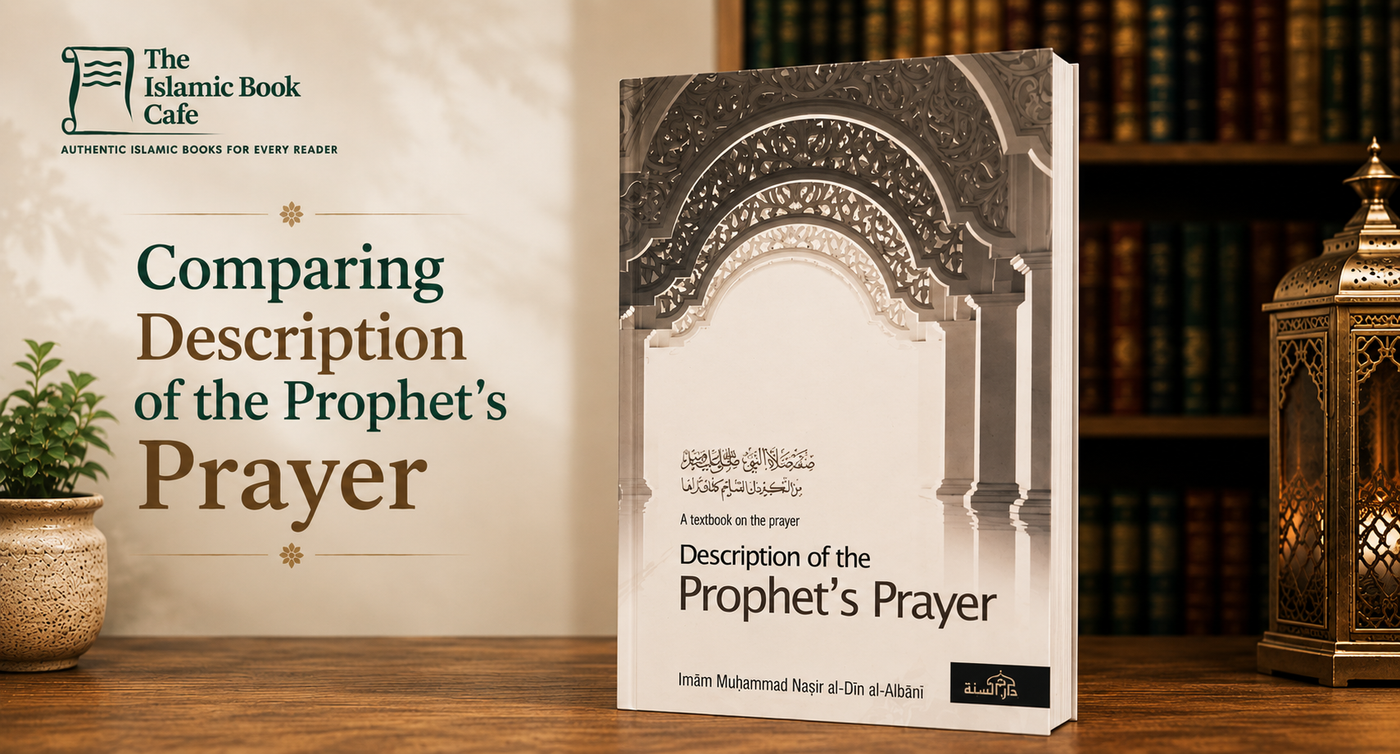
Muslims often ask how Description of the Prophet's Prayer by Imam Muhammad Nasir al-Din al-Albani relates to the four schools of thought (the Hanafi, Maliki, Shafi'i, and Hanbali schools) each of which developed its own principles and methodology for deriving rulings, including on the performance of the prayer.
About the Book
Description of the Prophet's Prayer by Imam Muhammad Nasir al-Din al-Albani is built on the authentic narrations collected in the books of al-Bukhari, Muslim, and others. The author spent years gathering and authenticating the narrations that describe the prayer, and sets out each step and movement with its evidence from the Qur'an and the Sunnah.
How It Relates to the Four Schools
The book does not set out to represent any one school. Its method is to return directly to the authentic narrations and derive the description of the prayer from them, which is precisely what the four imams themselves instructed their students to do when an authentic hadith is established. In practice, readers often note that the result lies closest to the Hanbali school, which is known for its emphasis on the literal sense of the Qur'an and Sunnah and for relying on the narrations of the Prophet, peace and blessings be upon him, over scholarly opinion.
The Hanafi, Maliki, and Shafi'i schools also provide detailed descriptions of the prayer, differing in certain aspects. The Hanafi school is known for its use of analogy (qiyas) and independent reasoning (ijtihad) in deriving rulings; the Maliki school places greater emphasis on the customs and practices of the people of Medina during the time of the Prophet, peace and blessings be upon him; and the Shafi'i school combines hadith narrations with analogy and independent reasoning.
All four schools derive their prayer descriptions from the Qur'an and the Sunnah. Where they differ, the position of Ahlus-Sunnah is the one the four imams stated themselves: when an authentic hadith is established, it is taken, and any statement contradicting it is left. We cover this in The Four Imams of Sunni Islam and in Taqlid in Islam: Al-Shawkani's Critique of Blind Following.
Conclusion
Description of the Prophet's Prayer is a useful resource for anyone seeking to deepen their understanding and practice of the prayer as the Prophet, peace and blessings be upon him, performed it. For the conditions, pillars, and full step-by-step method, see our guide Salah: The Second Pillar of Islam, and for another close study of prayer grounded directly in the Sunnah, our excerpt on The Prayer Times.
Baarakallahu feekum — The Islamic Book Cafe | Portland, Oregon.
Leave a comment
This site is protected by hCaptcha and the hCaptcha Privacy Policy and Terms of Service apply.