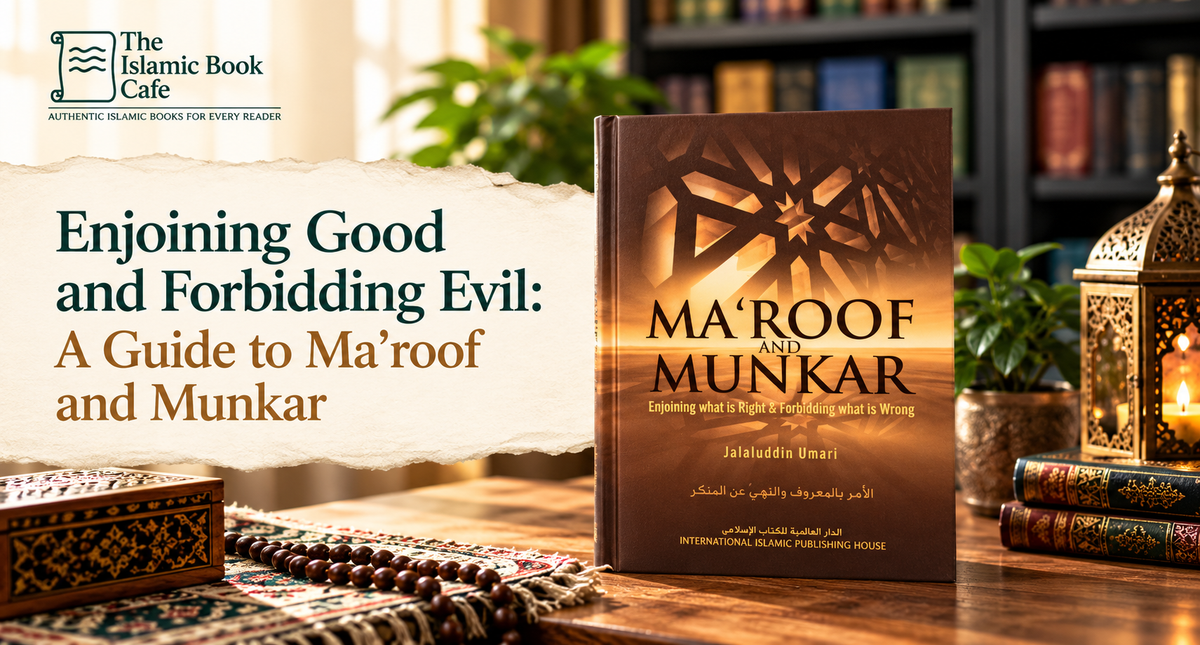
Enjoining Good and Forbidding Evil: A Guide to Ma'roof and Munkar by Jalaluddin Umari
Allah says:
And let there be [arising] from you a nation inviting to [all that is] good, enjoining what is right and forbidding what is wrong, and those will be the successful.
— Surah Ali 'Imran 3:104
Enjoining what is right (al-ma'ruf) and forbidding what is wrong (al-munkar) is a duty the Qur'an returns to again and again. Abu Sa'id al-Khudri narrated that he heard the Messenger of Allah (peace and blessings be upon him) say:
He who amongst you sees something abominable should modify it with the help of his hand; and if he has not strength enough to do it, then he should do it with his tongue, and if he has not strength enough to do it, (even) then he should (abhor it) from his heart, and that is the least of faith.
— Sahih Muslim 49
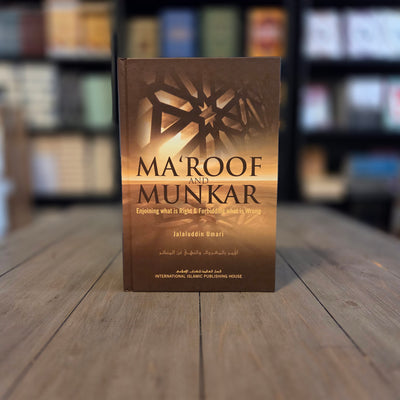
Many Muslims know this hadith, and fewer know how it is applied: which level fits which situation, who carries the responsibility, and where its limits lie. That is the subject of Ma'roof and Munkar: Enjoining What is Right and Forbidding What is Wrong.
About the Book
The author, Syed Jalaluddin Umri (1935–2022), was an Indian scholar and writer, a graduate of Jamia Darussalam in Oomerabad and of Aligarh Muslim University. He spent his career in writing, research and editorial work, and led Jamaat-e-Islami Hind as its Amir from 2007 to 2019. The book is published in English by International Islamic Publishing House.
It draws together the statements of classical and later scholars on this obligation and works through it in three parts:
The Foundation in the Qur'an and Sunnah
The book first establishes the textual basis of the duty from the Qur'an and the authentic Sunnah, as a defining mark of the Muslim community, before turning to how it is carried out.
The Conditions and Levels
Not every situation calls for the same response, and not everyone has the same ability or authority to act. Working from the hadith of Abu Sa'id, the book explains when a person acts with the hand, when with the tongue and when with the heart, who is responsible for acting, and what limits apply.
Practice in Daily Life
The duty looks different in the home, in the community and in wider society. The author shows how an ordinary Muslim fulfils it in his own setting without going beyond his authority, and without causing a greater harm than the wrong he is trying to correct.
Who it is for: every Muslim who wants to understand this obligation properly and carry it out correctly in their own life and community.
How Correction Is Delivered
Knowing the duty is one half. Delivering it with wisdom is the other. Three books on our shelves take that up:
- Shaykh Abdul Aziz ar-Rajihi's The Clear and Most Manifest Word treats the same obligation alongside calling to Allah.
- Ibn Rajab's The Difference Between Advising and Shaming separates sincere advice from exposing people.
- Shaykh Muhammad Salih al-Munajjid's The Prophet's Methods of Correcting People's Mistakes gathers how the Prophet (peace and blessings be upon him) himself corrected people.
Related Reading
Correcting others begins with correcting oneself. See our guide to the best books on purifying the soul, and for where this shelf sits in a complete library, our complete Islamic reading guide by topic.
We aim to carry only titles upon the Qur'an and the authentic Sunnah upon the understanding of the Salaf as-Salih, and we ask Allah to keep us upon that. You can read about each author on their page or browse all of them on our authors page. Every order ships from our shop here in Portland, and if you are unsure which book to begin with, reach out on live chat. We are always glad to help you choose.
Baarakallahu feekum — The Islamic Book Cafe | Portland, Oregon.
Leave a comment
This site is protected by hCaptcha and the hCaptcha Privacy Policy and Terms of Service apply.