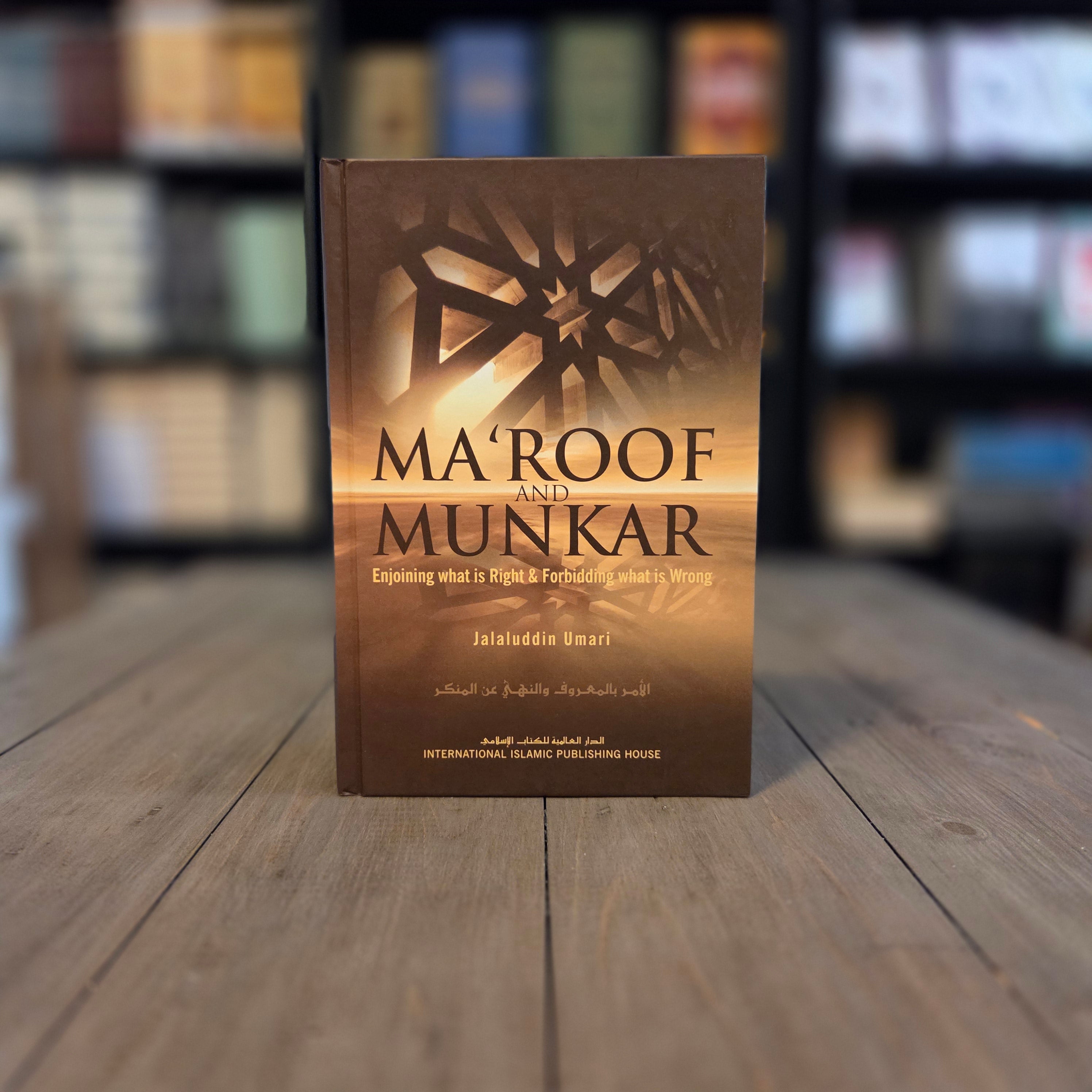

Maroof and Munkar | Enjoining What is Right And Forbidding What Is Wrong By Jalaluddin Umari
Commanding good and forbidding evil is not an optional act of Islamic virtue — it is a collective obligation that the Qur'an repeats throughout its pages and that the Prophet (peace and blessings be upon him) reinforced with binding directives to the Muslim community.
Every book we carry is selected upon the understanding of the Salaf as-Salih.
Get free shipping when you spend $50 or more.
Pickup available at The Islamic Book Cafe | Authentic Islamic Books For Every Reader
Usually ready in 4 hours

Maroof and Munkar | Enjoining What is Right And Forbidding What Is Wrong By Jalaluddin Umari
The Islamic Book Cafe | Authentic Islamic Books For Every Reader
30 SE 188th Ave
Portland OR 97233
United States

About This Book
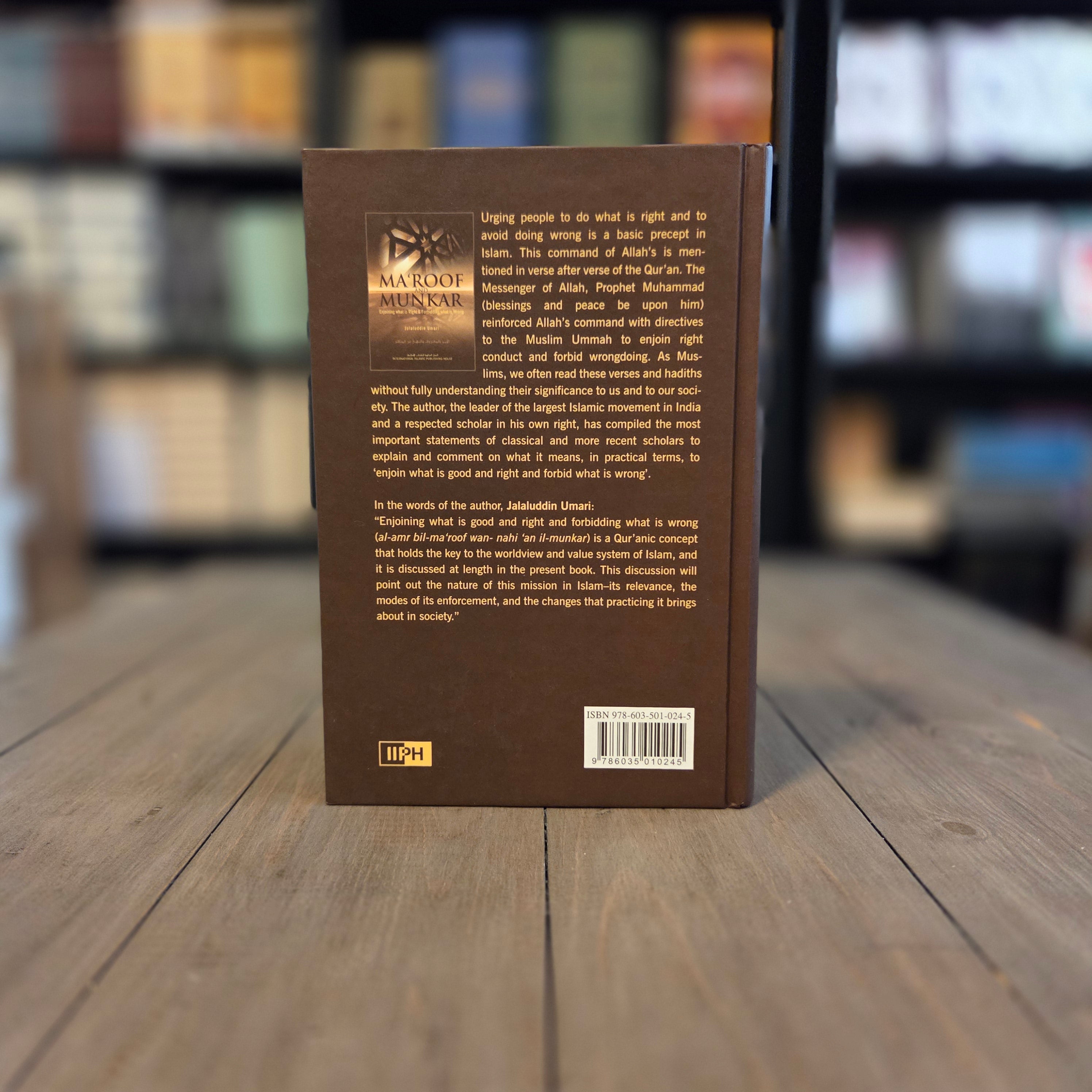
Commanding good and forbidding evil is not an optional act of Islamic virtue — it is a collective obligation that the Qur'an repeats throughout its pages and that the Prophet (peace and blessings be upon him) reinforced with binding directives to the Muslim community. Yet despite its importance, many Muslims have a confused or incomplete understanding of what this obligation actually requires, when it applies, and how it is to be carried out correctly.
Ma'roof and Munkar: Enjoining What is Right and Forbidding What is Wrong by Jalaluddin Umari fills that gap — drawing together the most important statements of classical and contemporary scholars to explain this obligation comprehensively and practically.
What This Book Covers
The Qur'anic and Prophetic Foundation
The obligation to enjoin good and forbid evil appears throughout the Qur'an as one of the defining characteristics of the Muslim community: "You are the best nation produced for mankind — you enjoin what is right and forbid what is wrong." (Surah Ali Imran: 110). The book establishes the full textual basis for this obligation from the Qur'an and the authentic Sunnah before moving to its practical application.
The Conditions and Levels of the Obligation
Not every situation calls for the same response, and not everyone has the same capacity or authority to act. The book explains the well-known hadith of the Prophet (peace and blessings be upon him): "Whoever among you sees an evil, let him change it with his hand; if he cannot, then with his tongue; if he cannot, then with his heart — and that is the weakest of faith." (Muslim). The conditions that determine which level applies, who is responsible for acting, and what limits exist are all addressed with scholarly precision.
Practical Guidance for the Individual Muslim
The obligation applies in the home, in the community, and in society — and the forms it takes differ accordingly. The author draws on classical scholarship to show how an ordinary Muslim fulfills this obligation in their everyday context, without exceeding their authority or causing greater harm than the evil they are trying to address.
Who This Book Is For
Every Muslim who wants to understand one of the most frequently mentioned obligations in the Qur'an — and how to fulfill it correctly in their own life and community. Published by International Islamic Publishing House (IIPH).
Book details
- Author
- Jalaluddin Umari
- Translated by
- Syed Amin Ashraf
- Publisher
- International Islamic Publishing House
- Publication year
- 2008
- Categories
- Aqeedah
- Binding
- Hardback
- Pages
- 272
- Language
- English
- Condition
- New
- ISBN
- 9786035010245
- SKU
- TIBC0149

