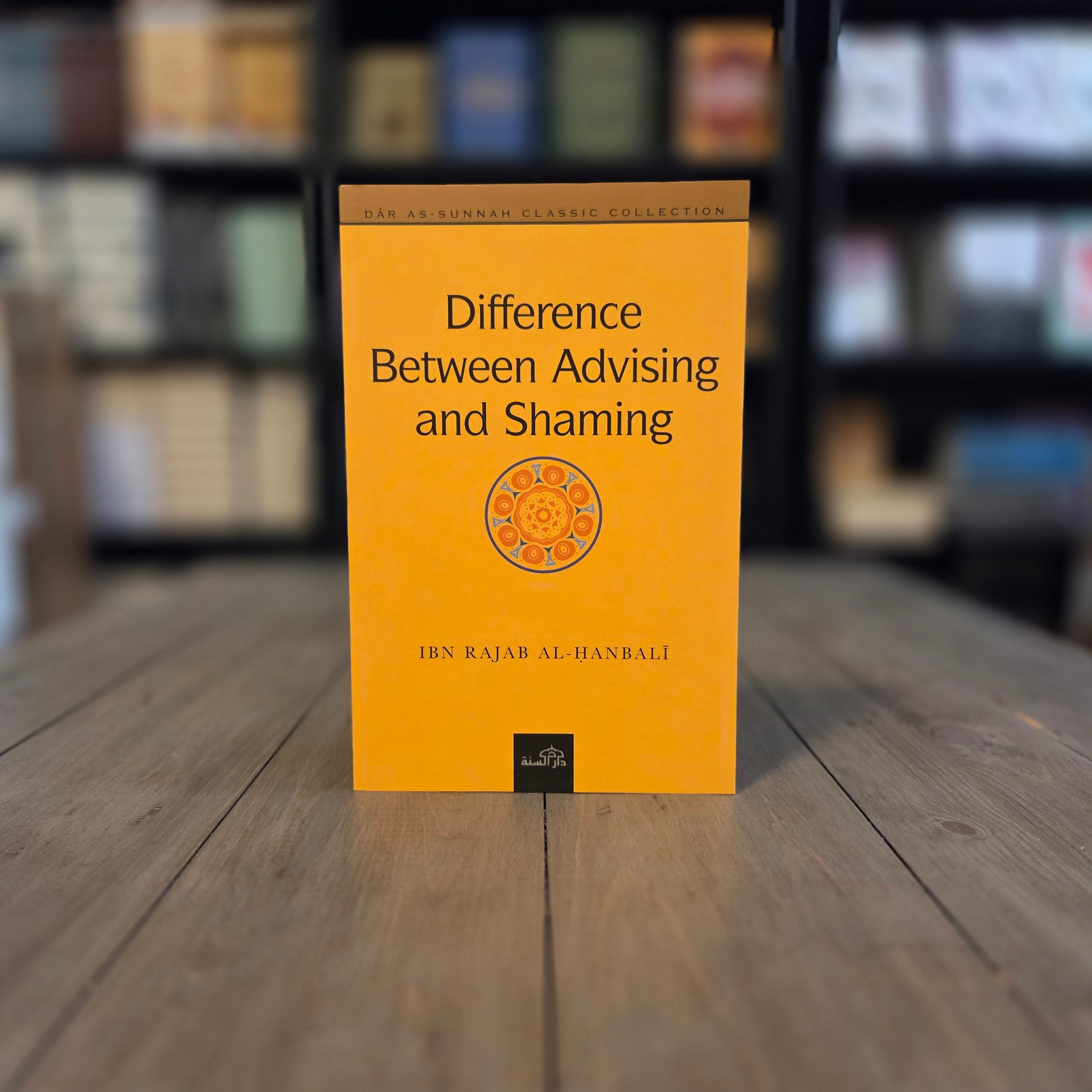
Difference Between Advising And Shaming by Ibn Rajab al-Hanbali

Sale price$15.00
In stock
Free Shipping

Get free shipping when you spend $75 or more.

Pickup available at The Islamic Book Cafe | Authentic Islamic Books For Every Reader

Usually ready in 4 hours

Difference Between Advising and Shaming by Ibn Rajab al-Hanbali — The Islamic Book Cafe

Difference Between Advising And Shaming by Ibn Rajab al-Hanbali

The Islamic Book Cafe | Authentic Islamic Books For Every Reader

Pickup available, Usually ready in 4 hours

30 SE 188th Ave
Portland OR 97233
United States

About This Book

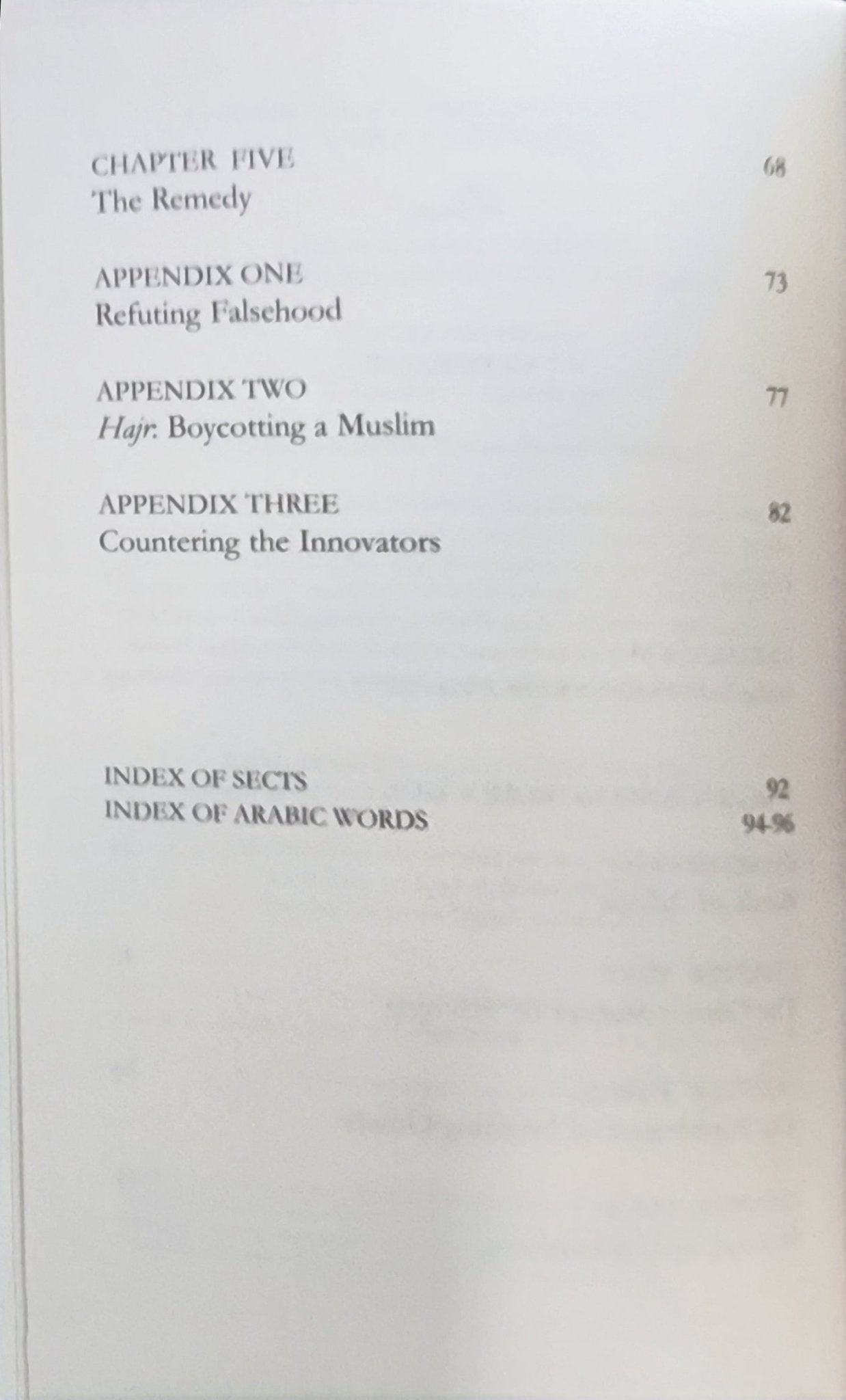
One of the most important — and most misunderstood — distinctions in Islamic conduct is the one between offering sincere advice to a brother and publicly shaming him. Both may look the same from the outside: criticism is delivered, a wrong is named. But their purpose, method, and effect are entirely different. The Prophet (peace and blessings be upon him) made nasiha (sincere advice) a right owed from one Muslim to another, and he distinguished it clearly from the public exposure of a person's faults that damages reputations and hardens hearts.

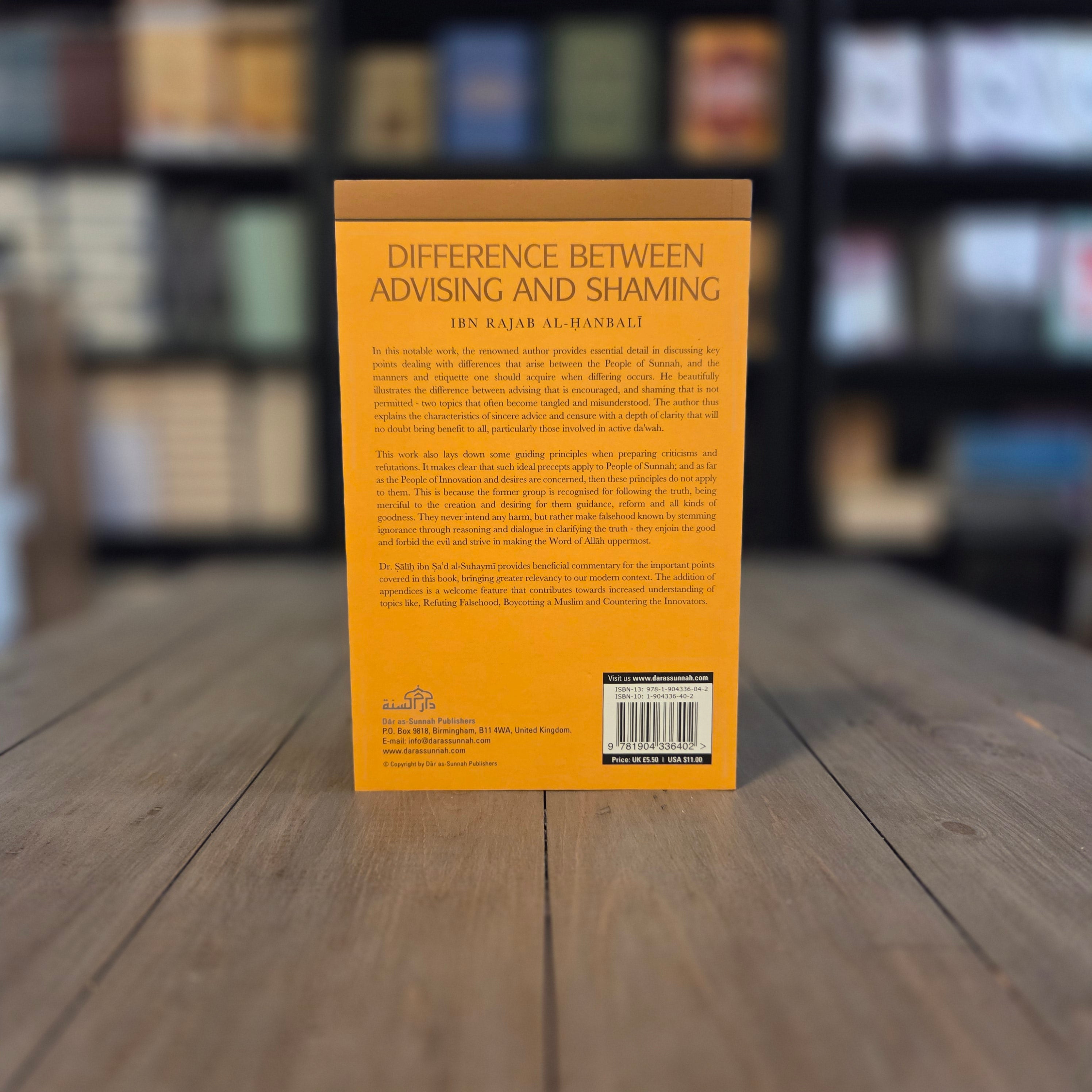
The Difference Between Advising and Shaming by Imam Ibn Rajab al-Hanbali is a precise and illuminating treatise on exactly this distinction — one that every Muslim involved in da'wah, in correcting others, or in navigating disagreement within the community needs to understand.

What This Book Covers

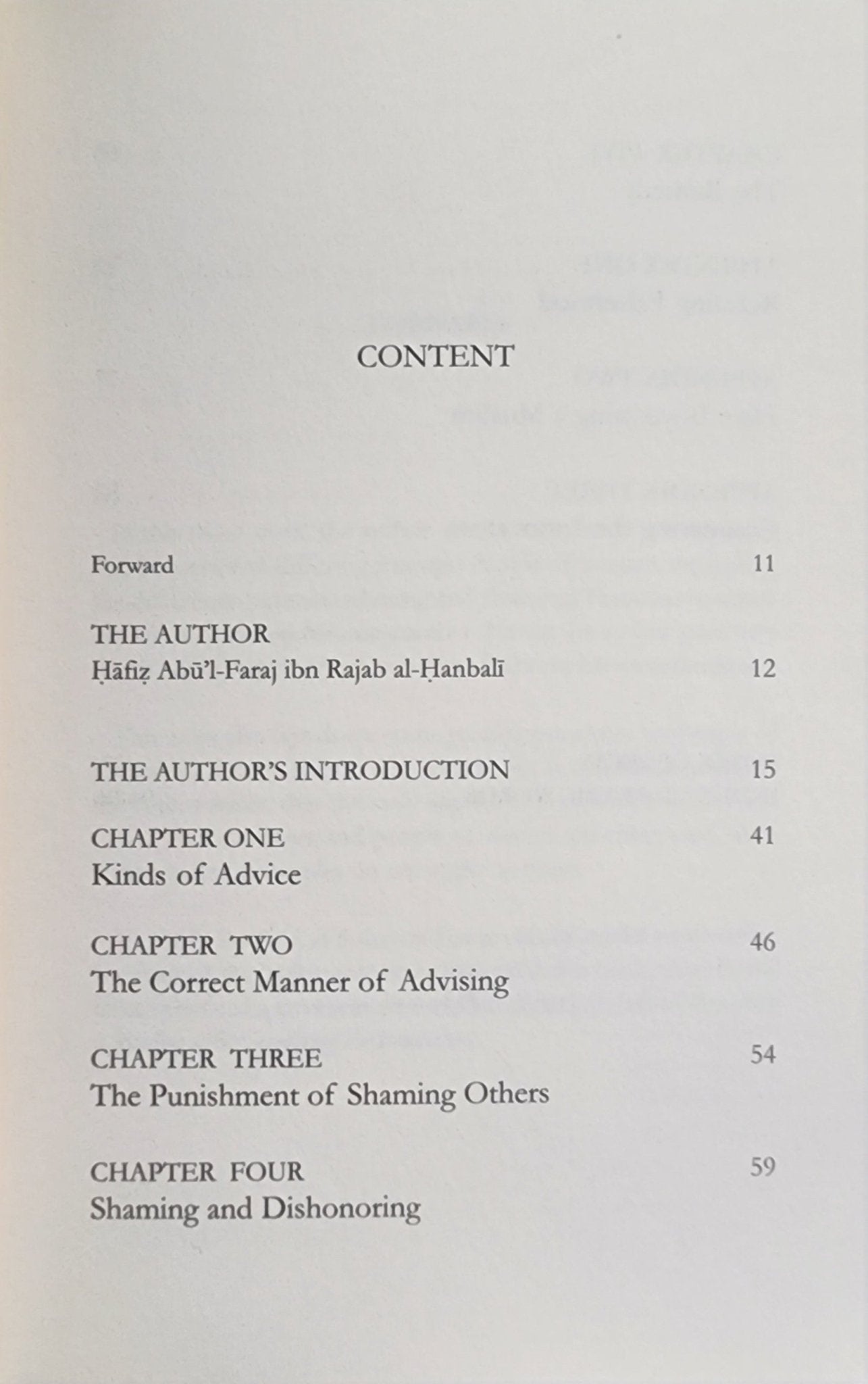
The Nature of Sincere Advice (Nasiha)

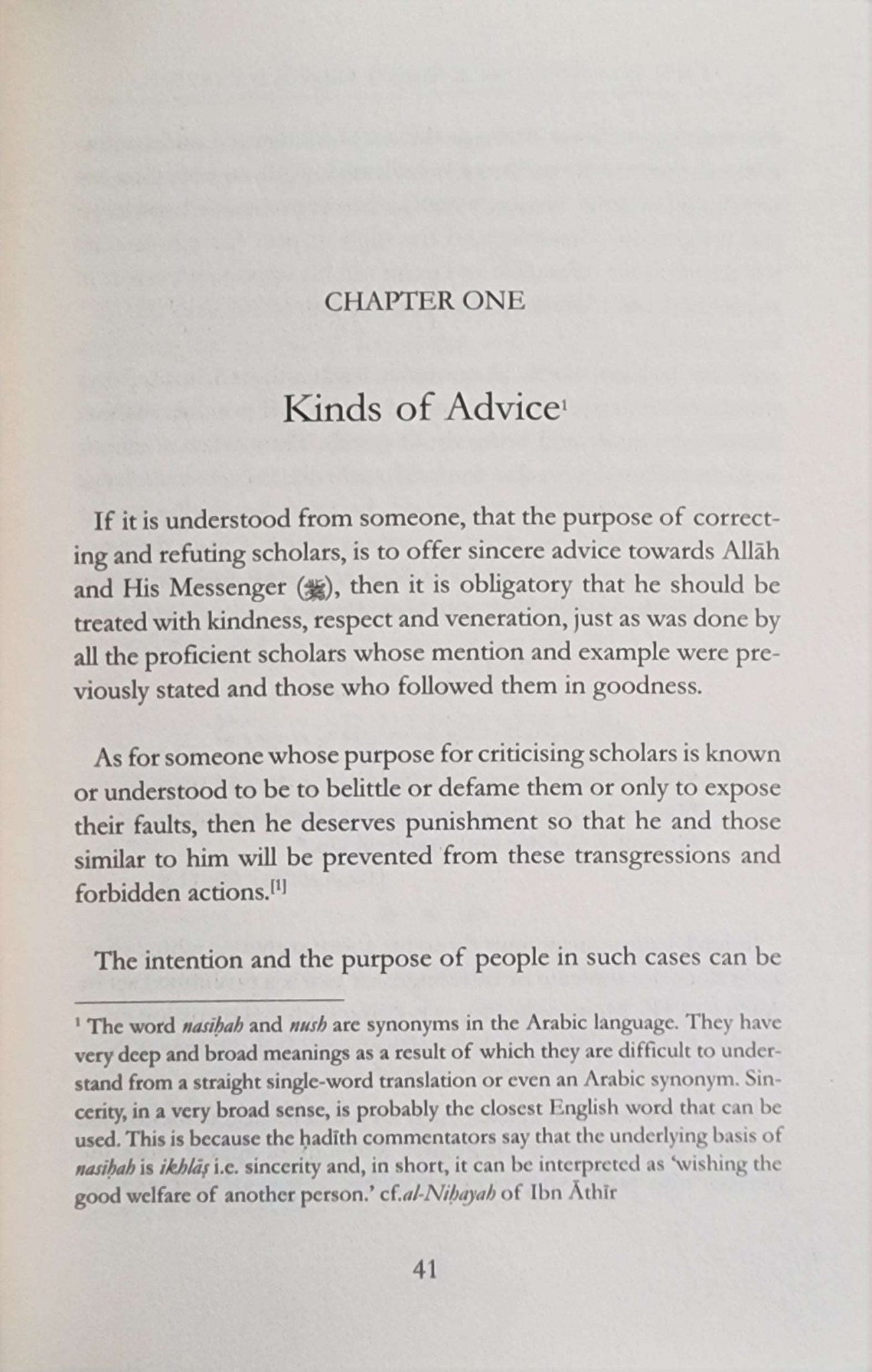
Ibn Rajab defines what true nasiha consists of: sincerity of intention, private delivery where possible, gentleness of manner, and concern for the person's benefit rather than one's own vindication. The aim of nasiha is to bring the person back to what is right — not to demonstrate one's own knowledge or to score a point in a public debate.

The Prohibition of Public Shaming

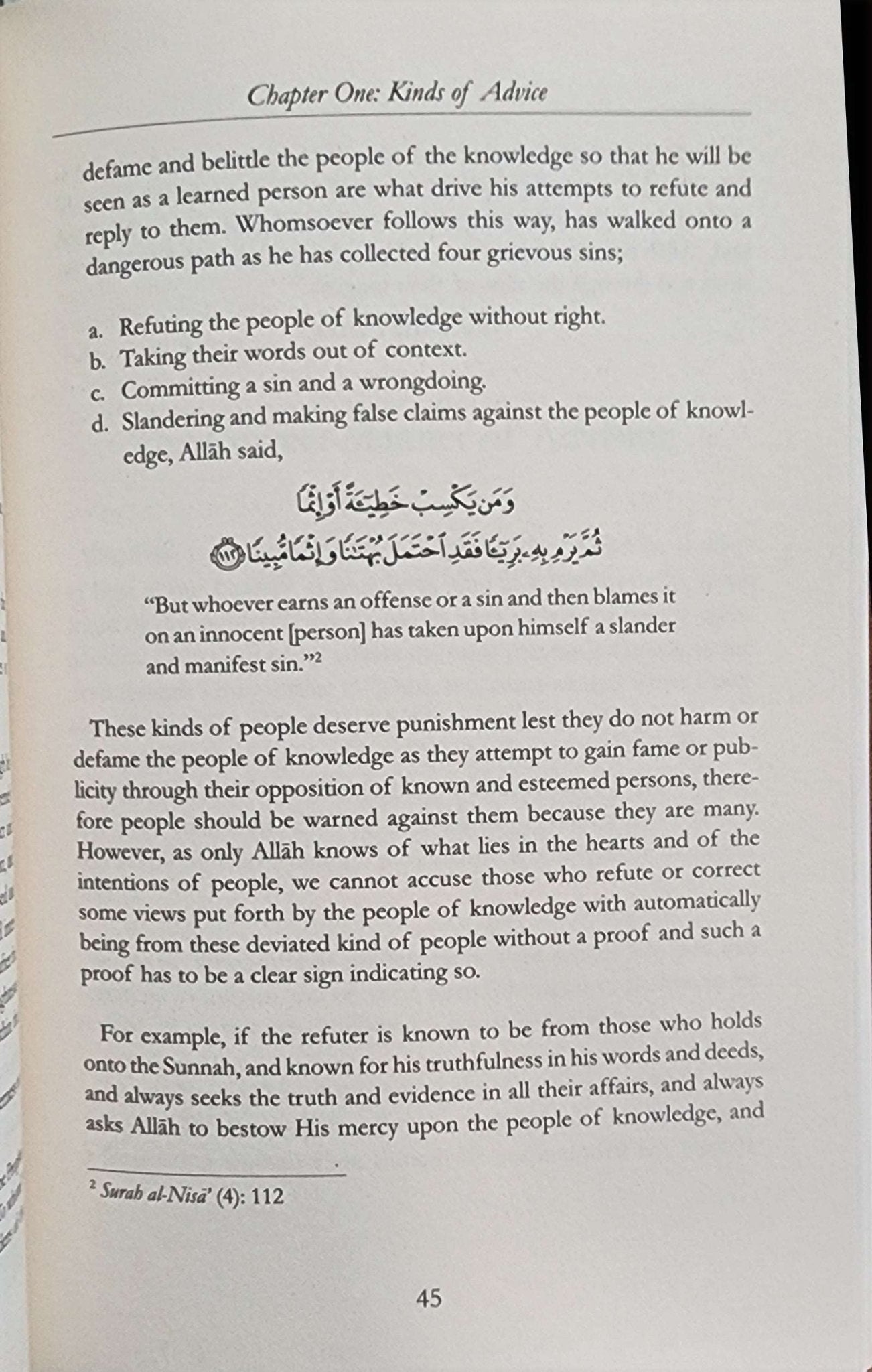
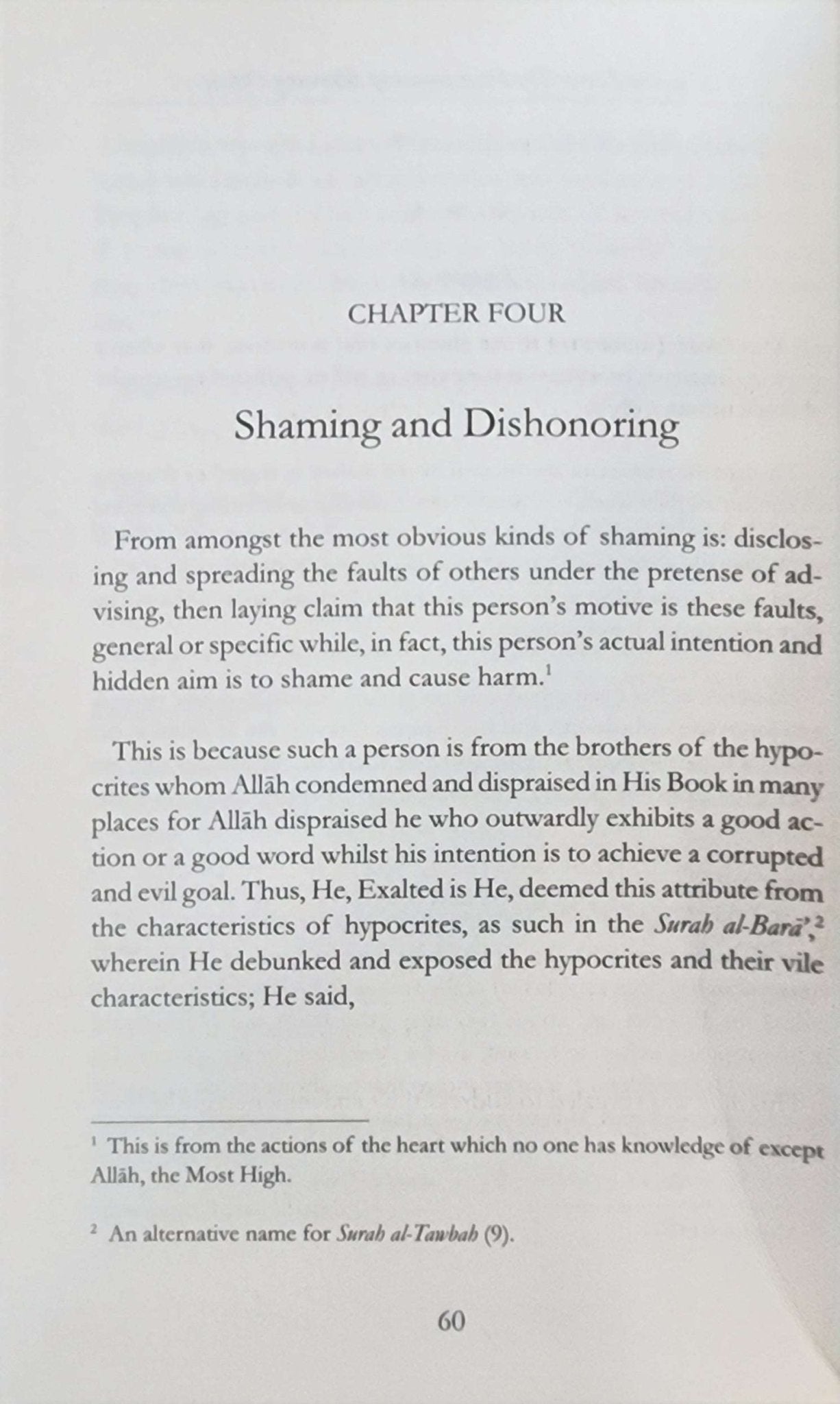
Shaming is the opposite of nasiha in its intent and effect. It exposes a person's faults before others, damages his honor, and often causes him to double down rather than repent. Ibn Rajab draws on Qur'an and Sunnah to establish that the public exposure of a Muslim's faults — except in defined cases involving warning others — is impermissible and does real harm to the community.

Where the Lines Are Drawn

The author also addresses the cases where public correction is permitted — when it involves bid'ah being spread publicly, when scholars must warn against those whose errors affect the ummah, and when the person has refused private correction. These cases are distinguished carefully from the use of "correction" as a pretext for personal attack.

Application for Those Active in Da'wah

For those who call to the Sunnah and deal regularly with disagreement, error, and correction, this treatise is practically indispensable. It provides the framework for engaging differences in a way that is truthful, fair, and productive rather than destructive.

About the Author

Imam Ibn Rajab al-Hanbali (736–795 AH / 1335–1393 CE) was a leading scholar of Hanbali fiqh, hadith, and tazkiyah. Born in Baghdad and educated in Damascus under the greatest scholars of his era, he is best known for his works on zuhd, the heart sciences, and hadith commentary. His writings are characterized by depth of scholarship and genuine concern for the Muslim community. Published by Dar as-Sunnah Publishers.

Who This Book Is For

Anyone who gives da'wah, corrects others, or finds themselves navigating disagreements within the Muslim community. Essential for students of knowledge and callers to the Sunnah who want their correction of others to be accepted rather than rejected, and who want to understand the ethics their religion places on how truth is delivered.

Book details

Author
Ibn Rajab al-Hanbali
Publisher
Dar as-Sunnah Publishers
Publication year
2016
Categories
Tazkiyah (Spiritual Development)
Binding
Paperback
Pages
96
Language
English
Condition
New
ISBN
9781904336402
SKU
TIBC0180