
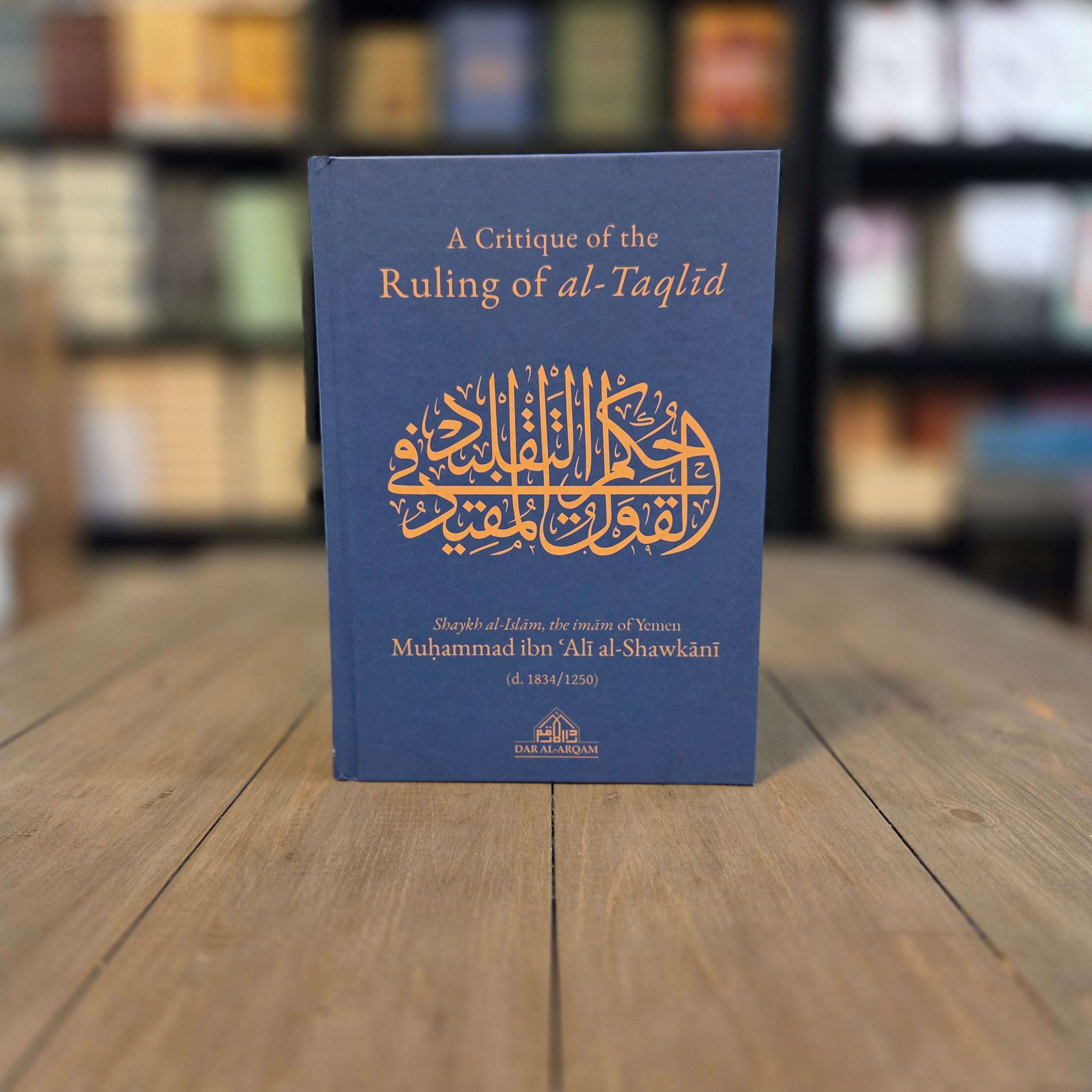


A Critique Of The Ruling Of al-Taqlid By Muhammad ibn Ali al-Shawkani
Get free shipping when you spend $75 or more.
Pickup available at The Islamic Book Cafe | Authentic Islamic Books For Every Reader
Usually ready in 4 hours

A Critique Of The Ruling Of al-Taqlid By Muhammad ibn Ali al-Shawkani
The Islamic Book Cafe | Authentic Islamic Books For Every Reader
30 SE 188th Ave
Portland OR 97233
United States
About This Book
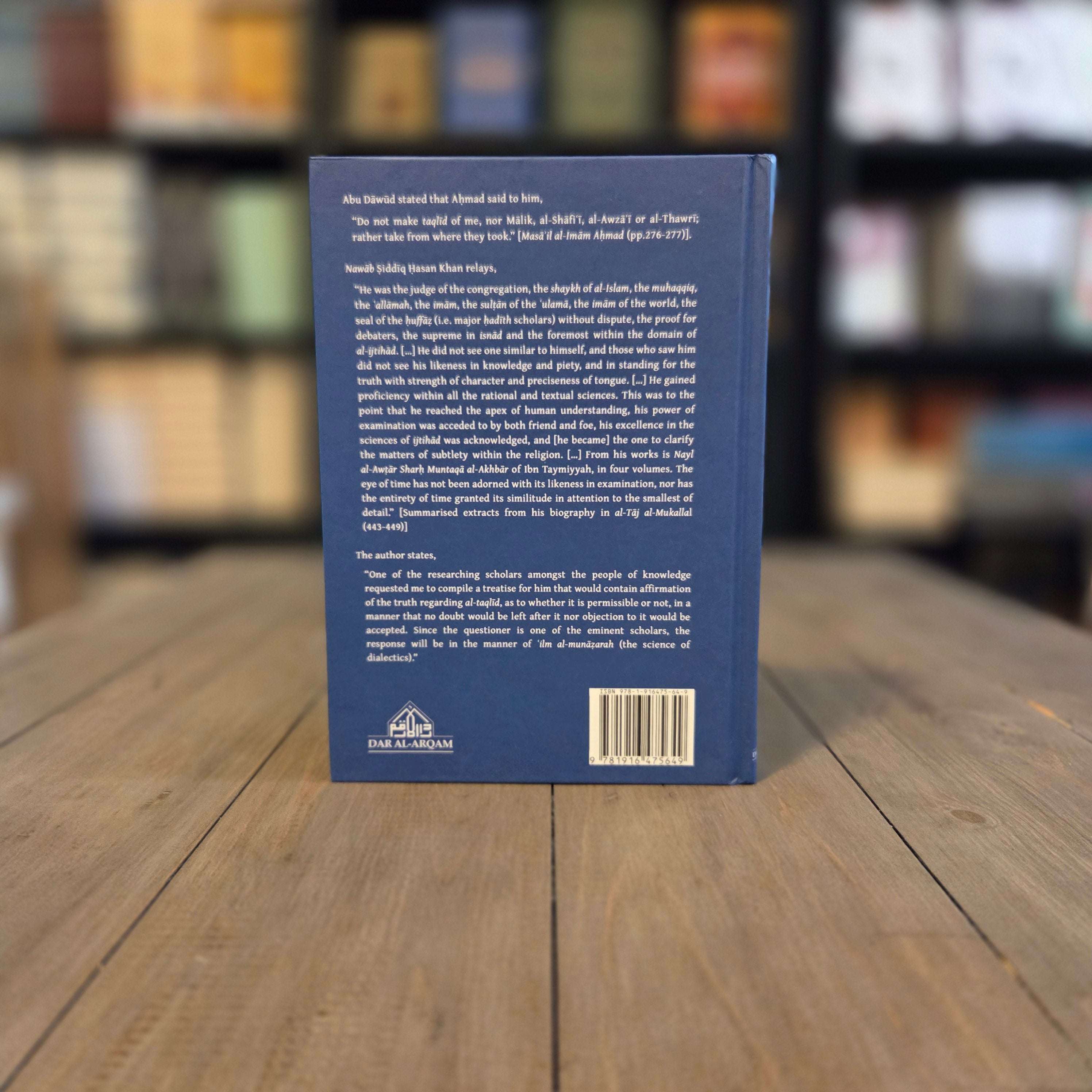
Imam Ahmad ibn Hanbal said to his student Abu Dawud: "Do not make taqlid of me, nor of Malik, al-Shafi'i, al-Awza'i, or al-Thawri. Rather, take from where they took." This statement captures the principle at the heart of A Critique of the Ruling of al-Taqlid — that Islam's scholars derived their rulings from the Qur'an and Sunnah, and that blind adherence to their conclusions without recourse to those same sources is a departure from their own methodology.
Imam Muhammad ibn Ali al-Shawkani was commissioned by a scholar to compile a precise treatise on this question — whether taqlid (following a scholar's ruling without knowing its evidence) is permissible, impermissible, or obligatory — addressing it with the rigor of the science of dialectics and leaving no room for ambiguity in the conclusion.
What This Book Covers
Defining Taqlid and Its Scope
Al-Shawkani begins by defining taqlid precisely — what it is, what it is not, and how it differs from ittiba' (following a scholar while knowing his evidence). This distinction is foundational: the critique is not of following scholars but of following them without their evidences, as though their opinions themselves were binding revelation.
The Evidence Against Obligatory Taqlid
Drawing from the Qur'an, the Sunnah, and the explicit statements of the four Imams themselves — all of whom prohibited their students from following them blindly — al-Shawkani builds a systematic case that restricting oneself to a single school without examining evidence is not what those Imams intended or sanctioned.
When a Layperson May Follow a Scholar
The treatise also addresses the legitimate role of following scholars for those without the tools for independent research — distinguishing between the necessary reliance of the layperson and the impermissible abandonment of evidence by those capable of examining it.
About the Author
Imam Muhammad ibn Ali al-Shawkani (1759–1834) was a Yemeni hadith scholar, jurist, and Chief Judge of Yemen for over three decades. He is considered one of the foremost advocates of ijtihad based directly on Qur'an and Sunnah and a major influence on the Salafi scholarly tradition. Published by Dar Al-Arqam.
Who This Book Is For
Students of Islamic knowledge grappling with questions of madhab adherence and the relationship between following scholars and following evidence. Essential reading for anyone who has been told that ordinary Muslims must restrict themselves to one school of thought, and who wants a scholarly, evidenced response to that claim from one of Islam's most rigorous jurists.

