
Gaining Knowledge from Reliable Sources
Recite in the name of your Lord who created — Created man from a clinging substance. Recite, and your Lord is the most Generous — Who taught by the pen — Taught man that which he knew not. (Surah al-'Alaq 96:1–5, Saheeh International)
The first revelation that Prophet Muhammad, peace and blessings be upon him, received from the Angel Jibril was the command to read. We should take this as a sign of the value of seeking and gaining knowledge. Today we have a problem with people taking information from all over, especially with social media and unreliable news. Works like Man-Made Laws Vs. Shari'ah remind us of where true authority comes from. Too often we check the facts only after re-posting or accepting an article as true. One of the things we need to do as a community is to slow down and trace claims back to their sources: who is saying what, and why.
The Prophet, peace and blessings be upon him, said, “It is enough for a man to prove himself a liar when he goes on narrating whatever he hears.” (Riyad as-Salihin 1547; reported by Muslim)
We need to avoid jumping to conclusions, and instead research, ask questions, and develop our understanding so that we promote only what is truthful. At the same time, we must be mindful of how easily we can spread rumors and fall into backbiting one another.
This care is essential when we are learning and teaching about Islam. Many sources in circulation are not authentic, and we have to be able to tell them apart. Collections like Riyad-us-Saliheen With Commentary preserve the Prophet's stern warning against passing on whatever one hears without verifying it:
The Messenger of Allah, peace and blessings be upon him, said, “Whoever narrates a Hadith from me thinking it to be false, then he is one of the two liars.” (Sunan Ibn Majah, Introduction)
The early generations applied this rigor even in everyday matters. During the Prophet's time, peace and blessings be upon him, a rumor spread that he had divorced his wives, and word raced through the Masjid. Companions Around The Prophet recounts how Umar ibn al-Khattab (may Allah be pleased with him) refused to accept the rumor secondhand: he went directly to the Prophet, peace and blessings be upon him, and asked him whether he had divorced his wives, and the Prophet told him that he had not. Umar then stood at the door of the Masjid and announced to the people that the Messenger of Allah had not divorced his wives. The Qur'an lays down this very principle, that unverified news must be referred back to those qualified to assess it:
And when there comes to them information about [public] security or fear, they spread it around. But if they had referred it back to the Messenger or to those of authority among them, then the ones who [can] draw correct conclusions from it would have known about it. (Surah an-Nisa 4:83, Saheeh International)
The point is to investigate matters and draw them from their proper sources, rather than rushing to disclose news that may not be true at all. Ibn Kathir explains this verse along these lines in Tafsir Ibn Kathir at Surah an-Nisa 4:83.
Book recommendation on gaining authentic knowledge and the stages of seeking it
Stages & Means of Seeking Knowledge is a guide to how the Prophet, peace and blessings be upon him, and the Salaf learned and took their knowledge as revelation came down: their conduct, their patterns of learning, and their dedication to authentic knowledge. The Prophet, peace and blessings be upon him, himself set the standard in his sermons:
The Prophet, peace and blessings be upon him, said, “The best of the speech is embodied in the Book of Allah, and the best of the guidance is the guidance given by Muhammad. And the most evil affairs are their innovations; and every innovation is error.” (Sahih Muslim 867)
Their method of teaching was built on the Qur'an and Sunnah. They did not move except with the Sunnah, and they did not rest except upon the Sunnah; there was no deviation. This is why it is so important to study the religion, ask questions, and rely on sources that return to the Qur'an and Sunnah, so that we do not spread falsehood or innovated practices. For more on the importance of returning every dispute to authentic evidence, see our piece on Obeying Allah and Obeying His Messenger.
What steps do you take to check whether what you are reading or hearing is truthful? Have you ever checked your facts about something and found it was not true? How did you handle it? And how would you want others to approach you about a rumor they had heard regarding you?
Baarakallahu feekum — The Islamic Book Cafe | Portland, Oregon.
 Man-Made Laws Vs. Shari'ah by Ph.D. Abdur-Rahmaan Ibn Salih Al-MahmoodInternational Islamic Publishing House$22.00
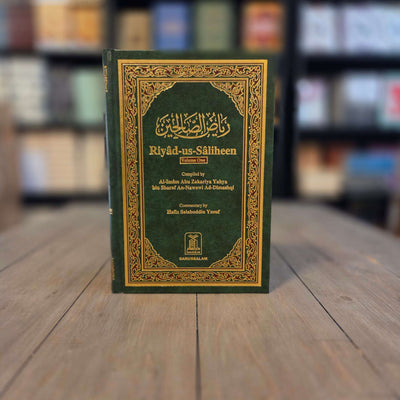 Riyad-us-Saliheen With Commentary (2 Volume Set) By Imam An-NawawiDarussalam Publishers$52.00
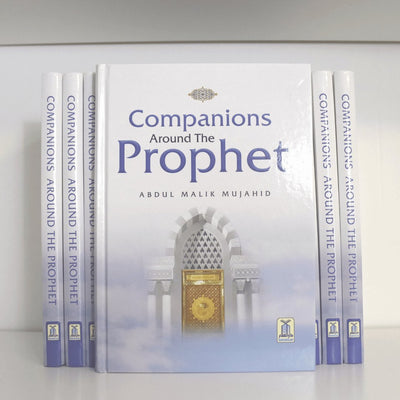 Companions Around The Prophet By Abdul Malik MujahidDarussalam Publishers$30.00
 Stages & Means of Seeking Knowledge By Shaykh Muhammad Sa'eed RaslanAl-Binaa Publishing$19.00
Leave a comment
This site is protected by hCaptcha and the hCaptcha Privacy Policy and Terms of Service apply.