
The 99 Names of Allah: Meanings, Benefits, and How to Use Them
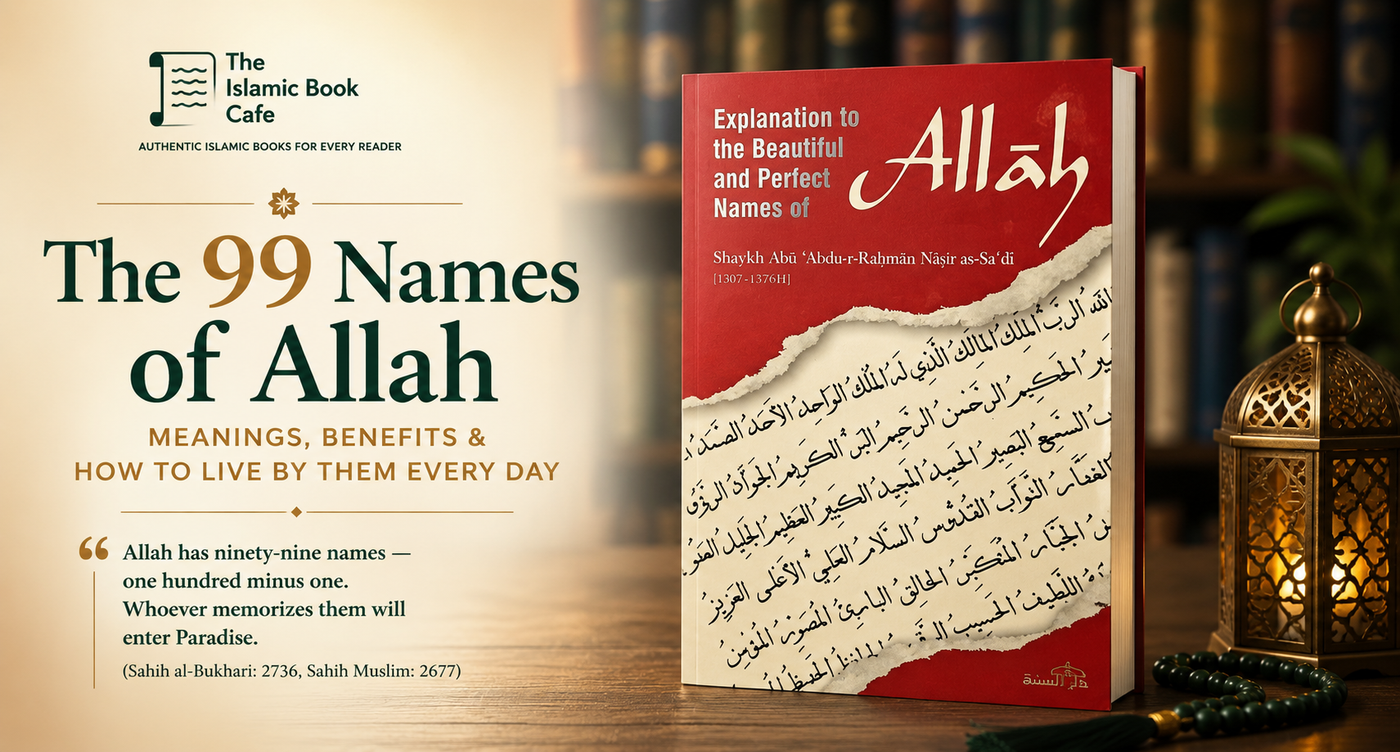
The Prophet, peace and blessings be upon him, said:
"Allah has ninety-nine names, i.e. one-hundred minus one, and whoever knows them will go to Paradise."
(Sahih al-Bukhari 2736; also Sahih Muslim 2677)
In the narration of Imam Muslim the wording is "whoever enumerates them" (ihsa), and the scholars explain that this is not a matter of merely listing or reciting the names, but of learning them, understanding their meanings, and living by what they require. The 99 names of Allah are not a list to be checked off. They are a way of knowing your Lord.
This post covers what the 99 names of Allah are, what some of the most important ones mean, the authentic hadith basis for their significance, and how a Muslim actually benefits from them in their daily worship and relationship with Allah.
Who Is Allah? Knowing Your Lord Through His Names
Before learning the names themselves, it helps to answer the deeper question they exist to answer: who is Allah? Allah is the one true God, the Creator and Sustainer of everything that exists, and the only one deserving of worship. He is not a distant force or an abstract idea; He has told us who He is, in His own words, through the names and attributes He revealed in the Qur'an and the authentic Sunnah. Upon the way of Ahlus-Sunnah wal-Jamaah, we affirm those names and attributes as they came, without distorting their meaning, denying them, asking how, or likening Allah to His creation. Knowing Allah in this way is the very foundation of tawhid, the singling out of Allah in worship, which we cover in our guide to Kitab at-Tawheed, the Book of Monotheism.
This is why the 99 names matter so much: they are not decoration, but the most direct answer to "who is Allah?" that a believer can study. For a thorough English-language study built entirely around this question, Who Is Allah? His Names and Attributes by Umm Abdurrahman Sakina Hirschfelder discusses over 100 of Allah's names and more than 60 of His attributes, each with its evidence from the Qur'an and Sunnah, its meaning, and its significance for daily life.
What Are the 99 Names of Allah?
The 99 names of Allah, known in Arabic as Al-Asma al-Husna (the Most Beautiful Names), are the names and attributes by which Allah has described Himself in the Qur'an and in the authenticated Sunnah of the Prophet, peace and blessings be upon him. They are not invented titles or names chosen by scholars. They are the names Allah chose for Himself.
Allah says in the Qur'an:
"And to Allah belong the best names, so invoke Him by them."
(Surah al-A'raf 7:180, Saheeh International)
And:
"Say, 'Call upon Allah or call upon the Most Merciful. Whichever [name] you call — to Him belong the best names.'"
(Surah al-Isra 17:110, Saheeh International)
The scholars of Islam have established that the names of Allah are tawqifiyyah, meaning they are fixed by revelation alone. No name can be added to Allah's names that He has not given Himself, and no name He has given Himself can be removed or treated as metaphorical.
Are All 99 Names Listed in One Hadith?
A common question is whether there is a single authentic hadith that lists all 99 names in order. The answer is: the authenticity of the enumerating hadith is disputed among hadith scholars.
The hadith in Sunan at-Tirmidhi (3507) and Sunan Ibn Majah (3861) contain a list of 99 names, but Imam al-Bukhari and Imam Muslim, who recorded the foundation hadith about knowing the 99 names, did not include the list itself. Many hadith scholars including Ibn Hazm, Ibn Taymiyyah, and Ibn al-Qayyim noted that the enumerating list has weakness in its chain.
What is firmly established is that Allah has 99 names and that knowing them is of immense benefit. The specific names themselves are gathered from the Qur'an and the authentic Sunnah, and there is no shortage of them. The point is not a fixed list but a depth of knowledge of who Allah is.
Key Names of Allah and Their Meanings
The following names are among the most frequently mentioned in the Qur'an and Sunnah and the most important for a Muslim to know deeply.
1. Allah: The One Deserving All Worship
The name Allah is the greatest and most comprehensive of all Allah's names. It is the name that encompasses all of His attributes and that cannot be applied to anything or anyone else. The scholars have said it is the proper name of the Creator: the name by which He alone is known, the name that every prophet called to, and the name that will be the last word on the tongue of the believer.
2. Al-Rahman, Al-Raheem: The Entirely Merciful, The Especially Merciful
These two names, paired at the opening of every surah in the Qur'an, both derive from the root word for mercy (rahmah) but carry different dimensions of it. Al-Rahman describes the vast, all-encompassing mercy that Allah extends to every created being: Muslim and non-Muslim, human and animal, believer and disbeliever. Al-Raheem describes the specific, enduring mercy He reserves for the believers in the Hereafter.
Ibn al-Qayyim wrote that Al-Rahman is a name that cannot be given to anyone other than Allah, while Al-Raheem can be used to describe a merciful human being, which shows that Al-Rahman expresses a level of mercy that belongs to Allah alone.
3. Al-Malik: The King, The Sovereign
Allah is Al-Malik, the true and only King over all of creation. Every sovereignty that exists in this world is borrowed and temporary. The sovereignty of Allah is absolute, eternal, and unchallenged. On the Day of Judgment, when every earthly kingdom has fallen, the call will resound:
"To whom belongs [all] sovereignty this Day? To Allah, the One, the Prevailing."
(Surah Ghafir 40:16, Saheeh International)
4. Al-Quddus: The Most Pure, The Most Holy
Allah is free from every imperfection, every deficiency, every likeness to His creation. The name Al-Quddus is a name of absolute transcendence. It affirms that Allah is beyond anything we can fully comprehend or adequately describe, that every comparison falls short, and that His perfection is complete in every attribute.
5. Al-Hayy, Al-Qayyum: The Ever-Living, The Self-Sustaining
The Prophet, peace and blessings be upon him, described Ayat al-Kursi as the greatest verse in the Qur'an, and Ayat al-Kursi opens with these two names:
"Allah - there is no deity except Him, the Ever-Living, the Sustainer of [all] existence."
(Surah al-Baqarah 2:255, Saheeh International)
Al-Hayy means Allah lives with a life that has no beginning and no end, that requires nothing and is never diminished. Al-Qayyum means He sustains all of creation: nothing exists except by His sustaining it, and nothing could continue to exist for a moment without His continuous upholding of it.
6. Al-Aleem: The All-Knowing
Allah's knowledge is total and perfect. He knows what has passed, what is present, and what will come. He knows what is hidden and what is visible, what is in the heavens and what is in the earth, what the hearts conceal. Allah says:
"And with Him are the keys of the unseen; none knows them except Him. And He knows what is on the land and in the sea. Not a leaf falls but that He knows it..."
(Surah al-An'am 6:59, Saheeh International)
7. Al-Qadir: The All-Powerful
Allah has power over all things without limit, without effort, and without assistance. When He decrees something, He says to it "Be," and it is. The Muslim who truly knows Al-Qadir does not despair over what seems impossible to human means, because they understand that nothing is difficult for Allah.
8. Al-Ghafur, Al-Ghaffar: The Most Forgiving, The Ever-Forgiving
Al-Ghafur and Al-Ghaffar both come from maghfirah (forgiveness) but Al-Ghaffar carries the added sense of repeated, continuous forgiveness. Ibn al-Qayyim wrote that Al-Ghaffar means Allah repeatedly forgives His servants again and again, covering their sins from the sight of creation, and removing the punishment those sins would otherwise have required. No sin is too great for Allah's forgiveness if the servant turns to Him sincerely.
9. Al-Tawwab: The Ever-Accepting of Repentance
This name appears repeatedly in the Qur'an alongside Al-Raheem and Al-Ghafur. It means that Allah turns toward His servants in acceptance when they turn toward Him in repentance. Tawbah is not a one-way action: the servant turns to Allah in repentance, and Allah turns to the servant in acceptance. The Prophet, peace and blessings be upon him, said:
"Allah is more pleased with the repentance of His slave than anyone of you is pleased with finding his camel which he had lost in the desert."
(Sahih al-Bukhari 6309)
10. Al-Wadud: The Most Loving
Allah loves. This is one of the most important theological truths in Islam and one that is sometimes understated. Al-Wadud means Allah has genuine love for His servants who believe and do righteous deeds, a love that is not a metaphor, not merely an expression of approval, but a real attribute of Allah befitting His majesty. The Prophet, peace and blessings be upon him, said:
"If Allah loves a person, He calls Gabriel saying: 'Allah loves so and so; O Gabriel, love him.' Gabriel would love him, and then Gabriel would make an announcement among the residents of the Heaven, 'Allah loves so-and-so, therefore, you should love him also.' So, all the residents of the Heavens would love him and then he is granted the pleasure of the people of the earth."
(Sahih al-Bukhari 6040)
How to Benefit from the 99 Names of Allah
The Prophet, peace and blessings be upon him, said to benefit from them through ihsa, a word that includes memorization, understanding, and acting upon them. The scholars of Islam identified three levels of benefiting from Allah's names:
Know the Name and Its Meaning
The foundation is knowledge. You cannot benefit from a name you do not know, and knowing a name without understanding it is shallow. The minimum is to know what each name means, and ideally to study how the scholars have explained it and what the Qur'an and Sunnah have revealed about it.
An accessible single-volume treatment of this subject in English is Explanation to the Beautiful and Perfect Names of Allah by Shaykh Abdur-Rahman as-Sa'di, a concise, clear, evidence-based explanation of each name.
Worship Allah Through His Names
Every name has implications for how you worship. If you know that Allah is Al-Tawwab, you return to Him in repentance. If you know that He is Al-Qadir, you ask Him for what seems impossible. If you know that He is Al-Aleem, you fear His awareness of your private sins. The scholars said that knowing a name of Allah should change something in how you relate to Him.
The Prophet, peace and blessings be upon him, modeled this. His supplications were grounded in Allah's names. He would call upon Allah by the name most suited to what he was asking: asking for forgiveness by Al-Ghafur, asking for provision by Al-Razzaq, asking for help by Al-Wakeel. This is the meaning of Allah's command: "So invoke Him by them." (Surah al-A'raf 7:180)
Let the Names Shape Your Character
The scholars also noted that knowing Allah's names should leave a mark on the believer's own character toward people. Knowing that Allah is Al-Raheem should produce mercy in your dealings. Knowing that Allah is Al-Adl (The Just) should produce justice. This is not a claim to any share in what belongs to Allah alone. It is allowing the meanings of His names to shape the best of human character in how you treat others.
If you want to build your knowledge of Allah's names alongside other aspects of Islamic character and the heart sciences, see our post on developing khushu in prayer, which deals directly with how knowing who you are standing before transforms your salah.
Recommended Books on the Names of Allah
If you want to go deeper into this subject, the following titles are available at The Islamic Book Cafe:
- Explanation to the Beautiful and Perfect Names of Allah by Shaykh as-Sa'di, an accessible single-volume explanation in English.
- Who Is Allah? His Names and Attributes by Umm Abdurrahman Sakina Hirschfelder, a thorough, well-referenced English-language study of the names and their significance.
- 99 Names of Allah by Umm Assad, an illustrated children's book introducing young Muslims to the names of their Lord, suited to ages 5–10.
Browse our full Aqeedah collection and Tazkiyah collection for more titles on knowing Allah and strengthening your relationship with Him.
A Final Word
The 99 names of Allah are one of the greatest gifts Allah has given His servants, a way of knowing Him that goes beyond mere information into genuine connection, worship, and love. Every name is a door. The believer who studies them is not accumulating facts. They are learning who their Lord is.
May Allah make us among those who know His names, worship Him through them, and meet Him having lived by them.
Baarakallahu feekum — The Islamic Book Cafe | Portland, Oregon.
 Explanation to the Beautiful and Perfect Names of Allah by Shaykh Abu `Abdu-r-Rahman Nasir as-Sa`diDar as-Sunnah Publishers$13.00
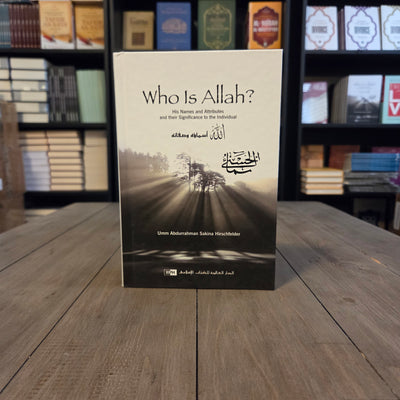 Who Is Allah? His Names and Attributes and Their Significance to the Individual By Umm Abdurrahman Sakina HirschfelderInternational Islamic Publishing House$22.00
 99 Names of Allah (Allah is One Series) By Umm AssadUmm Assad Publications$19.00
Leave a comment
This site is protected by hCaptcha and the hCaptcha Privacy Policy and Terms of Service apply.