
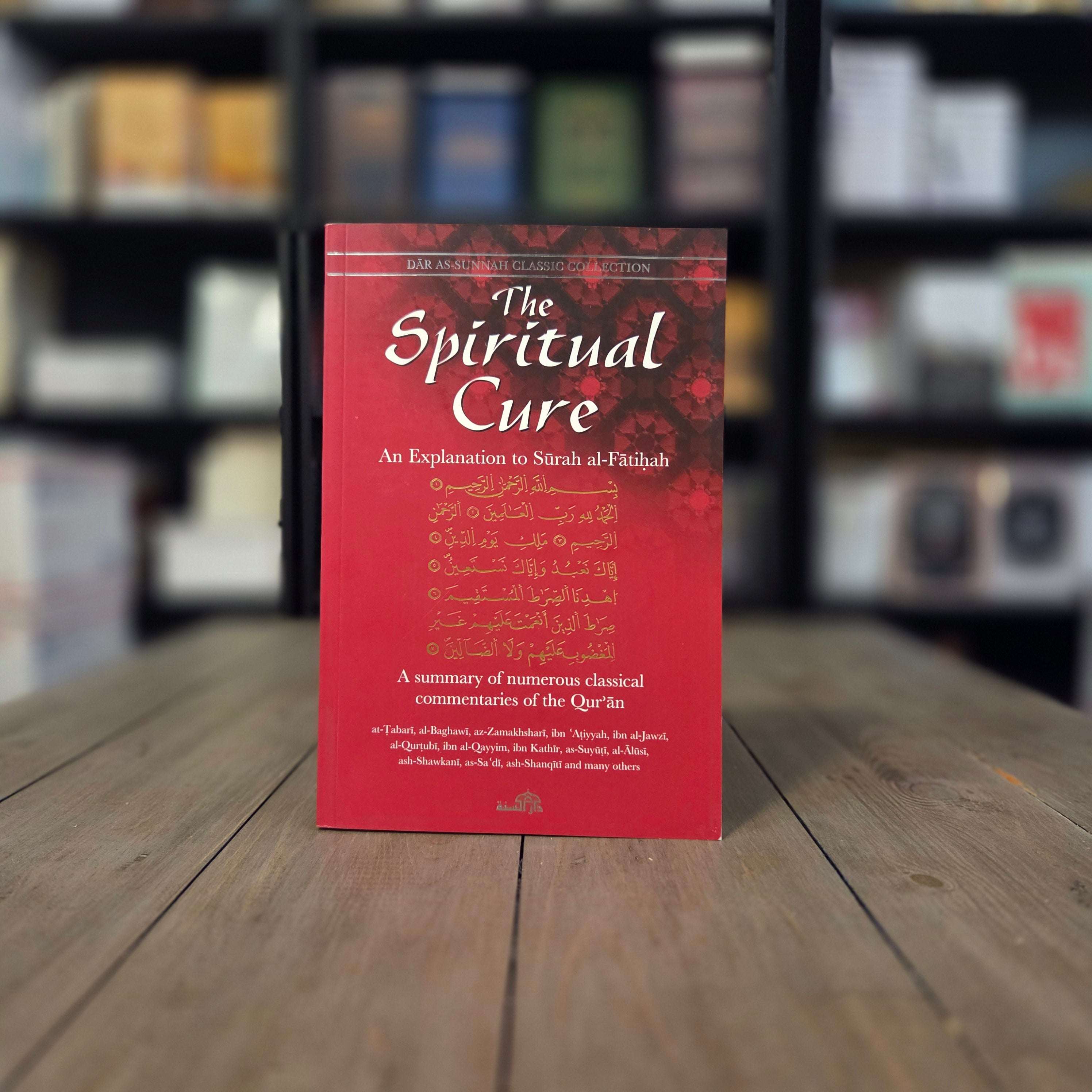
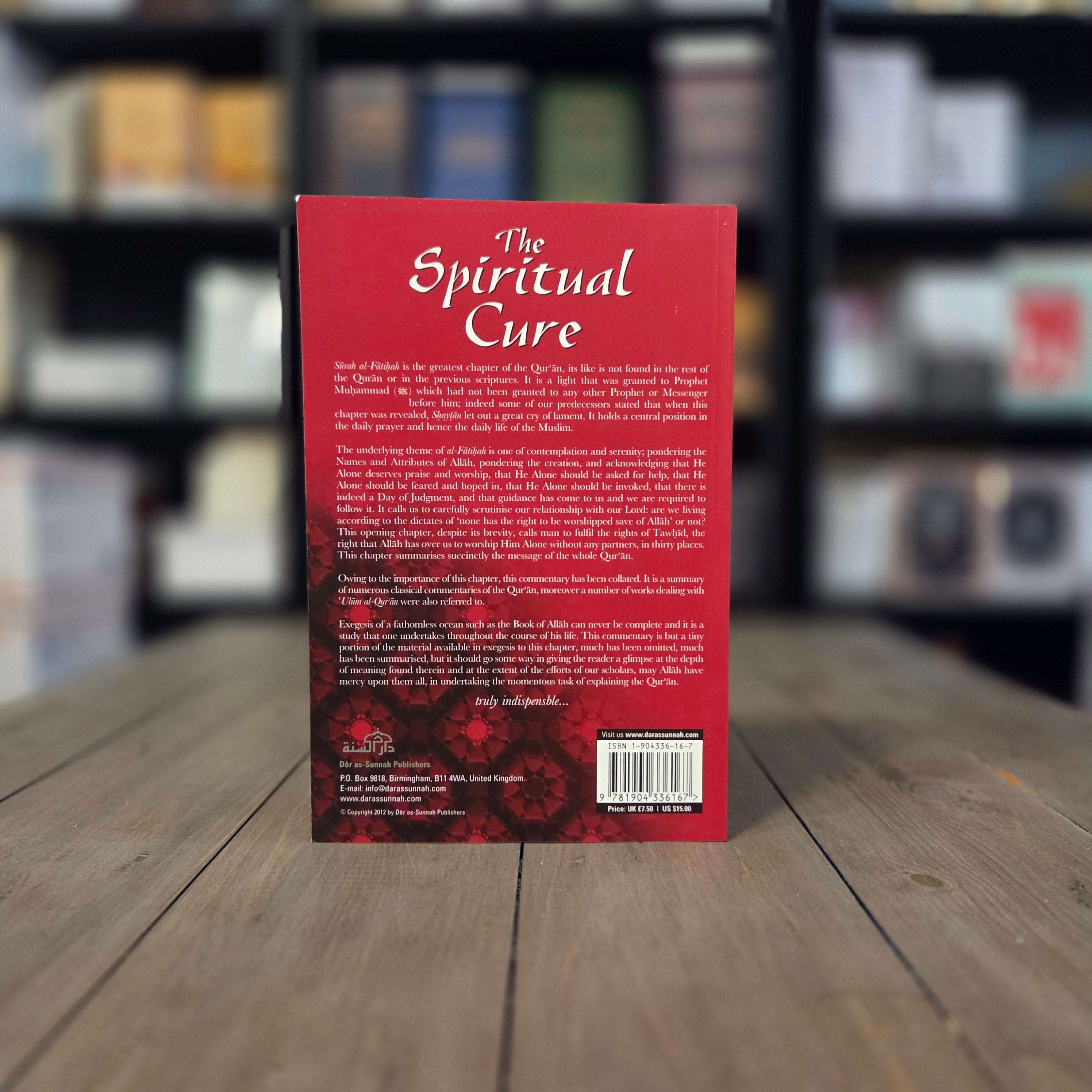

The Spiritual Cure An Explanation of Surah al-Fatihah
Get free shipping when you spend $75 or more.
Pickup available at The Islamic Book Cafe | Authentic Islamic Books For Every Reader
Usually ready in 4 hours

The Spiritual Cure An Explanation of Surah al-Fatihah
The Islamic Book Cafe | Authentic Islamic Books For Every Reader
30 SE 188th Ave
Portland OR 97233
United States

About This Book
Surah al-Fatihah is recited at least seventeen times every day by every praying Muslim. The Prophet (peace and blessings be upon him) called it "the greatest surah in the Qur'an" and "the seven often-repeated verses." Ibn al-Qayyim devoted an entire book to it. The scholars agree that it contains the entire message of the Qur'an in seven verses. Yet for most Muslims, these seven verses are recited from memory without any engagement with their profound meaning.
The Spiritual Cure: An Explanation of Surah al-Fatihah is a comprehensive commentary on this opening chapter — drawing from the greatest works of classical tafsir to present a multi-layered explanation of its every word, phrase, and implication. It is among the most thorough English treatments of Surah al-Fatihah available.
What This Book Covers
Why Surah al-Fatihah Is the Greatest Chapter
The book opens by establishing the unique status of this surah — why it holds a position found in no other chapter of the Qur'an or previous scriptures, why the Prophet (peace and blessings be upon him) said its like was not given to any prophet before him, and why Imam al-Shafi'i held that its recitation in prayer is obligatory rather than recommended. The full weight of this chapter's significance is established before a single verse is explained.
Verse-by-Verse Commentary
Every verse is explained in depth — the meanings of Bismi'llah, the significance of al-Rahman and al-Rahim and what distinguishes them, what "Lord of all the worlds" establishes about the relationship between Allah and His creation, the meaning of the Day of Recompense, and the profound implications of "You alone we worship and You alone we ask for help." The commentary on this last verse alone — the transition from speaking about Allah to speaking directly to Him — is one of the most theologically rich passages in the book.
The Straight Path — Its Definition and What Distinguishes It
The final verse — "Guide us to the straight path, the path of those upon whom You have bestowed favor, not of those who have evoked anger or those who are astray" — is explained with the full scholarly understanding of who the favored ones are, who earned Allah's anger, and who went astray. The Prophet himself explained this in authentic narrations, and the commentary draws on those explanations in full.
The Dialogue in Every Prayer
One of the most extraordinary dimensions of Surah al-Fatihah addressed in the book is the authenticated hadith qudsi in which Allah says He has divided this surah between Himself and His servant, and that He responds to each verse as the servant recites it — "My servant has praised Me," "My servant has glorified Me," "My servant has entrusted his affairs to Me," "This is between Me and My servant, and My servant shall have what he asks." The commentary on this hadith alone changes every Muslim's experience of salah forever.
About the Book
This commentary draws on the classical tafsir tradition — including the works of Imam al-Tabari, Ibn al-Jawzi, al-Qurtubi, Ibn al-Qayyim, Ibn Kathir, As-Sa'di, and others — with the primary focus on what the Qur'an and authentic Sunnah establish about the meaning of each verse. Published by Dar as-Sunnah Publishers.
Who This Book Is For
Every Muslim who wants to understand Surah al-Fatihah at the depth it deserves. Those who want their salah to be transformed by understanding what they are saying to Allah in every rak'ah. Students of tafsir beginning their study of the Qur'an with its greatest chapter. And any Muslim who has ever felt that their prayers were mechanical rather than a living conversation — this book is the remedy.
Book details
- Author
- at-Tabari, al-Baghawi, az-Zamakhshari, Ibn Atiyyah, ibn al-Jawzi, al-Qurtubi, ibn al-Qayyim, ibn Kathir, as-Suyuti, al-Alusi, ash-Shawkani, as-Sadi, ash-Shanqiti and many others.
- Translated by
- Abu Rumaysah
- Publisher
- Dar as-Sunnah Publishers
- Publication year
- 2012
- Categories
- Tafsir
- Binding
- Paperback
- Pages
- 208
- Language
- English
- Condition
- New
- ISBN
- 9781904336167
- SKU
- TIBC0262

