
Pearls from the Scholars #5: Lying with Your Actions
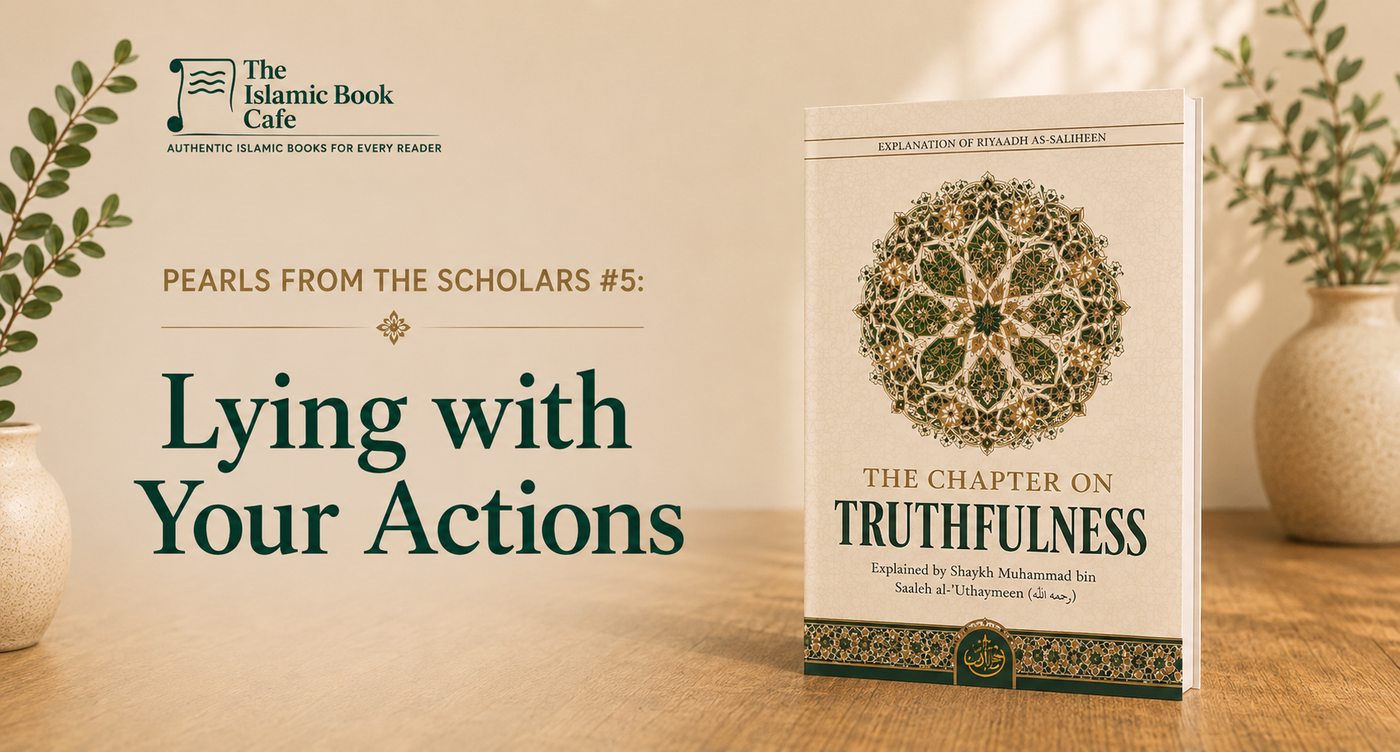
In our ongoing Pearls from the Scholars series we take a single passage from one of the imams who followed the way of the Salaf as-Salih and sit with it for a while. This week's pearl comes from Shaykh Muhammad ibn Salih al-Uthaymin in his Explanation of Riyadh as-Saliheen: The Chapter on Truthfulness, commenting on a hadith most of us have heard many times without following it all the way through.
The hadith is the one narrated by Abdullah ibn Mas'ud (may Allah be pleased with him), in which the Prophet (peace and blessings be upon him) commanded truthfulness, said that truth leads to virtue and virtue leads to Paradise, and that a man who keeps speaking the truth is finally recorded with Allah as truthful, with the same chain running in the opposite direction for the liar. (Al-Bukhari 6094; Muslim 2607)
Shaykh Ibn Uthaymin begins where you would expect: truthfulness is the conformity of a report to reality. If you are asked what day it is and you answer correctly, you have spoken truth. Then he asks a question that turns the whole subject on its head:
"Know that truthfulness involves both with tongue and actions, but how can lying be in actions?! If a person does an action which is contrary to what is in his heart, then this person has lied with his actions. The hypocrite, for example, is a liar because he shows people signs of belief; prays in congregational prayer and fasts with people, even gives charity although he is a miser and he may perform pilgrimage. This outward conduct deceptively leads people to consider him a righteous individual. However, this conduct does not truthfully reflect what resides in the heart; in other words, these actions are untrue."
A Lie Does Not Need Words
Most of us police our speech and leave our conduct unexamined. We would not say something we know to be false, but it does not occur to us that a deed can be false in exactly the same way. The Shaykh's definition makes it plain: truthfulness is conformity between the report and reality, and an action is a report. It tells the people watching something about what is inside you. When the inside does not match, the action has told them something untrue.
The Example He Chose Is Deliberate
Notice which deeds he lists: congregational prayer, fasting with the people, charity, even Hajj. Not one of them is a sin. They are the highest acts of worship in the religion, and he uses them as his example of lying, because the hypocrite performs them while his heart holds something else entirely. The man is a miser, and yet he gives. His giving is not a good deed spoiled by a bad intention; the Shaykh's word for it is untrue. The deed itself is a false statement.
Why This Should Make Us Uneasy Rather Than Comfortable
It would be easy to read this as a passage about hypocrites other people, elsewhere. That is not how the Salaf read warnings about nifaq. Ibn Abi Mulaykah said he met thirty of the Companions of the Prophet (peace and blessings be upon him) and every one of them feared hypocrisy for himself. The value of this pearl is that it hands you a test you can actually run: where do my actions say more about me than my heart could honestly support? Not to despair over the answer, but to close the gap either by correcting the heart or by not performing for an audience.
Truthfulness of the Tongue and of the Limbs
The Shaykh finishes by naming both halves together: when speech conforms to reality, that is truthfulness of the tongue; when the actions of the limbs conform to what resides in the heart, that is truthfulness of actions. Read the hadith again with that in view. "A man keeps speaking the truth until he is recorded with Allah as truthful" is not only about accurate reporting. It is about a person whose words, deeds and heart are finally saying the same thing, and that is a description of a life, not a habit of speech.
The thread from our last pearl, When Repentance Brings Hardship, runs straight into this one: there Ibn al-Qayyim said hardship after repentance is Allah testing whether the return was truthful. Here Ibn Uthaymin tells you where that truthfulness has to show in the limbs, not only on the tongue.
This pearl is taken from Shaykh Ibn Uthaymin's Explanation of Riyadh as-Saliheen: The Chapter on Truthfulness, published by Maktabatul-Irshad. The original compilation is Imam an-Nawawi's Riyad us-Saliheen — available at The Islamic Book Cafe.
Baarakallahu feekum — The Islamic Book Cafe | Portland, Oregon.
 Explanation of Riyadh as-Saliheen Chapter on Truthfulness By Shaykh Muhammad bin Saleh al-UthaymeenMaktabatul-Irshad Publications$9.00
 Riyad-us-Saliheen With Commentary (2 Volume Set) By Imam An-NawawiDarussalam Publishers$52.00
Leave a comment
This site is protected by hCaptcha and the hCaptcha Privacy Policy and Terms of Service apply.