
Pearls from the Scholars #3: The Three Types of the Self
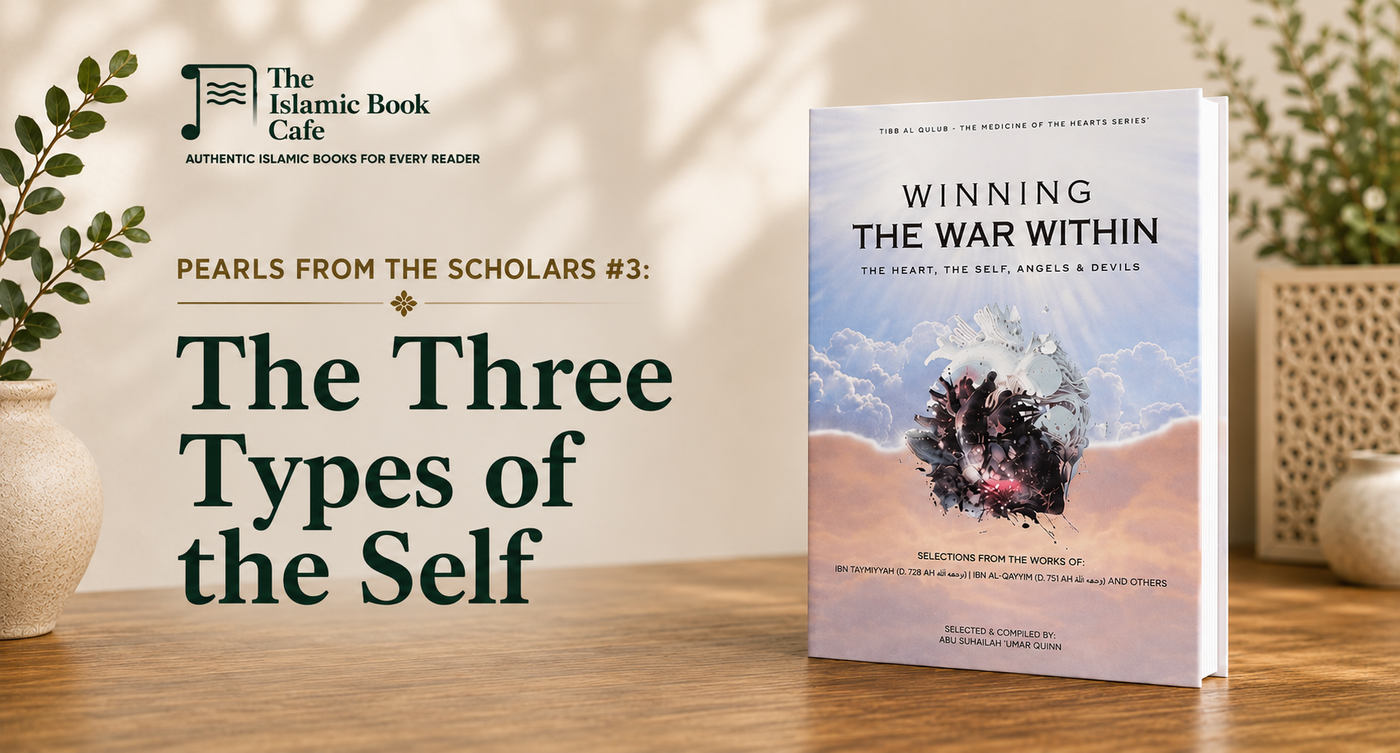
Shaykh al-Islām Ibn Taymiyyah taught that the self a person carries is not one fixed thing. It shifts between three states, and learning to recognize which one is speaking is half of the struggle. In a passage collected in Winning the War Within (Tibb al-Qulub: The Medicine of the Hearts), he wrote:
“It is said that there are three types of the self: The first is ‘al-ammārah’: ‘the self that insistently commands with evil,’ which is primarily characterized by following its desires to commit sins and acts of disobedience. The second is ‘al-lawwāmah’: ‘the reproachful soul,’ which sins and then repents; thus, it possesses both good and evil. However, when it does something evil, it repents and returns to the right path, hence it is called reproachful as it blames its possessor for the sins and because it wavers, i.e., hesitates, between good and evil. The third type is ‘al-muṭma’innah’: ‘the peaceful soul,’ which loves good and righteousness, desires them, hates evil deeds, and despises such. This becomes its character, habit, and second nature.”
Recorded in his Majmūʿ al-Fatāwā, this is not a description of three different people but of three states a single heart moves through, sometimes within a single day. The Qur’an names all three: the soul that commands to evil (Surah Yusuf 12:53), the self-reproaching soul (Surah al-Qiyamah 75:2), and the reassured soul (Surah al-Fajr 89:27). Knowing which one is speaking in the moment is where the work begins.
The commanding soul pulls without apology. It does not argue; it wants, and it keeps wanting until it is fed, whether the thing it craves is lawful or unlawful makes no difference to it. And it does not stay in the open where it can be fought honestly. Ibn Taymiyyah warns, elsewhere in the same collection, that this soul will clothe its desires in the language of religion, urging a person to “enjoin good” upon others while its true fuel is envy and the wish to rise above them. The danger is not only that it sins, but that it can disguise its sin as righteousness.
The self-reproaching soul looks like failure and is in fact a mercy. It falls, but then it turns on itself: blaming, regretting, returning. That sting of conscience after a wrong is not a weakness to be silenced; it is proof the heart is still alive. Allah swore an oath by this very soul, and He does not swear by something worthless. Its wavering between good and evil is uncomfortable precisely because the light still in it refuses to let the darkness settle.
The reassured soul is where the whole struggle is meant to lead. Notice Ibn Taymiyyah’s exact words: loving good and hating evil have become its “character, habit, and second nature.” It is not that this soul stops feeling temptation. It is that righteousness has been chosen so many times that it has become who the person is. The peace here is not the absence of the war; it is the war won so completely that the heart has stopped negotiating with its enemy.
This is the same battlefield we mapped in our last pearl, the two thrones of the heart, where Ibn al-Qayyim described the heart as a throne claimed either by the Most Merciful or by Satan. The three states of the soul are how that contest actually feels from the inside: the tug of the commanding soul, the sting of the reproaching soul, and the stillness of the one that has finally come home.
Winning the War Within is Umar Quinn’s translation of Tibb al-Qulub, “the medicine of the hearts,” gathering the words of Ibn Taymiyyah and Ibn al-Qayyim on the states of the heart and the self. This section on the three souls is among its most practical: a map of your own interior, drawn by two imams who devoted their writing to the diseases of the heart and their cures.
Baarakallahu feekum — The Islamic Book Cafe | Portland, Oregon.

Leave a comment
This site is protected by hCaptcha and the hCaptcha Privacy Policy and Terms of Service apply.