
Madarij as-Salikin in English: Ibn al-Qayyim's Map of the Journey to Allah
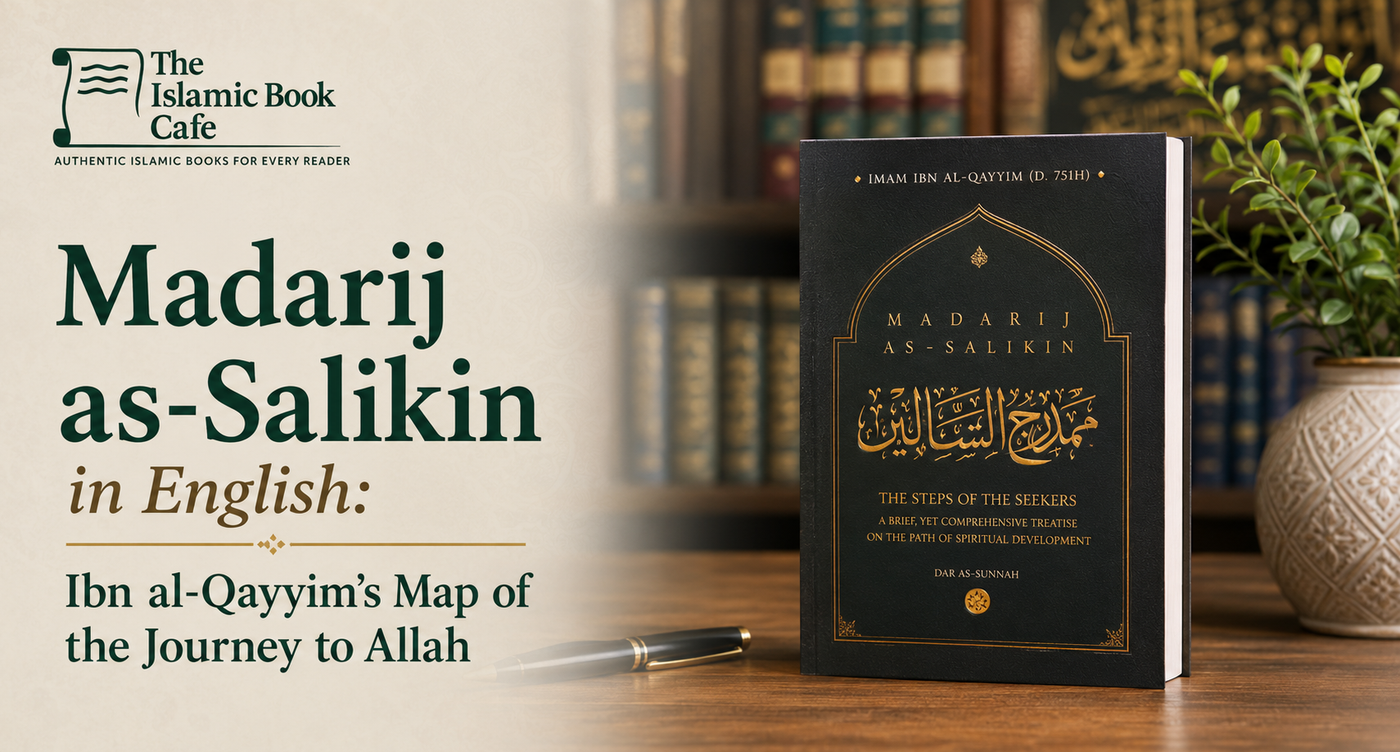
Ask anyone who has read Imam Ibn al-Qayyim al-Jawziyyah in English which of his books they most wanted and could not get, and the answer is usually the same: Madarij as-Salikin. It is his longest treatment of the road a servant travels toward his Lord, and until recently there was no way into it for an English reader short of a multi-volume academic translation.
An Abridgment of The Servant's Journey from Hikmah Publications changes that. This guide explains what Madarij as-Salikin is, why it is built the way it is, and where this abridgment fits for a reader who wants the substance without the shelf.
What Madarij as-Salikin Actually Is
Ibn al-Qayyim (691–751 AH) wrote Madarij as-Salikin as an exposition of an earlier book: Manazil as-Sa'irin by Abu Isma'il al-Harawi al-Ansari (d. 481 AH), a terse Hanbali text laying out one hundred stations the soul passes through on the way to Allah: repentance, wakefulness, turning back, fear, hope, reliance, love, and the rest.
That is the frame. What Ibn al-Qayyim does inside it is the reason the book matters. He does not simply explain al-Harawi's stations one by one. He reorders them, expands what is sound, and answers what is not, measuring each station against what the Qur'an and the authentic Sunnah actually establish. The result reads less like a commentary and more like a book of his own that happens to follow another man's outline.
Why the Whole Book Rests on Surah al-Fatihah
Ibn al-Qayyim frames the entire journey on one verse of the opening chapter of the Qur'an:
It is You we worship and You we ask for help.
— Surah al-Fatihah 1:5 (Saheeh International)
Everything in the book hangs on those two halves. Worship belongs to Allah alone. That is the first half, and it is tawhid al-uluhiyyah stated in six words. But no servant reaches any station by his own strength, which is the second half: the help by which any of it is achieved also comes from Allah alone. A station reached without the second half is a station a man credits to himself.
The verse that follows is the request that opens the journey:
Guide us to the straight path.
— Surah al-Fatihah 1:6 (Saheeh International)
This is why the book is not a self-improvement manual with Islamic vocabulary laid over it. Its structure is the structure of the surah every Muslim recites seventeen times a day.
The Correction Inside the Book
Manazil as-Sa'irin came out of a tradition that produced statements Ahl as-Sunnah do not accept, and readers are right to ask what a book upon the manhaj of the Salaf is doing built on top of it. Ibn al-Qayyim asks the same question, and answers it in the text itself.
He keeps and explains what agrees with the Book and the Sunnah. Where al-Harawi's wording carries a meaning that contradicts them (on annihilation of the self, on union, on the ranks of the elite) he states the objection plainly and refutes it. The correction is not a translator's footnote added centuries later or a publisher's disclaimer at the front. It is part of the work. That is precisely why students upon the way of the Salaf read this book rather than avoid it, and why it has a place in a catalogue that does not stock Sufi literature.
What Is in This Volume
An Abridgment of The Servant's Journey is Part 1 of the abridgment: 388 pages, translated by Osman Hamid, published by Hikmah Publications. It begins at the beginning of the journey and reads straight through; further parts are to follow from the publisher.
What you get is the stations treated in their reality, their signs, and the means by which each one is cultivated, in Ibn al-Qayyim's own manner of writing: a definition, then the evidence, then what the state looks like in a person who actually has it, then the counterfeit version of it that a man can mistake for the real thing. That last move is the one readers remember.
What to Read Alongside It
The stations mapped in Madarij as-Salikin are the frame that Ibn al-Qayyim's shorter books fill in. These four sit naturally beside it:
The Disease and The Cure by Ibn al-Qayyim
His treatment of ad-Da' wa ad-Dawa', written in answer to a man who could not break free of a sin. Where Madarij maps the whole road, this book examines what stops a servant on it. Its section on why a supplication appears to go unanswered is the part most readers come back for.
Excellence of Patience and Gratefulness by Ibn al-Qayyim
Two stations from the same map, taken on their own and given room. Patience and gratitude are treated not as opposites but as the two halves of a believer's response to everything Allah decrees.
Diseases of the Hearts and Their Cures by Ibn Taymiyyah
From Ibn al-Qayyim's teacher, and short enough to read in a sitting. It establishes why the heart is the foundation of every action, and prescribes the cures: reliance on Allah, night prayer, consistent dhikr, righteous companionship, and recitation of the Qur'an.
Driving the Souls to the Abodes of Happiness by Ibn al-Qayyim
His call to lift the soul toward Paradise rather than let it settle for the dunya, the destination the stations are travelled toward.
If Part 1 Is More Than You Want Right Now
388 pages is a commitment, and it is not where everyone should begin with this author. Two short books show you exactly what kind of writer he is:
- Release from the Shackles of Desire: on the tyranny of the lower self and how a believer breaks its grip. The briefest way into his writing on the heart.
- Inner Dimensions of the Prayer: not the fiqh of how to pray, but what standing, bowing and prostrating do to a heart that is paying attention.
Read either one, and if the manner of writing holds you, Madarij is where it goes.
Where This Sits in a Reading Plan
To work through this author in order, see our guide to books by Ibn al-Qayyim. For the wider subject (which books treat which disease of the heart, and in what order to read them) see the best books on purifying the soul (tazkiyah). And tazkiyah is one shelf in a complete library; our complete guide to the best Islamic books by topic covers the rest.
Every title above is vetted upon the Qur'an and the authentic Sunnah upon the understanding of the Salaf as-Salih, and ships from our shop here in Portland. Browse the full Ibn al-Qayyim collection or the whole Tazkiyah collection any time, and if you are unsure which book suits your level, reach out on live chat. We are always glad to help you choose.
Baarakallahu feekum — The Islamic Book Cafe | Portland, Oregon.
 An Abridgment of The Servants Journey By Ibn Al-QayyimHikmah Publications$37.00
 The Disease and The Cure By Imam Ibn Al-QayyimHikmah Publications$53.00
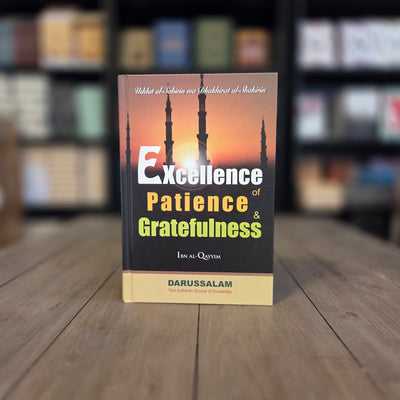 Excellence of Patience and Gratefulness By Ibn Al-QayyimDarussalam Publishers$30.00
 Diseases of The Hearts And Their Cures By Shaykul-Islam Ibn TaymiyyahDar as-Sunnah Publishers$15.00
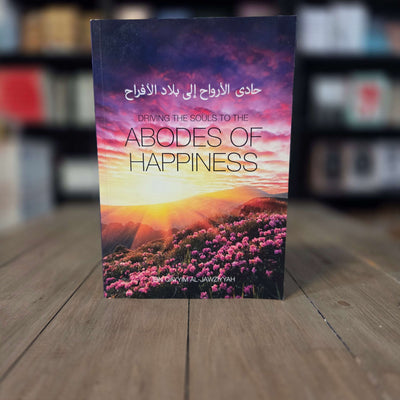 Driving The Souls To The Abodes of Happiness By Ibn Qayyim Al-JawziyyahDarussalam Publishers$30.00
 Release From the Shackles of Desire By Ibn QayimDakwah Corner Bookstore$8.00
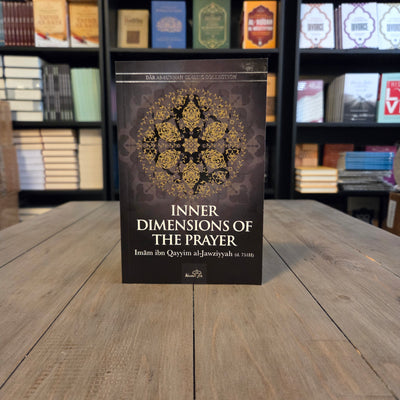 Inner Dimensions of The Prayer By Ibn Qayyim Al JawzziyahDar as-Sunnah Publishers$13.00
Leave a comment
This site is protected by hCaptcha and the hCaptcha Privacy Policy and Terms of Service apply.