
The History of the Adhan: A Chronology of the Muslim Call to Prayer
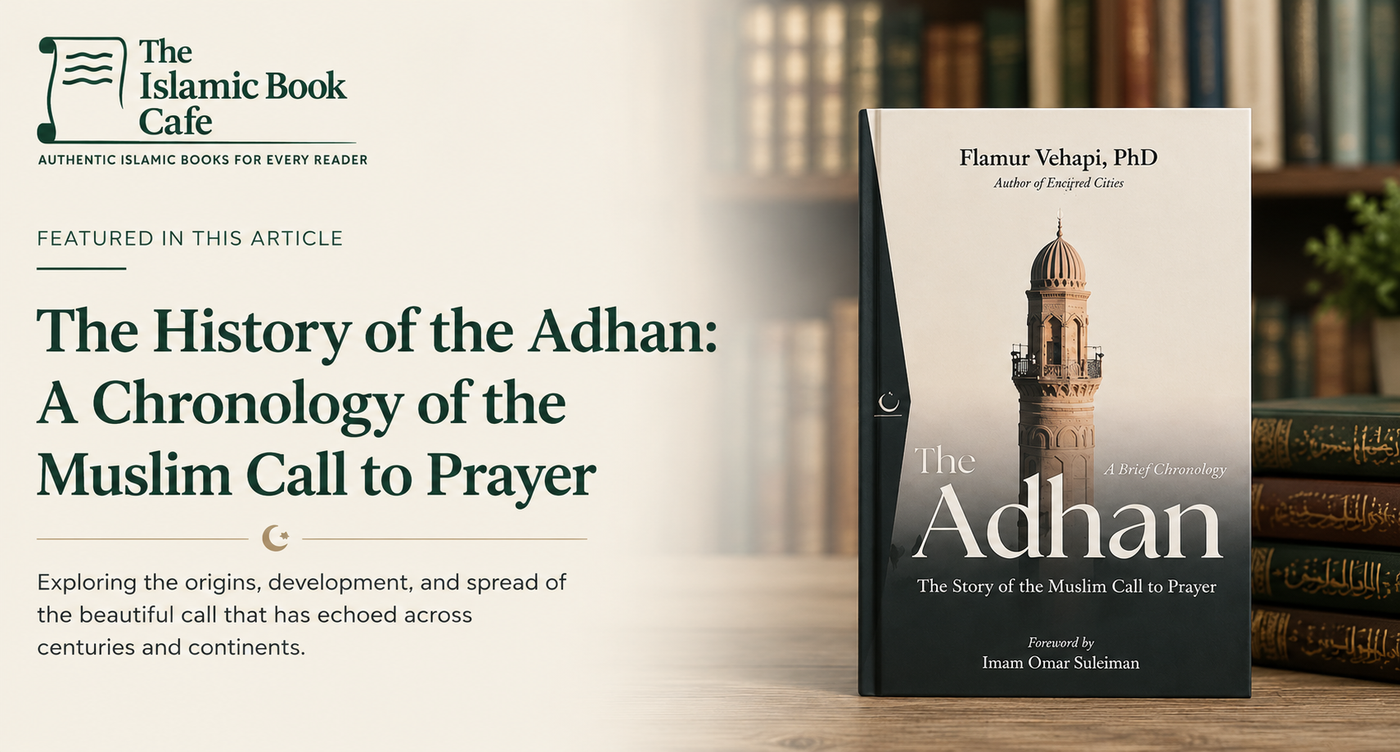
Most books on the adhan treat it as a chapter inside a book on salah. The Adhan: A Brief Chronology by Flamur Vehapi takes the call to prayer itself as the subject and follows it forward from Madinah to the present.
Where the Adhan Began
When the Muslims first settled in Madinah there was no fixed signal for the prayer. They gathered by guesswork, and when the matter was discussed, a bell and a horn were both put forward before Umar suggested that a man should simply call out. Ibn Umar narrated:
"Allah's Messenger, peace and blessings be upon him, ordered Bilal to get up and pronounce the Adhan for prayers."
— Sahih al-Bukhari 604
Bilal ibn Rabah was the first to raise it, and the same words have been called aloud ever since. That continuity is what the book sets out to trace. On the prayer those words summon the Muslim to, see our full guide to salah, the second pillar of Islam.
A Chronology Rather Than a Narrative
The book is arranged as dated entries rather than continuous prose, and that structure is what makes it useful. Reading it in order, you are not only following the spread of the call to prayer, you are watching the spread of Islam alongside it: communities settling in new lands, masjids being built, the adhan being raised in places where it had never been heard before.
It also means the book works as a reference. You can read it in a sitting, then come back to a single century or region when you need it.
How to Read It as a Starting Point
The chronology gives a framework, and the reader who stops along the way will find a great deal of history sitting behind each entry. Four questions turn it from a book you finish into a book you work through:
- What was happening in this region at this time?
- What was life like for the Muslims living there?
- How did Islam reach this area?
- What is the history of the masjid mentioned, and what became of it?
Answer those as you go and a short book opens onto the history, livelihood, growth, and spread of Muslim communities around the world. It becomes a read, pause, research, and return kind of book.
Where the Book Ends Up
The closing chapters reach the present: the minaret giving way to the loudspeaker, the call carried by radio and recording, and the adhan heard in cities where the Muslims are a minority. For a reader in the West, that last stretch is the part of the history they are standing inside.
A History, Not a Book of Rulings
This is a work of history. It records how the adhan has been called across the centuries rather than setting out the fiqh of the adhan and the iqamah, their conditions, or what the caller and the listener should say. For that, see Prayer According to the Qur'an and Sunnah and Common Mistakes Regarding Prayer, and browse the salah collection.
For readers who want a short entry into Islamic history, or who already read history and want a single thread to follow through it, this one is worth the shelf space. You can find it alongside the rest of our Islamic history titles.
Baarakallahu feekum — The Islamic Book Cafe | Portland, Oregon.

Leave a comment
This site is protected by hCaptcha and the hCaptcha Privacy Policy and Terms of Service apply.