
Women's Rights in Islam: Dignity, Not Oppression
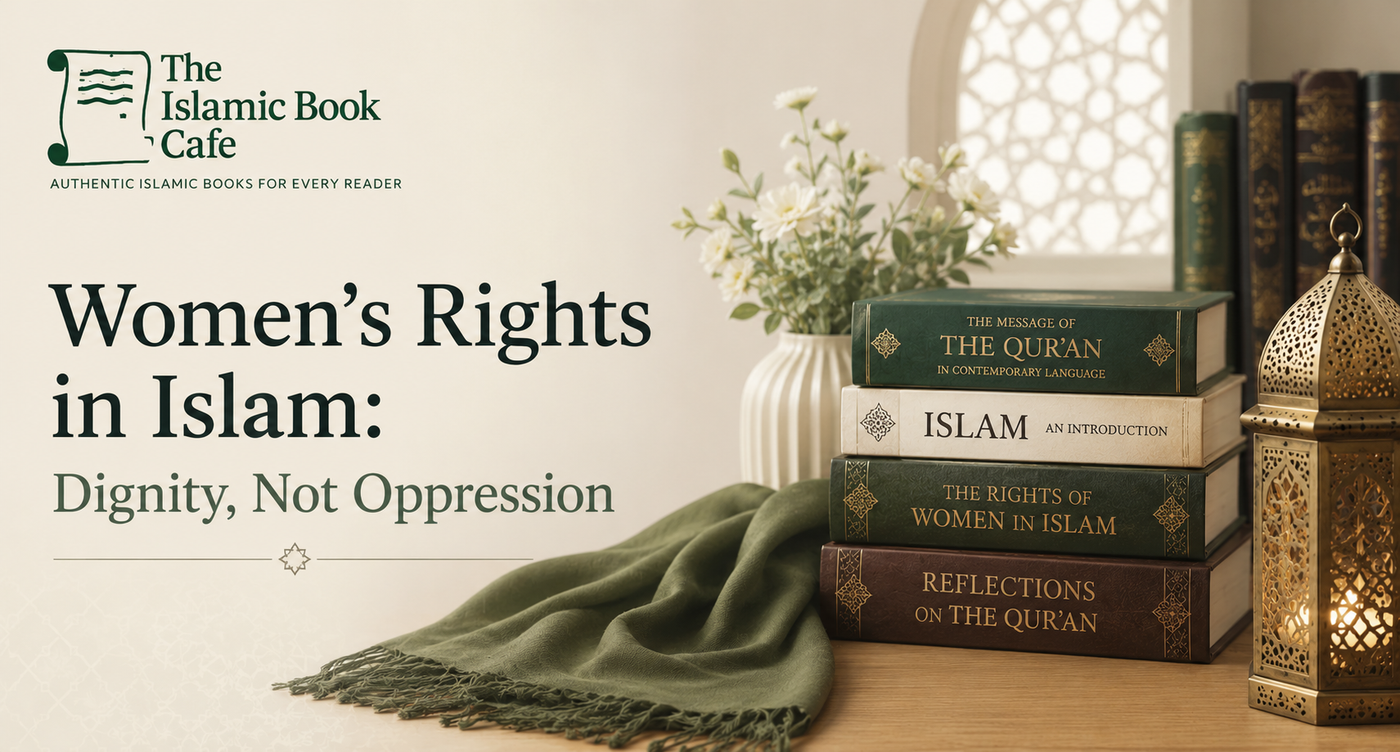
Few objections to Islam are repeated as often as the claim that it oppresses women. It surfaces in headlines, classrooms, and everyday conversation almost as settled fact. Yet when the question is taken back to the sources, the Qur'an, the authentic Sunnah, and the understanding of the first generations of Muslims, a very different picture emerges. Islam did not merely permit women a place in society; it guaranteed them defined rights by revelation, at a time when much of the world granted them none.
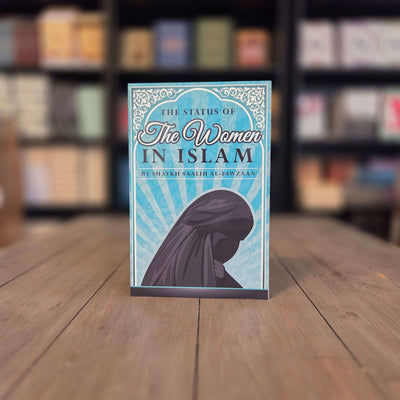
Those rights are the subject of The Status of Women in Islam ($11.00) by Shaykh Saalih al-Fawzaan. This article walks through the foundations that book rests on: where a woman stands before Allah, and the specific rights Islam established for her in wealth, marriage, and family life. It is a companion to our earlier look at Human Rights in Islam, which shows that rights in Islam are grounded in revelation rather than shifting human consensus.
Equal in Humanity, Equal in Reward
The starting point is not a list of privileges but a statement about worth. In Islam, men and women share a single origin and stand as moral equals before their Creator, each fully accountable, and each eligible for the same reward. Allah addresses them together and promises them the same outcome:
Indeed, the Muslim men and Muslim women, the believing men and believing women, the obedient men and obedient women, the truthful men and truthful women, the patient men and patient women, the humble men and humble women, the charitable men and charitable women, the fasting men and fasting women, the men who guard their private parts and the women who do so, and the men who remember Allah often and the women who do so - for them Allah has prepared forgiveness and a great reward.
— Surah al-Ahzab 33:35, Saheeh International
Nine qualities of faith are named, and for each one the woman is mentioned alongside the man, with an identical promise at the end. Spiritual standing in Islam is earned through faith and righteous action, not decided by gender. This is the foundation on which every right that follows is built.
The Rights Islam Established for Women
The Right to Own Property and Inherit Wealth
Islam gave women an independent financial identity. A woman's wealth is her own: her earnings, her savings, and her inheritance belong to her, not to her husband, father, or brother. Where pre-Islamic custom often treated women as property to be inherited, revelation named them as heirs in their own right:
For men is a share of what the parents and close relatives leave, and for women is a share of what the parents and close relatives leave, be it little or much - an obligatory share.
— Surah an-Nisa 4:7, Saheeh International
The share is described as “obligatory,” meaning it cannot be erased by custom or withheld by relatives. A woman inherits as a daughter, a wife, a mother, and a sister, and what she receives is legally hers to keep, spend, or invest as she chooses.
The Right to Consent in Marriage
No woman can be married against her will. Her consent is a condition of a valid marriage, not a formality, and when it was denied, the Prophet, peace and blessings be upon him, overturned the marriage outright:
Narrated Khansa bint Khidam Al-Ansariya: that her father gave her in marriage when she was a matron and she disliked that marriage. So she went to Allah's Messenger, peace and blessings be upon him, and he declared that marriage invalid.
— Sahih al-Bukhari 5138
A father, for all his authority, could not force his daughter into a marriage she rejected. That a woman in the earliest Muslim community could bring such a complaint directly to the Messenger of Allah, peace and blessings be upon him, and have it upheld shows how seriously this right was taken.
The Right to Kind and Honorable Treatment
Beyond legal rights, Islam obligates the good treatment of women in daily life. Allah commands husbands to live with their wives in kindness, even through moments of difficulty:
O you who have believed, it is not lawful for you to inherit women by compulsion. And do not make difficulties for them in order to take [back] part of what you gave them unless they commit a clear immorality. And live with them in kindness. For if you dislike them - perhaps you dislike a thing and Allah makes therein much good.
— Surah an-Nisa 4:19, Saheeh International
The Prophet, peace and blessings be upon him, made a man's treatment of women a measure of his faith itself:
The most complete of the believers in faith, is the one with the best character among them. And the best of you are those who are best to your women.
— Jami' at-Tirmidhi 1162, graded hasan sahih
Kindness to women is not framed here as optional courtesy; it is tied directly to the completeness of a believer's faith.
The Right to Honor as Mother and Daughter
Islam raised the standing of women within the family to a height that startled its first audience. When a man asked who most deserved his devotion, the answer placed the mother first, three times over:
A man came to Allah's Messenger, peace and blessings be upon him, and said, “O Allah's Messenger! Who is more entitled to be treated with the best companionship by me?” The Prophet said, “Your mother.” The man said. “Who is next?” The Prophet said, “Your mother.” The man further said, “Who is next?” The Prophet said, “Your mother.” The man asked for the fourth time, “Who is next?” The Prophet said, “Your father.”
— Sahih al-Bukhari 5971
Daughters, too, were lifted from a culture that had once buried them alive (a practice the Qur'an condemns by name in Surah at-Takwir 81:8–9, where the buried girl is asked for what sin she was killed) to a religion that made raising them well a means of entering Paradise. Womanhood in Islam is honored at every stage of life: as a daughter, a wife, and a mother.
Answering the Objection: Context, Not Contradiction
Objections usually cluster around a few specific rulings: differences in inheritance shares in certain cases, the guardianship structure of the family, or the command of hijab. Handled honestly, none of these overturn the picture above; each carries a wisdom and a context that the polemical version leaves out. A woman's smaller share in some inheritance scenarios, for instance, sits alongside the fact that she bears no obligation to spend on the household, while the man remains financially responsible for it. Hijab is a command of modesty and dignity, not a mark of inferiority. We take that objection up on its own in The Hijab: Modesty, Not Oppression. Islamic family law aims at order and justice between people with complementary roles, not a ranking of human worth.
These are precisely the questions Shaykh al-Fawzaan takes up in detail, answering them from the Qur'an and Sunnah upon the understanding of the Salaf rather than from cultural assumption or modern apology.
About the Book: The Status of Women in Islam
The Status of Women in Islam sets out, clearly and without apology, the honor, rights, and defined role that revelation established for women. Rather than reacting to every modern talking point, it builds the case from the ground up: what the Qur'an and Sunnah actually say about women, and how the early generations understood and applied it.
What This Book Covers
The book opens by establishing the woman's status, then contrasts it with her degraded position in the pre-Islamic days of ignorance, the historical baseline that makes Islam's reforms clear. From there it turns to practical matters: the woman working outside her home, the rulings connected to her, and what is specific to women in acts of worship. It closes with three appendices of direct scholarly advice, from Shaykh al-Fawzaan himself, from Shaykh ‘Ubayd al-Jaabiree, and from Shaykh al-Albaanee, grounding the whole treatment in the words of recognized scholars of the Sunnah.
About the Author
Shaykh Saalih ibn Fawzaan al-Fawzaan is a member of the Council of Senior Scholars of Saudi Arabia and of the Permanent Committee for Islamic Research and Fatwa, and the author of many works studied by students of knowledge around the world. His writing is known for clarity, precision, and close adherence to evidence.
Who Should Read This Book
This is a useful read for any Muslim who wants to answer the “oppression” objection with confidence and evidence, for new Muslims fielding questions from family and friends, and for anyone seeking a clear, source-based account of what Islam grants to women. It is short enough to finish quickly and solid enough to return to.
You can find The Status of Women in Islam by Shaykh Saalih al-Fawzaan in stock now at The Islamic Book Cafe.
Prices were current at the time of publication. The price shown on each product page is always the live one.
Baarakallahu feekum — The Islamic Book Cafe | Portland, Oregon.
Leave a comment
This site is protected by hCaptcha and the hCaptcha Privacy Policy and Terms of Service apply.