
What Is Jihad in Islam? Meaning, Conditions, and Misconceptions
Of all the words associated with Islam, “jihad” may be the most misunderstood. Extremists invoke it to justify atrocities; critics cite it to indict the entire religion. Neither reflects what the word actually means. Taken from the Qur'an, the authentic Sunnah, and the scholars of the Salaf, jihad has a precise meaning, strict conditions, and firm limits, and none of them resemble the violence carried out in its name. This piece sits alongside our look at There Is No Compulsion in Religion, which addresses a closely related misconception.
What “Jihad” Actually Means
Linguistically, jihad means to strive or exert effort. In the Sharia it covers far more than the battlefield. Striving against one's own desires in obedience to Allah, seeking and spreading beneficial knowledge, and calling others to the truth with wisdom and clear proof are all forms of jihad. Armed fighting, known as qital, is one specific type, and it is the one people most often have in mind. Yet even this is not the lawless free-for-all the popular image suggests; it is bound by conditions and limits set by Allah and His Messenger, peace and blessings be upon him.
When Fighting Is Permitted, and Its Limits
Fighting in Islam is tied to justice and the repelling of aggression, and even then it is fenced by a divine limit:
Fight in the way of Allah those who fight you but do not transgress. Indeed. Allah does not like transgressors.
— Surah al-Baqarah 2:190, Saheeh International
The command comes with an immediate restriction: “do not transgress.” Warfare is not permission to abandon morality; it is regulated conduct, and Allah names those who exceed the limits as people He does not love.
The Prophet's Own Rules of Engagement
The Qur'an sets the limit; the Sunnah spells out what it means in the field. The clearest text is the hadith of Buraydah, in the Book of Jihad and Expeditions in Sahih Muslim, under the chapter on the ruler appointing commanders and instructing them in the etiquette of war:
It has been reported from Sulaiman b. Buraida through his father that when the Messenger of Allah, peace and blessings be upon him, appointed anyone as leader of an army or detachment he would especially exhort him to fear Allah and to be good to the Muslims who were with him. He would say: Fight in the name of Allah and in the way of Allah. Fight against those who disbelieve in Allah. Make a holy war, do not embezzle the spoils; do not break your pledge; and do not mutilate (the dead) bodies; do not kill the children.
— Sahih Muslim 1731a, authentic
Read what is actually in that instruction. Before any mention of the enemy comes the command to fear Allah and to treat one's own men well. Then four prohibitions, each of them a thing armies have always done: stealing from the spoils, breaking a pledge given, mutilating the dead, and killing children. The hadith continues by requiring that the other side be invited to Islam, or to terms, before fighting begins at all, and that whichever they accept, the fighting stops.
This is what the Qur'anic phrase “do not transgress” looks like in practice. It is also worth noticing who is being addressed: a commander, appointed by the Prophet, peace and blessings be upon him, and sent out under his authority. The rules of war and the question of who may declare it arrive in the same breath.
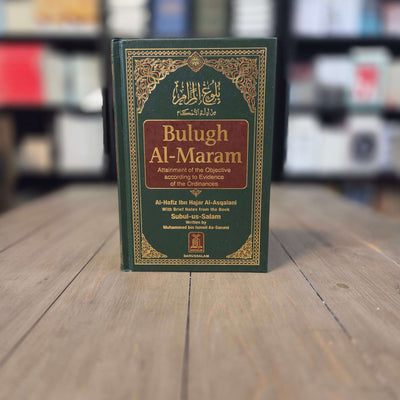
The narration is also collected by al-Hafiz Ibn Hajar al-Asqalani in the Book of Jihad in Bulugh al-Maram, where it sits alongside the other narrations on the conduct of war.
The Sanctity of Innocent Life
Islam's baseline is the inviolability of human life. The taking of a single innocent life is measured against the whole of humanity:
Because of that, We decreed upon the Children of Israel that whoever kills a soul unless for a soul or for corruption [done] in the land - it is as if he had slain mankind entirely. And whoever saves one - it is as if he had saved mankind entirely.
— Surah al-Ma'idah 5:32, Saheeh International
Any act of violence in Islam is weighed against this principle. A cause that requires the slaughter of the innocent has already stepped outside the bounds Allah set.
Non-Combatants Must Never Be Targeted
The prohibition on harming non-combatants is explicit. When a slain woman was found after a battle, the Prophet, peace and blessings be upon him, responded with a clear ban:
Narrated Ibn `Umar: During some of the Ghazawat of Allah's Messenger, peace and blessings be upon him, a woman was found killed, so Allah's Messenger, peace and blessings be upon him, forbade the killing of women and children.
— Sahih al-Bukhari 3015
Taken with the hadith of Buraydah, the position is not a matter of inference. The killing of children is prohibited by the Prophet's standing instruction to every commander he sent out, and the killing of women was forbidden by name when it occurred.
Jihad Is the Authority of the Ruler, Not the Individual
A further condition is decisive, and it is where much modern violence collapses: armed jihad is a matter for the Muslim ruler and legitimate authority, declared under the banner of the state, not something individuals or self-appointed groups may launch on their own.
This is not a modern accommodation. Ibn Qudamah al-Maqdisi states it in al-Mughni, one of the major works of Hanbali fiqh: the matter of jihad is in the hands of the ruler and his ijtihad, and the people are to follow him in what he judges regarding it. The reasoning given is practical as well as legal: if people were free to fight without the ruler's permission, the result would be chaos. The ruling, with its citation from al-Mughni, can be read in full here. The one exception the jurists name is sudden defence: where an enemy attacks a people directly, repelling that attack does not wait on permission.
That distinction matters, because it is precisely the one that groups committing violence in the name of Islam collapse. Other works by Ibn Qudamah al-Maqdisi are on our shelves.
Why Jihad Is Not Terrorism
Set against these standards, terrorism is not jihad. It is its opposite. Targeting the innocent to spread fear is the very transgression the Qur'an forbids, the shedding of protected blood the Prophet, peace and blessings be upon him, prohibited by name, and the vigilante violence the scholars reject. To call such acts “jihad” wrongs both the victims and the religion itself. The genuine meaning, striving in the way of Allah, bound by justice, mercy, and rightful authority, stands far from the caricature.
For the closely related question of whether Islam forces its faith on anyone, see There Is No Compulsion in Religion. The wider rulings this subject sits within are worked through in the books in our fiqh collection.
Baarakallahu feekum — The Islamic Book Cafe | Portland, Oregon.
Leave a comment
This site is protected by hCaptcha and the hCaptcha Privacy Policy and Terms of Service apply.