
There Is No Compulsion in Religion: Freedom of Belief in Islam
Few verses of the Qur'an are quoted as often, or misunderstood as often, as the words “There shall be no compulsion in religion.” Some read it as a claim that all beliefs are equally valid. Others insist it contradicts the rest of the religion. The understanding of the Salaf, the first generations of Muslims, is clearer and firmer than either: no one is forced to enter Islam, because faith is only real when it is chosen by conviction, yet the truth is never left unclear, and every soul remains accountable for the path it takes. It is a theme that runs alongside the broader framework we covered in Human Rights in Islam.
“There Shall Be No Compulsion in Religion”
The statement is unambiguous, and it comes directly from Allah:
There shall be no compulsion in [acceptance of] the religion. The right course has become clear from the wrong. So whoever disbelieves in Taghut and believes in Allah has grasped the most trustworthy handhold with no break in it. And Allah is Hearing and Knowing.
— Surah al-Baqarah 2:256, Saheeh International
Explaining this verse, the mufassir Ibn Kathir wrote that it means: do not force anyone to become Muslim, for Islam is plain and clear, and its proofs are evident; there is no need to compel anyone, because whoever Allah opens his heart to guidance will embrace it with certainty. His treatment of the verse can be read in Tafsir Ibn Kathir at Surah al-Baqarah 2:256. Forced belief, in other words, is a contradiction in terms. A person can be made to utter words, but faith lives in the heart, and the heart cannot be coerced.
Faith Is by Conviction, Not Coercion
This principle is so central that Allah reminded even His Messenger, peace and blessings be upon him, that guiding hearts was never his task to force:
And had your Lord willed, those on earth would have believed - all of them entirely. Then, [O Muhammad], would you compel the people in order that they become believers?
— Surah Yunus 10:99, Saheeh International
Had Allah wished, He could have created all of humanity as believers by nature, as He created the angels. Instead He gave people the will to accept or reject, and made the Messenger's duty the conveying of the message, not the forcing of it. Da'wah, calling to Islam with clear proof, is the method; compulsion is not.
What “No Compulsion” Does Not Mean
Because the verse is so often quoted out of context, it is worth stating plainly what it does not say.
It Does Not Mean All Religions Are Equally True
The same verse that forbids compulsion also declares that “the right course has become clear from the wrong.” Islam does not treat truth and falsehood as interchangeable, nor does it present every path as equally valid. Freedom from compulsion is not a statement of relativism; it is a recognition that guidance, once made clear, must be accepted willingly to have any worth.
It Does Not Mean Freedom from Accountability
Choosing is not the same as escaping consequence. Every person answers to Allah for the path they take. As the Qur'an teaches elsewhere, whoever is guided is guided for his own benefit, and whoever strays does so to his own loss. The absence of worldly compulsion does not remove the reality of the Hereafter; it places the weight of the decision squarely on each individual.
It Does Not Contradict Jihad
A common objection claims that armed struggle in Islamic history disproves “no compulsion.” The scholars answer that jihad was never legislated to force people to convert. Its causes lay elsewhere (repelling aggression, ending oppression, and establishing justice) and peoples who came under Muslim authority were not compelled to abandon their religion, but kept their faith under a protected status. The conditions and limits placed on armed jihad, including the Prophet's own standing instructions to every commander he sent out, are set out in What Is Jihad in Islam?, and the protected status itself in The Rights of Non-Muslims in an Islamic Society.
Why This Matters
The command not to compel flows from Islam's confidence in its own clarity: a religion sure of its truth has no need to drag anyone through the door. At the same time, it hands each person a serious responsibility: the freedom to believe is also the accountability for what one chooses. That balance, dignity of choice paired with clarity of truth, is exactly what the modern conversation about “freedom of religion” so often misses.
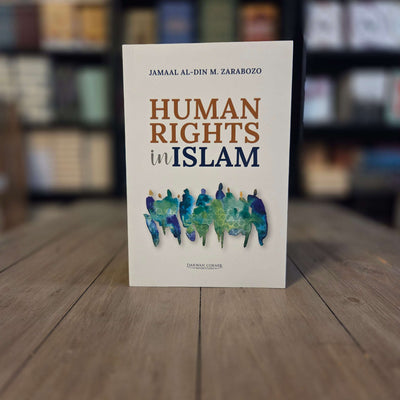
For further reading on where this sits within the wider set of rights Islam guarantees, see Human Rights in Islam by Dr. Jamaal al-Din Zarabozo.
Baarakallahu feekum — The Islamic Book Cafe | Portland, Oregon.
Leave a comment
This site is protected by hCaptcha and the hCaptcha Privacy Policy and Terms of Service apply.