
The Status of Jesus (Isa) in Islam
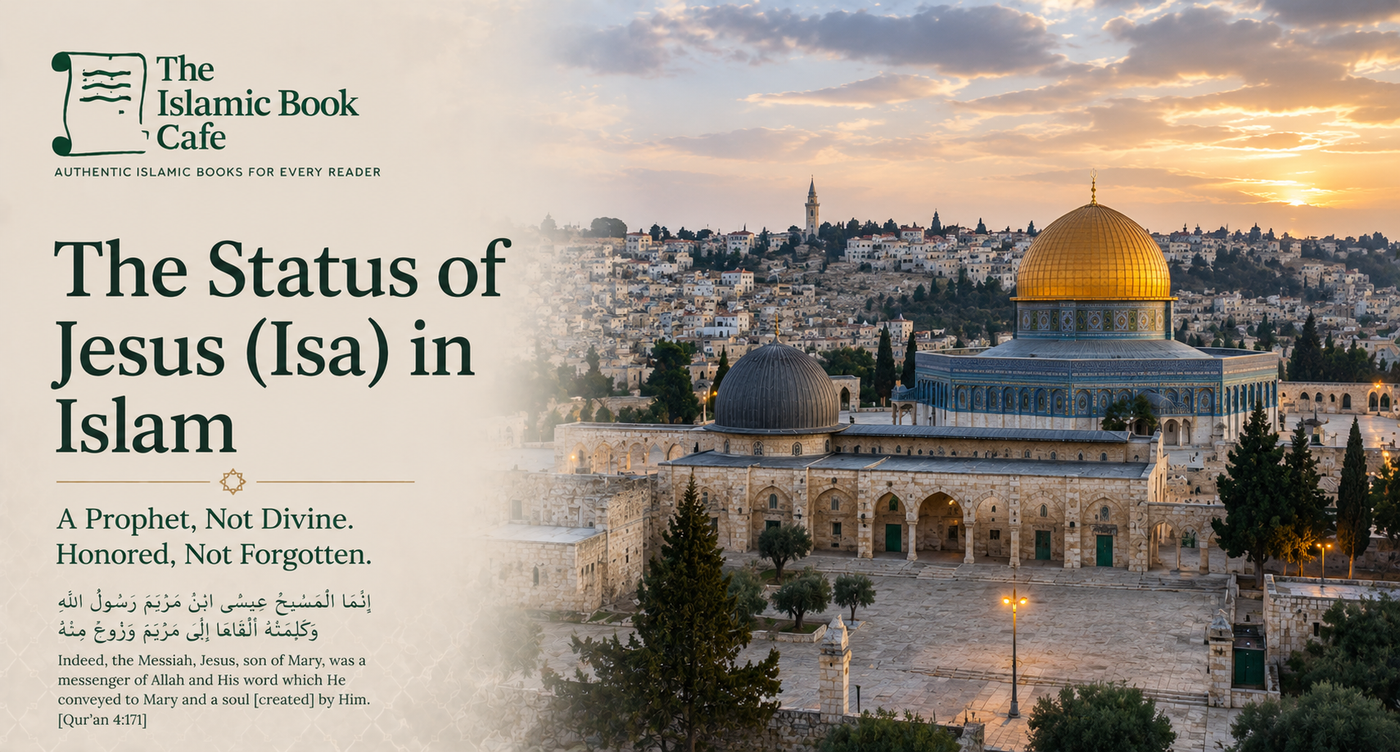
Few figures reveal how much Islam and Christianity share, and where they part, as clearly as Jesus. In Islam he is Isa, the son of Mary, and he holds one of the highest stations a human being can hold: a mighty messenger of God, honored and loved by every Muslim. Yet Islam differs sharply from Christian doctrine on who he was. Here is what the Qur'an actually teaches about him, a message Islam holds was preserved intact, as we discuss in Is the Qur'an Preserved?
A Messenger of Allah, Not a Son of God
The Qur'an addresses the People of the Scripture directly on the question of Jesus, honoring him in the highest terms while drawing one firm line:
The Messiah, Jesus, the son of Mary, was but a messenger of Allah and His word which He directed to Mary and a soul [created at a command] from Him. So believe in Allah and His messengers. And do not say, “Three”; desist - it is better for you. Indeed, Allah is but one God. Exalted is He above having a son.
— Surah an-Nisa 4:171, Saheeh International
Islam gives Jesus titles of great honor (the Messiah, a word from Allah, a soul from Him) and at the same time rejects, without ambiguity, that he is the son of God or one of a trinity. Allah is one, and far exalted above having a son. This single distinction is the heart of the difference between the two faiths.
Jesus in His Own Words: “I Am the Servant of Allah”
According to the Qur'an, Jesus spoke as an infant in the cradle, and his first words settled his own status:
[Jesus] said, “Indeed, I am the servant of Allah. He has given me the Scripture and made me a prophet.”
— Surah Maryam 19:30, Saheeh International
He called himself the servant of Allah, not His son, and in the same passage he directs people to worship Allah alone, saying that Allah is “my Lord and your Lord” (Surah Maryam 19:36). The very one Muslims are asked to revere as a prophet is himself pointing away from his own worship and toward God.
What Muslims Believe About Jesus
His Miraculous Virgin Birth
Islam affirms that Jesus was born of the Virgin Mary by the direct command of Allah, without a father. The Qur'an compares this to the creation of Adam, who had neither father nor mother: Allah said “Be,” and he was (Surah Ali Imran 3:59). His extraordinary birth is a sign of Allah's power, not proof of divinity.
His Miracles by Allah's Permission
Jesus performed remarkable miracles: healing the blind and the leper, and giving life to the dead. The Qur'an is careful each time to note that he did so by Allah's permission (Surah Ali Imran 3:49). The miracles were signs granted to a prophet, never the acts of an independent divine power.
He Was Not Crucified
Islam parts from the Christian account of the crucifixion. The Qur'an teaches that Jesus was neither killed nor crucified; rather, it was made to appear so, and Allah raised him up to Himself (Surah an-Nisa 4:157–158). His life on earth did not end in death on a cross.
His Return Before the Day of Judgment
Muslims believe that Jesus will return before the end of time, not as God, but as the servant and prophet of Allah he always was. This is established in the authentic Sunnah, in the Book of Prophets in Sahih al-Bukhari:
Allah's Messenger, peace and blessings be upon him, said, “By Him in Whose Hands my soul is, surely (Jesus,) the son of Mary will soon descend amongst you and will judge mankind justly (as a Just Ruler); he will break the Cross and kill the pigs and there will be no Jizya (i.e. taxation taken from non Muslims). Money will be in abundance so that nobody will accept it, and a single prostration to Allah (in prayer) will be better than the whole world and whatever is in it.”
— Sahih al-Bukhari 3448, authentic
He returns, in other words, to affirm the very truth he first brought, worship of Allah alone, and the narration has him prostrating to Allah, not receiving worship himself.
Honor, Not Division
The result is that no one can be a Muslim without believing in Jesus, loving him, and honoring him as one of the greatest of the prophets. Islam's disagreement with Christianity is precise: not about whether Jesus is worthy of reverence, but about whether he is God. On that question the Qur'an is clear: he is a servant and messenger of the One God, and it is that God alone whom Jesus called his people to worship.
Where to Read More
This article has set out the outline. The questions that usually follow (the trinity, the crucifixion, the titles given to Jesus in the Gospels, and what the Qur'an says about the Christians of his time) are worked through in Jesus the Son of Mary: Q&A by Salah Abdul-Wahhab Ameen, which handles the subject in a question-and-answer format.
For the foundation underneath all of it, who Allah is and why associating anything with Him is the one thing Islam will not concede, see Who Is Allah? The One True God in Islam, and the titles in our Aqeedah collection.
Baarakallahu feekum — The Islamic Book Cafe | Portland, Oregon.
 Jesus The Son of Mary Q&A By Salah Abdul-Wahhab AmeenAl-Binaa Publishing$9.00
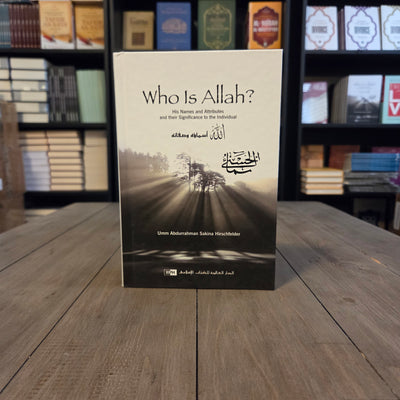 Who Is Allah? His Names and Attributes and Their Significance to the Individual By Umm Abdurrahman Sakina HirschfelderInternational Islamic Publishing House$22.00
Leave a comment
This site is protected by hCaptcha and the hCaptcha Privacy Policy and Terms of Service apply.