
The Hijab: Modesty, Not Oppression
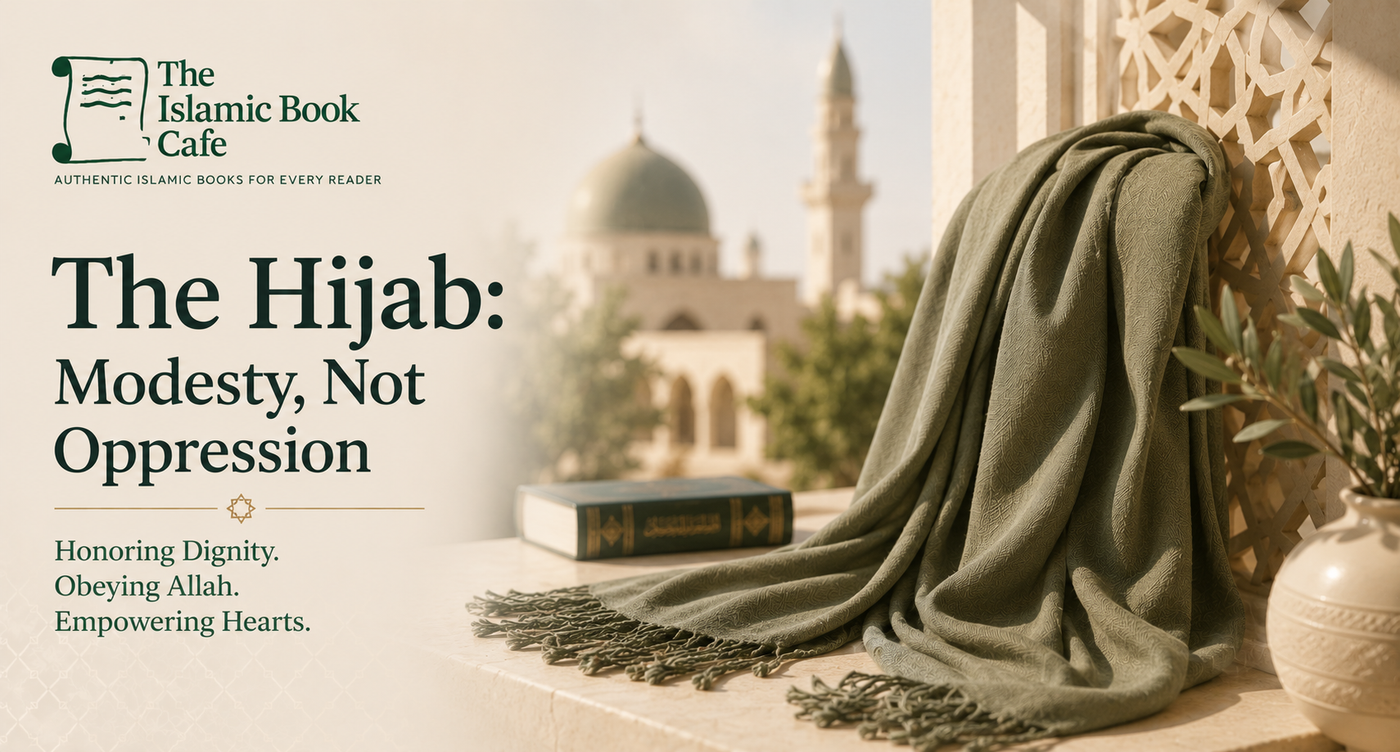
Few symbols of Islam draw as much debate as the hijab. To its critics it is a mark of oppression, a cloth imposed on women against their will. Read from its actual sources, the Qur'an and the practice of the first generations of Muslims, it is something quite different: a command of modesty, an act of worship, and a statement of dignity that a believing woman takes on by faith. This piece is a companion to Women's Rights in Islam, and it answers one of the objections raised there head-on.
What the Hijab Actually Is
In the Sharia, hijab refers to the covering a Muslim woman observes in the presence of men who are not her close relatives: the khimar, a headcovering drawn over the head, neck, and chest, and the jilbab, an outer garment worn when she goes out. It is not a cultural inheritance or a regional custom but an instruction from Allah, observed as an act of obedience, the same way prayer and fasting are.
The Command in the Qur'an
The Khimar Over the Chest
The primary verse of hijab is addressed to believing women in Surah an-Nur, joining modesty of the eyes and heart to modesty of dress:
And tell the believing women to reduce [some] of their vision and guard their private parts and not expose their adornment except that which [necessarily] appears thereof and to wrap [a portion of] their headcovers over their chests...
— Surah an-Nur 24:31, Saheeh International
The command is not only outward. It begins with lowering the gaze and guarding one's chastity, then moves to dress, drawing the headcover over the chest rather than leaving it exposed. Hijab, in other words, is one part of a wider modesty that governs how a believer looks, behaves, and carries herself.
The Jilbab When Going Out
A second verse, in Surah al-Ahzab, addresses the outer garment worn in public, and names its purpose plainly:
O Prophet, tell your wives and your daughters and the women of the believers to bring down over themselves [part] of their outer garments. That is more suitable that they will be known and not be abused. And ever is Allah Forgiving and Merciful.
— Surah al-Ahzab 33:59, Saheeh International
Notice the reason Allah gives: so that believing women “will be known and not be abused.” The covering is tied in the verse itself to recognition and protection, the opposite of a tool of subjugation.
Modesty, Not Oppression
Three things follow from these verses. First, hijab is an act of worship: a woman who wears it is obeying her Lord, in the same category as any other command He gave. Second, it is a matter of dignity, not diminishment. It asks that a woman be encountered for who she is rather than reduced to how she looks. Third, for the countless Muslim women who observe it, it is a choice they make willingly, out of conviction, not something extracted by force. To read a command a woman embraces as devotion as though it were imposed on her is to speak over her rather than listen to her.
This does not mean cultural coercion never happens; where it does, it is a failing of people, not of the revelation, which addresses the believing woman directly and ties the command to her own faith. The wider dignity Islam extends to women, in worship, marriage, wealth, and family, is the subject of Women's Rights in Islam.
An Act of Faith Between Her and Her Lord
In the end, the hijab is worship before it is anything else, a response to Allah's command, carried by a believing woman as part of the same modesty and dignity Islam honors in her at every stage of life. Seen from the inside, it is not a cage but a choice; not oppression, but obedience.
Where to Read the Rulings in Detail
This article has covered the two verses and what they establish. The detailed rulings (what the garment must actually meet in terms of covering, looseness, and opacity, and the evidences behind each condition) are worked through in The Dress Code for the Muslim Woman by Imam Muhammad Naasirud-Deen al-Albaani, who gathered and authenticated the narrations on the subject and set out the conditions with their proofs.
For the wider question of what Islam grants women in worship, marriage, wealth, and family, see The Status of Women in Islam by Shaykh Saalih al-Fawzaan.
Baarakallahu feekum — The Islamic Book Cafe | Portland, Oregon.
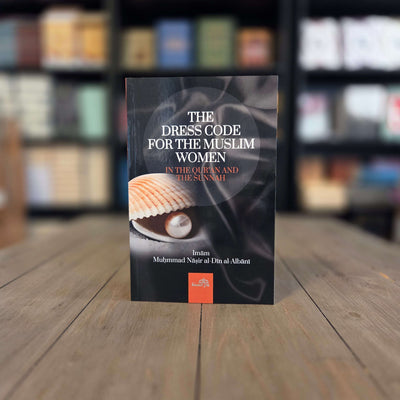 The Dress Code For The Muslim Woman By Imam Muhammad Naasirud-Deen Al-AlbaaniDar as-Sunnah Publishers$27.00
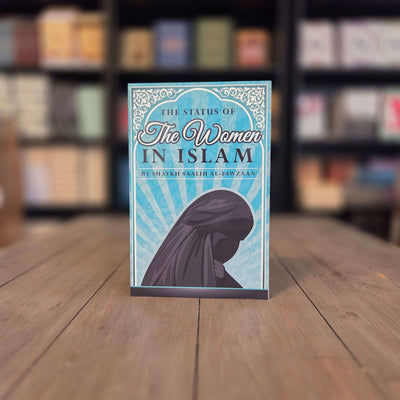 The Status of Women in Islam By Shaykh Saalih al-FawzaanAuthentic Statements Publications$11.00
Leave a comment
This site is protected by hCaptcha and the hCaptcha Privacy Policy and Terms of Service apply.