
Islam and Slavery: Answering a Modern Objection
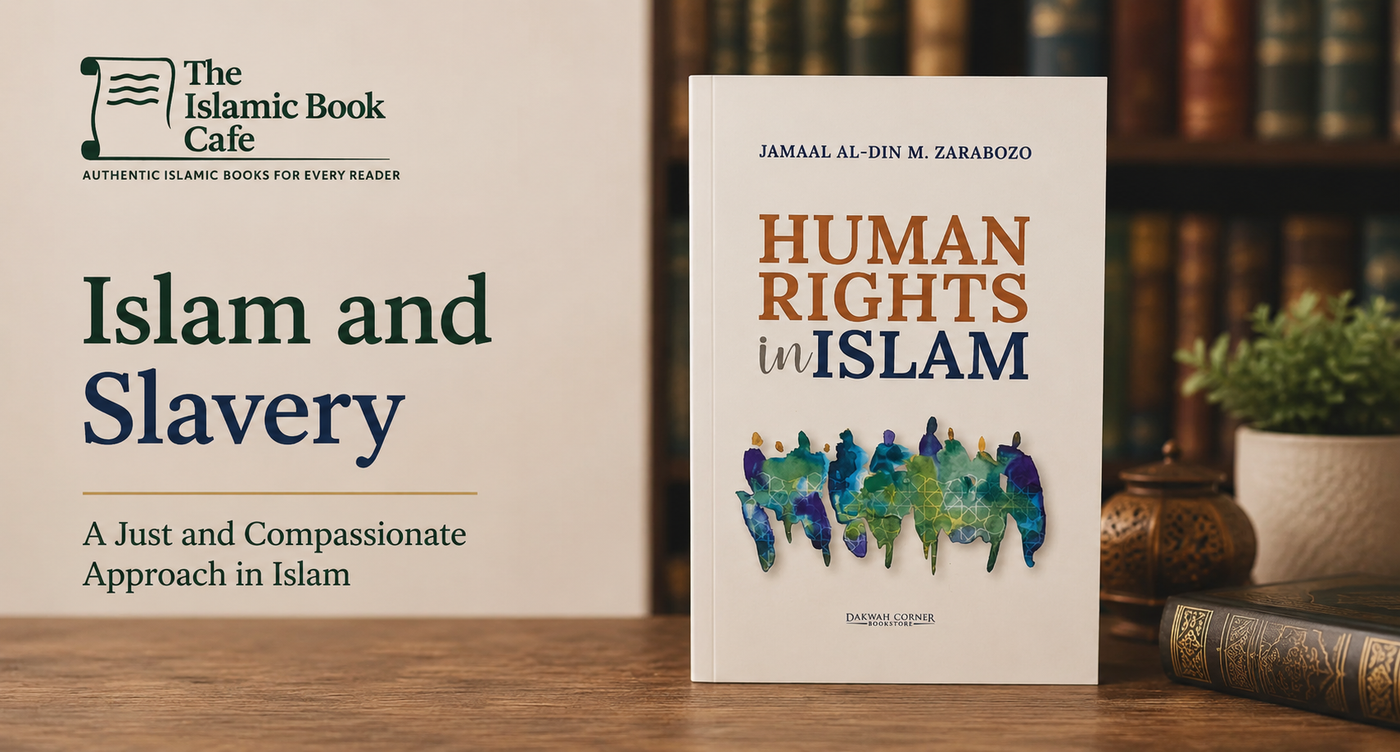
Among the objections raised against Islam, few are deployed as confidently as this one: that Islam “permitted slavery.” It is offered as a conversation-ending gotcha, as though the mere fact settles the matter. But a fair examination asks a different and more honest set of questions. Did Islam invent slavery? Did it endorse the institution as an ideal? Or did it inherit a universal human practice and fundamentally transform it: restricting it, regulating it, and steadily steering it toward emancipation?
Understanding the Objection in Its Historical Context
The first problem with the objection is anachronism: judging a seventh-century society by twenty-first-century norms. When Islam arrived, slavery was a fixed feature of every major civilization on earth: Mesopotamia, Greece, Rome, Persia, Byzantium, India, Africa, and the Arabian Peninsula itself. Islam did not introduce slavery into a world that was free of it. It entered a world saturated with it, and immediately began to dismantle it from within.
It is worth being precise about how long the practice then continued elsewhere, because the dates are a matter of public record rather than opinion. Britain did not prohibit its slave trade until the Act of Parliament of 25 March 1807, and Parliament's own account of that campaign describes it as the culmination of one of the first great public campaigns in British history. That Act ended the trade but not the institution: slavery itself remained lawful in the British colonies until the Slavery Abolition Act received royal assent in 1833 and took effect the following year. In the United States it continued until the Thirteenth Amendment was ratified on 6 December 1865. The text is held by the National Archives and runs to two sentences.
How Islam Transformed an Existing Institution
Closing Off the Sources of Enslavement
Islam cut off nearly every avenue by which a person could be enslaved. Kidnapping and selling free people, the engine of most of history’s slave trades, was condemned in the severest terms. The Prophet, peace and blessings be upon him, reported that Allah Himself would stand as the adversary of such a person on the Day of Resurrection:
The Prophet, peace and blessings be upon him, said, “Allah said, ‘I will be an opponent to three types of people on the Day of Resurrection: -1. One who makes a covenant in My Name, but proves treacherous; -2. One who sells a free person and eats his price; and -3. One who employs a laborer and takes full work from him but does not pay him for his labour.’” (Sahih al-Bukhari 2270)
With the major historical sources of enslavement forbidden, the institution was left without fuel.
Making Emancipation an Act of Worship
Where most societies treated freeing a slave as a private favor, Islam made it one of the highest acts of devotion. The Qur’an presents it as the steep, demanding path that leads to salvation:
And what can make you know what is [breaking through] the difficult pass? It is the freeing of a slave. (al-Balad 90:12–13)
Freeing a slave became the prescribed expiation for a range of shortcomings (a broken oath, an accidental killing, and more) so that the system continuously drained itself of captives. The Prophet, peace and blessings be upon him, made its reward explicit:
The Prophet, peace and blessings be upon him, said, “Whoever frees a Muslim slave, Allah will save all the parts of his body from the (Hell) Fire as he has freed the body-parts of the slave.” (Sahih al-Bukhari 2517)
An entire category of obligatory charity (zakat) was set aside for freeing slaves, so that the wider community continually purchased people out of bondage.
The Built-In Path to Freedom
Islam gave the enslaved a legal route out. A slave could request a contract of emancipation, agreeing to purchase their own freedom, and the owner was commanded to grant it:
And those who seek a contract [for eventual emancipation] from among whom your right hands possess — then make a contract with them if you know there is within them goodness and give them from the wealth of Allah which He has given you. (an-Nur 24:33)
The believer was not merely permitted but encouraged to help the enslaved buy their freedom, and public charity funds could be spent toward it. Freedom was made a right one could claim, not a gift one could only hope for.
Dignity and Just Treatment
While the institution persisted in its diminishing form, those still within it were granted a dignity unknown in the surrounding world. When Abu Dharr (may Allah be pleased with him) was seen dressed no differently from the man who served him, the Prophet, peace and blessings be upon him, explained the principle behind it:
“Your slaves are your brothers and Allah has put them under your command. So whoever has a brother under his command should feed him of what he eats and dress him of what he wears. Do not ask them (slaves) to do things beyond their capacity (power) and if you do so, then help them.” (Sahih al-Bukhari 30; also Sahih Muslim 1661)
To call the enslaved person a brother, and to bind the master to feed and clothe him as he fed and clothed himself, was to undo the very logic on which slavery everywhere else depended.
A Trajectory Toward Abolition, Not Endorsement
Taken together, these measures point in a single direction. By choking off the sources of enslavement, turning emancipation into worship, building a legal path to freedom, and dignifying those still bound, Islam set the institution on a trajectory toward its own disappearance. This is the opposite of endorsement. The system the modern critic pictures (lifelong, hereditary, race-based ownership with no exit) is precisely the system Islam worked against, and precisely the one that later powers built and defended on a massive scale.
The scale of that later system is documented rather than estimated loosely. The Trans-Atlantic Slave Trade Database, assembled from the archival records of roughly 36,000 individual voyages, puts the number of Africans embarked between 1501 and 1867 at about 12.5 million, of whom around 10.7 million survived the crossing. Anyone who wishes to check that figure can query the database directly.
Why the Modern Objection Misfires
The objection assumes that the critic’s own civilization holds the moral high ground by default. The record complicates that assumption in a specific way. When Britain finally abolished slavery in its colonies, the compensation paid out went to the slave owners rather than to the people they had held: the National Archives holds the claim forms and payment registers, and records that the government borrowed to fund those payments and that the residue of that debt was not cleared until 2015.
Islam, by contrast, had been commanding restriction, kind treatment, and emancipation as acts of worship for well over a millennium before any of those dates. The honest measure of a moral system is the direction in which it pushes, toward bondage or toward freedom, and on that measure the Islamic record is one of steady movement toward liberation. The point is not that one civilization may sneer at another. It is that the objection is usually made without the dates in front of it, and the dates are freely available to anyone willing to look them up.
Recommended Reading
For a fuller treatment of how Islam grounds human dignity, justice, and rights in revelation rather than shifting human consensus, Human Rights in Islam by Dr. Jamaal Zarabozo is a useful next step, and it engages directly with the contested questions critics most often raise. You can also explore more titles on belief and methodology in our Aqeedah collection. For a related discussion, see our pillar on human rights in Islam.
Baarakallahu feekum — The Islamic Book Cafe | Portland, Oregon.
Leave a comment
This site is protected by hCaptcha and the hCaptcha Privacy Policy and Terms of Service apply.