
Worshiping Allah in Spirit According to the Quran and Sunnah
In today's fast-paced world, it's easy to lose sight of the spiritual core of worship. Many Muslims struggle with feeling connected during prayer or other acts of devotion. Islam, however, is not a religion of empty rituals. It calls believers to worship Allah with sincerity, mindfulness, and awareness, what many would describe as worshiping "in spirit." This spiritual foundation is clearly laid out in both the Qur'an and the Sunnah.
Worship That Begins in the Heart
The Qur'an consistently emphasizes that the heart is central to worship. Allah says:
"And they were not commanded except to worship Allah, [being] sincere to Him in religion, inclining to truth…"
(Surah al-Bayyinah 98:5, Saheeh International)
True worship stems from ikhlas, sincerity. It is not enough to perform acts of worship outwardly; what truly matters is that they are done with a pure heart, seeking only the pleasure of Allah. In another verse Allah says:
"That [is so]. And whoever honors the symbols of Allah - indeed, it is from the piety of hearts."
(Surah al-Hajj 22:32, Saheeh International)
The outward acts are a reflection of an inner state. When the heart is present, the worship becomes meaningful.
The Prophetic Definition of Spiritual Worship
The Prophet Muhammad, peace and blessings be upon him, defined the highest level of worship, ihsan, in a way that captures this inner spirit. When asked about ihsan, he said:
"It is to worship Allah as if you are seeing Him; and although you do not see Him, He sees you."
(Sahih Muslim 8 — the Hadith of Jibril)
This level of consciousness transforms ritual into spiritual experience. When a Muslim stands in prayer with awareness of Allah's presence, every movement and word carries deeper significance, the subject of Developing Khushu in the Prayer. We explore this same quality of presence in salah, specifically in sujud, in Servitude in al-Sujud.
Worship Is a Relationship, Not a Routine
Surah al-Fatihah, recited in every unit of prayer, includes the powerful statement:
"It is You we worship and You we ask for help."
(Surah al-Fatihah 1:5, Saheeh International)
This verse highlights the personal relationship between the worshiper and Allah. Worship is not just an obligation. It is an expression of our dependence, gratitude, and love for the One who created us.
The Heart Matters Most
Abu Hurayrah (may Allah be pleased with him) reported that the Prophet, peace and blessings be upon him, said:
"Verily Allah does not look to your faces and your wealth but He looks to your heart and to your deeds."
(Sahih Muslim 2564)
Islam prioritizes sincerity over show. What counts is not how things appear to people, but the truth of what is in the heart when we stand before Allah.
About the Books
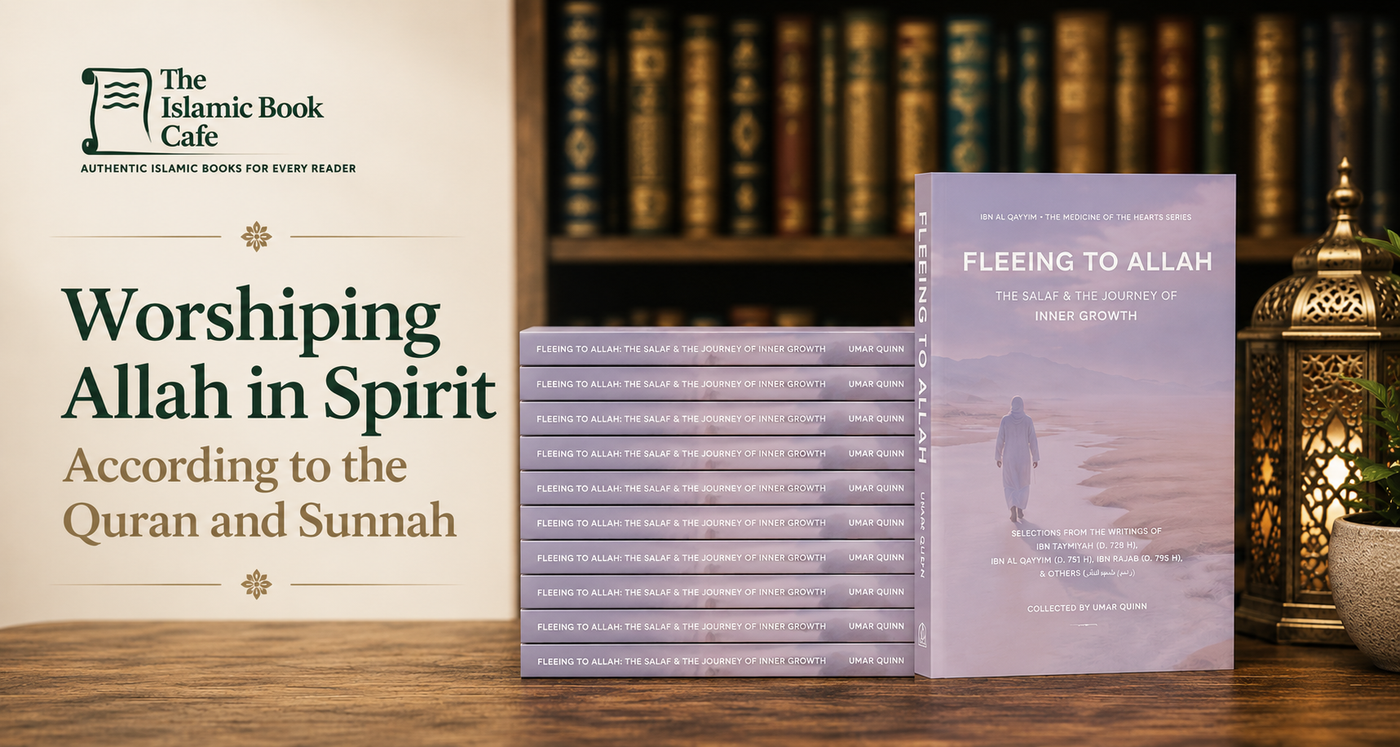
Fleeing to Allah: The Salaf and the Journey of Inner Growth, compiled by Umar Quinn from the writings of Ibn Taymiyyah, Ibn al-Qayyim, and Ibn Rajab, explores how the early generations understood and practiced inner growth, with lessons on humility, sincerity, and turning back to Allah.
For further reading on the states of the heart and the journey of self-purification, we also recommend:
- Gardens of Purification by Shaykhul-Islam Ibn Taymiyyah
- Winning the War Within by Umar Quinn
- Heart Therapy: Forty Hadiths in Tazkiyah and Soul Purification
Worship in Islam is more than physical action. It is a spiritual journey. The Qur'an and Sunnah guide us to a type of worship that is rooted in the heart: sincere, humble, and ever aware of Allah's presence. When we align our inner state with our outward acts, our worship becomes transformative.
Baarakallahu feekum — The Islamic Book Cafe | Portland, Oregon.
 Fleeing to Allah: The Salaf and the Journey of Inner Growth (Tibb al Qulub - The Medicine of the Hearts) By Umar QuinnThaqafa Press$32.00
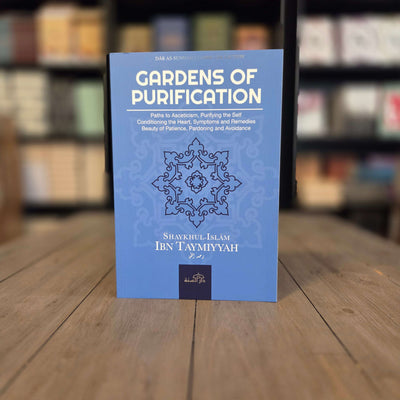 Gardens of Purification By Shaykul-Islam Ibn TaymiyyahDar as-Sunnah Publishers$35.00
 Winning the War Within: The Heart, the Self, Angels & Devils (Tibb al Qulub - The Medicine of the Hearts) By Umar QuinnThaqafa Press$27.00
 Heart Therapy | Forty Hadiths in Tazkiyah and Soul PurificationDakwah Corner Bookstore$26.00
Leave a comment
This site is protected by hCaptcha and the hCaptcha Privacy Policy and Terms of Service apply.