
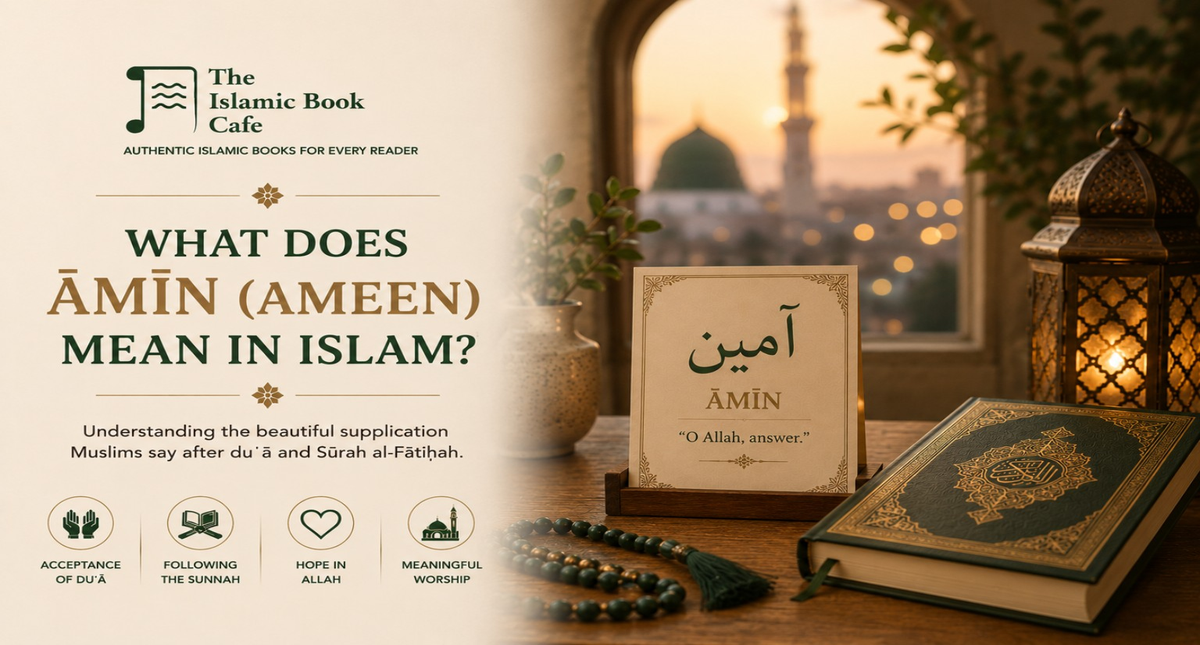
Every Muslim says it multiple times a day — after al-Fatihah in prayer, after making dua, and when hearing others supplicate. But what does Amin actually mean, and what have the scholars said about it? Here is a summary of what the scholars have established about this word and its significance in Islam.
What Does Amin Mean?
The scholars have differed on the precise meaning of Amin, but several explanations have been narrated. The most commonly cited meaning is "O Allah, answer our supplication" — making Amin itself a form of dua. Others have said it means "let it be so" or "do not disappoint our hopes." Ibn Abbas (may Allah be pleased with him) reported that he asked the Prophet (peace and blessings be upon him) about its meaning, and he said: "Lord, do it!"
Some early scholars held that Amin is one of the names of Allah, though this position is not well-established. The majority understanding is that it is a supplication asking Allah to grant what was asked for.
Amin as a Seal
One of the most powerful descriptions of Amin comes in the narration reported by Abu Dawud in which a Companion compared Amin to the seal on a page — it closes the supplication and secures it. The Prophet (peace and blessings be upon him) said about a man he observed making dua intensely: "It is guaranteed if he seals it." When asked with what it should be sealed, he said: "With Amin."
This narration illustrates that Amin is not merely a concluding word but an active part of the supplication itself. It completes the dua and, by Allah's mercy, can be the means by which it is accepted.
The Reward of Saying Amin in Prayer
The Prophet (peace and blessings be upon him) said: "When the imam says Amin, say Amin. If someone's Amin coincides with that of the angels, his past sins will be forgiven." (Al-Bukhari and Muslim)
The scholars have noted that this narration places four conditions on attaining this forgiveness: the imam saying Amin, the congregation saying Amin, the angels saying Amin, and all of them coinciding. This is an enormous reward attached to a single word said in prayer, which is why the Prophet (peace and blessings be upon him) would say it audibly enough that those in the first row could hear it.
Should the Imam Say Amin Out Loud?
This is a matter on which the scholars have differed. The position of al-Shafi'i, Ahmad, and Ishaq is that the imam says Amin out loud. Their evidence includes the narration of Wa'il ibn Hujr, who said that when the Prophet (peace and blessings be upon him) finished reciting al-Fatihah he said Amin, raising his voice. (Abu Dawud and al-Daraqutni) Ibn az-Zubayr and those praying behind him would say it until the mosque reverberated.
Other scholars, including some Malikis, held that the imam does not say it or says it silently, with those praying behind him saying it after him. The stronger evidence supports saying it audibly in the group prayer, as this is what is established from the practice of the Prophet and his Companions.
A Gift Specific to This Ummah
The Prophet (peace and blessings be upon him) said: "The Jews do not envy you for anything as much as they envy you for the salam and the saying of Amin — so say Amin often." (Ibn Majah)
He also said that Allah gave this ummah three things He did not give to anyone before them: the greeting of salam, the rows of the angels, and Amin — except for what was said by Musa and Harun (peace be upon them). When Musa supplicated against Pharaoh, Harun said Amin — and Allah addressed both of them as having supplicated because Amin carried the weight of a supplication.
Understanding the words we use in prayer and dua increases our concentration and connection to Allah. If you are looking for books on Tafsir and Quranic sciences to deepen your understanding of what you recite, browse our Tafsir collection at The Islamic Book Cafe.
Baarakallahu feekum — The Islamic Book Cafe | Portland, Oregon

Leave a comment
This site is protected by hCaptcha and the hCaptcha Privacy Policy and Terms of Service apply.